
Food on the Langtang trek is usually better than many first-time trekkers expect. You are not walking into a wilderness camp system with freeze-dried meals every night. This Langtang food guide will help you understand what is actually served in teahouses, what tastes best at altitude, what to avoid when your stomach feels off, and how to eat in a way that supports long walking days.
In Langtang, meals are simple, filling, and built for trekkers. Menus are often surprisingly broad, especially in lower villages, but the smartest choice is not always the most exciting one. The higher you go, the more food has to be carried by porters, mule, or other local transport methods, so prices rise and freshness becomes more limited. That does not mean the food is poor. It means you should expect practical mountain cooking rather than restaurant dining.
What food is like on the Langtang trek
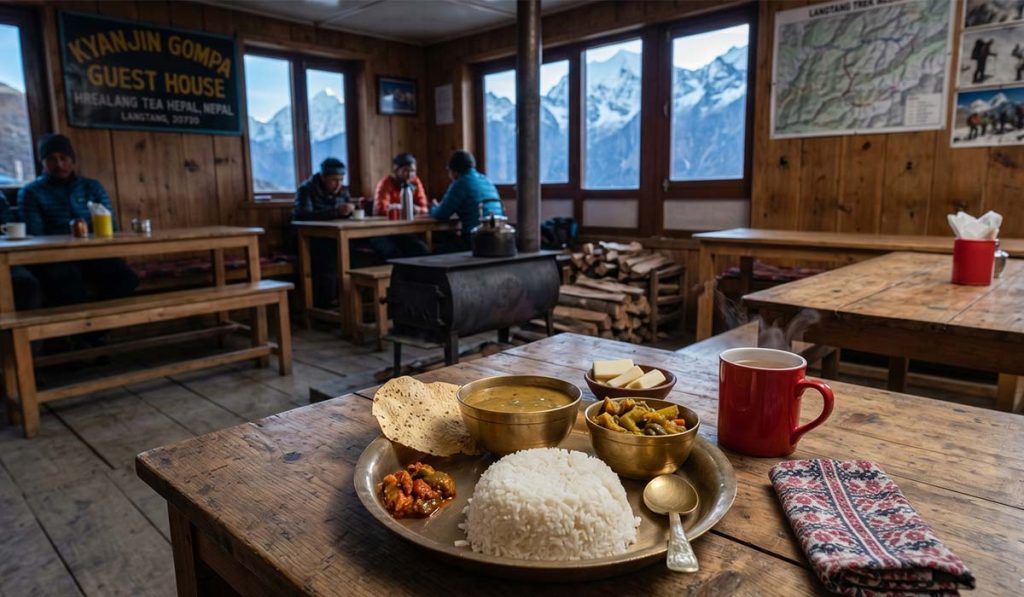
Most teahouses in Langtang serve a familiar trekking menu. You will see Nepali staples, Tibetan-influenced dishes, and a few comfort foods aimed at international hikers. The quality depends on the village, the season, and the kitchen team, but overall the food is reliable and designed to keep you going.
The most common meals are dal bhat, fried rice, noodle dishes, soups, momos, potatoes, eggs, pancakes, porridge, chapati, and pasta. In some places you may also find pizza, spring rolls, macaroni, or bakery-style items like apple pie. These sound tempting after several days on the trail, and sometimes they are quite good. Still, local staples are usually the safest and most satisfying choice, especially as you gain elevation.
Dal bhat deserves special mention because it is the backbone of trekking food in Nepal. It usually comes with rice, lentil soup, vegetable curry, pickles, and sometimes potatoes or greens. Many teahouses offer refills, which is one reason guides and porters often choose it for lunch and dinner. It gives steady energy, it is usually cooked fresh, and it sits well for most trekkers.
Best meals to eat in Langtang
If you want the short answer, eat local and eat warm. That approach works better than chasing variety every day.
For breakfast, porridge is one of the best options. It is easy to digest, warm, and useful before a cold morning start. Tibetan bread with eggs or honey is also common, though it can feel heavy for some people. Pancakes are available in many teahouses and can be good for morale, but they vary a lot in texture and size. Some are excellent, some are dense and oily.
For lunch, fried rice, garlic soup, thukpa, or dal bhat are usually dependable. A noodle soup can be especially helpful on colder days when you need fluids as much as calories. Garlic soup is a classic trekking choice in Nepal. People often say it helps with altitude. It is not a medical treatment, but it is warming, comforting, and easy to eat when appetite starts to drop.
For dinner, dal bhat remains the most practical meal. Potato dishes are also common and often very good in the Langtang region. You may see boiled potatoes, fried potatoes, or potato curry. Eggs can be added to many meals if you want extra protein.
Momos are popular and worth trying when they are prepared fresh. In busy villages they are often better than in very remote stops, where kitchens may simplify the menu depending on supplies and workload.
Langtang food guide to drinks and snacks
Hydration matters as much as food on this trek. Many trekkers focus on meals and forget how much dry air, altitude, and steady walking can reduce energy.
Tea is everywhere. Black tea, milk tea, lemon tea, and ginger tea are the standard choices. Ginger tea is especially popular in the mountains because it feels soothing in cold weather and after a long day. Coffee is available in many teahouses, but do not expect specialty quality. It is often instant coffee or a very basic brew. That may be perfectly fine at 3,000 meters when what you really want is warmth.
Hot lemon, hot chocolate, and bottled soft drinks may also be available. Prices climb as you go higher, so do not be surprised if a drink costs far more in Kyanjin Gompa than in Syabrubesi.
Snacks are worth carrying from Kathmandu even though small shop items are sold on the route. Chocolate bars, cookies, chips, and instant noodles can be bought in some villages, but selection is limited and prices increase with altitude. Many experienced trekkers bring a personal supply of trail snacks they know they tolerate well, such as nuts, energy bars, dried fruit, or electrolyte tablets.
How prices change as you go higher
One of the most common questions trekkers ask is whether food in Langtang is expensive. The honest answer is that it starts reasonably and becomes costly as you ascend.
This is normal in Nepal’s trekking regions. Transport is difficult, weather affects delivery, and every gas cylinder, crate of eggs, sack of rice, and box of noodles takes effort to reach remote settlements. A plate of fried rice or a pot of tea that feels affordable lower down may be noticeably more expensive in higher villages.
Because of that, budgeting for food matters. If you are trekking independently, it is wise to carry enough cash for meals, drinks, and a few extras each day. Do not plan your budget on the assumption that you will eat the cheapest item every time. Cold weather, altitude, and long walking hours often make trekkers order more hot drinks, soup, or snacks than they expected.
Vegetarian, vegan, and dietary needs
Vegetarian trekkers generally do well in Langtang. In fact, many of the best trekking meals are naturally vegetarian. Dal bhat, vegetable fried rice, potato dishes, noodle soup, porridge, chapati, and many pancake options are easy to find.
Vegan trekking is possible but needs a little more communication. Some foods may include butter, milk, cheese, or eggs even when the menu description looks simple. Teahouse staff are usually helpful, but you should explain clearly and keep expectations realistic, especially in smaller villages where ingredient choices are limited.
Gluten-free trekking is harder. Rice-based meals help, but cross-contamination is possible in small kitchens, and packaged ingredients are not always labeled in detail. If you have celiac disease or a severe intolerance, you need to plan more carefully and bring backup food.
If you have allergies, speak plainly and early. Do not assume a menu item is made the same way it would be at home. Language is not usually a major barrier on this route, but being direct is safer than being casual.
What to avoid when eating at altitude
Not every menu item is equally smart on a high trail. A long list of options can create the illusion that everything is a good idea. It is not.
Meat becomes more questionable the higher you go, especially if storage conditions are basic and supply is irregular. Many experienced guides recommend avoiding meat in higher villages for that reason. Lower down it may be fine, but once you are deeper into the trek, vegetarian meals are often the safer choice.
Heavy fried foods can also be a mistake if your digestion starts slowing with altitude. The same goes for too much dairy if you already know it does not sit well with you. And while a celebratory drink may sound appealing, alcohol is not your friend on a trek where hydration, sleep, and acclimatization matter.
Raw foods are another area where judgment helps. Cooked meals are usually the better option in mountain teahouses. A hot plate served fresh from the kitchen is generally safer than something uncooked or sitting around.
Practical eating tips for the Langtang trek
A few habits make a big difference. Eat breakfast even if you are not very hungry. Start drinking early in the day, not only after you feel thirsty. Order meals before the dining room gets crowded if your group wants to eat on time, because kitchens can get busy in the evening.
It also helps to listen to your body rather than your cravings. At altitude, the meal that sounds exciting is not always the one that will help you walk well the next morning. Warm, simple, freshly cooked food usually wins.
If you are prone to stomach issues, bring basic medicine from home and carry a few familiar snacks. That gives you a backup when appetite drops or you need something light between villages.
Is Langtang food good enough for a multi-day trek?
Yes, for most trekkers it absolutely is. Langtang does not offer luxury dining, but it does offer enough variety, warmth, and energy for a comfortable trek if you choose sensibly. The key is to adjust your expectations. You are eating in mountain villages, not in city cafes, and that is part of the experience.
The best meals in Langtang are often the simplest ones: a hot bowl of soup after a cold climb, a generous plate of dal bhat after a long day, or a pot of ginger tea while watching the evening temperature drop outside. If you go in expecting honest trekking food rather than polished restaurant meals, you will likely eat well and feel stronger on the trail.
For most people, the real value of a Langtang food guide is not finding the fanciest dish. It is knowing how to eat for energy, comfort, and safety so the trek stays enjoyable from the first village to Kyanjin Gompa and back.

