
If you want big Himalayan views without committing to a long expedition, the Langtang trek is one of the smartest choices in Nepal. You get mountain scenery, Tamang culture, forest trails, and high alpine landscapes in less time than Everest or Annapurna routes usually require. For trekkers who want a rewarding trip in under a week of walking, Langtang delivers real substance, not a rushed compromise.
What makes Langtang especially attractive is its balance. The approach from Kathmandu is relatively straightforward; the trail is well established, and the scenery changes quickly as you gain elevation. In just a few days, you move from lower river valleys and bamboo forests to yak pastures, open ridgelines, and close-up views of Langtang Lirung and surrounding peaks.
Why Langtang is the best short trek in Nepal for many trekkers
Not every short trek feels complete. Some are beautiful but too low for major mountain views. Others demand uncomfortable travel logistics that eat up valuable time. Langtang stands out because the trekking days are efficient and the mountain reward arrives quickly.
The classic short version usually runs from Syabrubesi to Kyanjin Gompa and back. That route gives you the essence of Langtang without stretching the itinerary too far. You still pass through Lama Hotel, Langtang Village, and Kyanjin Gompa, which are the key points that make this valley memorable.
Compared with other short Himalayan treks, Langtang also feels less commercial. Tea houses are available and the trail is popular, but the atmosphere is still quieter than many first-choice routes in Nepal. For trekkers who want a more grounded mountain experience, that matters.
What is the best short Langtang trek itinerary?
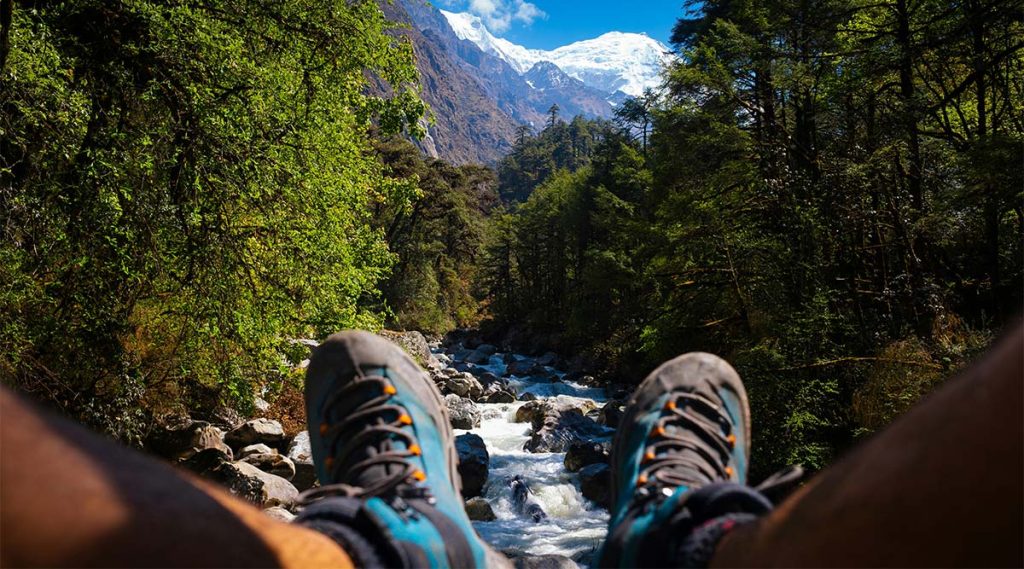
For most travelers, the best short itinerary is 5 to 7 trekking days, depending on how much time you have and how cautious you want to be with altitude. The shortest practical version is usually 5 days of walking, but 6 or 7 days is more comfortable and safer.
A common 6-day trekking plan looks like this in practice. You drive from Kathmandu to Syabrubesi, then trek to Lama Hotel, continue to Langtang Village, and then reach Kyanjin Gompa. After that, you usually add a morning hike to Kyanjin Ri or Tserko Ri if weather and fitness allow, then descend back through the same route.
This is not a circuit trek. You return on the same trail, but that does not make it repetitive in a negative way. On the way up, your focus is usually on gaining elevation and reaching the next village. On the way down, the views open differently, and many trekkers notice details they missed earlier.
If you are very short on time, a 5-day version is possible with longer walking hours. That said, this only suits strong trekkers who are comfortable with back-to-back ascents and descents. If this is your first trek in Nepal, a 6- or 7-day plan is the better choice.
Langtang best short trek route highlights
The route begins at Syabrubesi, a road-accessible village that serves as the gateway to the Langtang Valley. Early in the trek, the trail follows the Langtang Khola through thick forest. This section is green, humid, and rich with birdlife, and in spring the rhododendron areas can be especially attractive.
Lama Hotel is usually the first major overnight stop. From there, the valley starts to open gradually. As you climb higher, the forest gives way to wider views and a stronger sense of Himalayan scale. Langtang Village marks an emotional and important section of the route, as the village was heavily affected by the 2015 earthquake and later rebuilt.
Kyanjin Gompa is the goal of the short trek and the point where many people feel the route truly reveals itself. The village sits beneath dramatic peaks and offers one of the best mountain settings you can reach in a relatively short time from Kathmandu. Around Kyanjin, you can visit the old monastery area, enjoy the surrounding glacier views, and take an acclimatization hike.
For strong trekkers, Kyanjin Ri is often the best side trip on a short itinerary. It is steep but manageable, and the panoramic reward is excellent. Tserko Ri is higher and more demanding. If you have only one extra viewpoint hike in your schedule, the best choice depends on your energy, weather, and how well you are adapting to altitude.
How difficult is the Langtang short trek?
This trek is moderate, but the altitude is what turns it from a simple hike into a serious mountain trip. The trail itself does not require technical climbing, ropes, or prior mountaineering experience. However, daily ascents can be long, and the climb to Kyanjin Gompa takes you above 3,800 meters.
That means even fit trekkers need to take pacing seriously. Many people underestimate Langtang because it is shorter than other famous treks. Shorter does not always mean easier. If you push too hard on the way up, fatigue and altitude symptoms can affect the quality of the trek.
A good benchmark is this: if you can comfortably walk 5 to 7 hours a day on hilly terrain, you can likely handle the trek with proper pacing. If you plan to add Kyanjin Ri or Tserko Ri, your fitness should be better than average because those side hikes are much steeper than the main trail.
Best season for the Langtang best short trek
Spring and autumn are the best seasons for most trekkers. March to May brings blooming forests, moderate temperatures, and generally stable trekking conditions. September to November is usually the clearest period for mountain views, with crisp skies and dry trails.
Winter is still possible for the short Langtang trek, especially for trekkers who prefer quieter trails. The upside is clear air and fewer crowds. The downside is cold nights, possible snow around Kyanjin, and a less forgiving environment if the weather changes quickly.
Monsoon season is the least favorable overall. Trails can be muddy, leeches are common in the lower sections, and cloud cover often hides the mountain scenery. Still, it is not impossible. Trekkers who go during this time need more flexibility and should accept that views may be limited.
Permits, accommodation, and daily logistics
For the Langtang trek, you generally need a Langtang National Park entry permit. Permit rules can change, so checking updated requirements before departure is always wise.
Accommodation on the short Langtang route is normally in tea houses. These are simple mountain lodges with basic rooms and common dining halls. Do not expect luxury, but on the main route, you can usually find a bed, warm meals, and a practical place to rest.
Food is straightforward and filling. Dal bhat, noodles, fried rice, soups, potatoes, eggs, and tea are standard. As you gain altitude, prices rise because every supply must be carried or transported into the valley. That is normal in Nepal’s trekking regions and worth planning for in your budget.
The drive from Kathmandu to Syabrubesi is one of the less glamorous parts of the trip. Road conditions vary and travel time can be long. This is one trade-off with Langtang. The trek itself is efficient, but the road approach can feel tiring. Even so, many trekkers still find it worthwhile because once you are on the trail, the mountain experience comes quickly.
Do you need a guide for a short Langtang trek?
A guide is strongly recommended, especially if this is your first trek in Nepal. The route is not among the most confusing in the country, but a guide adds value beyond navigation. You get help with pacing, tea house coordination, local communication, weather judgment, and practical decisions if someone in the group feels unwell.
A porter can also make the trek more enjoyable if you want to walk with a light daypack. That can be the difference between simply finishing the route and actually enjoying the landscape.
For independent trekkers, the main question is not just whether you can do it alone. It is whether you want your short trekking window to include avoidable logistical stress. On a limited schedule, experienced local support often improves the trip significantly.
Who should choose Langtang for a short trek?
Langtang is ideal for travelers who want real Himalayan scenery in a compact timeframe. It works well for first-time trekkers with decent fitness, returning hikers who want something less crowded, and Nepal visitors who cannot commit to a two-week itinerary.
It is also a strong option for people who care about cultural contact as much as mountain views. The Tamang heritage of the region gives the route character that goes beyond scenery alone. At the same time, if your main goal is reaching a famous base camp or crossing a high pass, another trek may suit you better.
The best short trek is not always the one with the biggest name. It is the one that matches your time, fitness, and expectations. In that respect, Langtang is one of the most reliable choices in Nepal. If you want a trek that feels genuinely Himalayan without needing a long holiday, Kyanjin Gompa is hard to beat.

