
A Langtang solo trek appeals to many trekkers for one simple reason – it gives you a real Himalayan experience without the long logistics of Everest or Annapurna. The valley is close to Kathmandu, the route is straightforward by Nepal standards, and the scenery changes quickly from forest and river gorge to open mountain country. But trekking solo here is not just a romantic idea. It is a planning question, a safety question, and for many travelers now, also a legal question.
If you are thinking about doing Langtang alone, the first thing to understand is that the trek itself is not highly technical. The real challenge is making sound decisions around permits, navigation, altitude, weather, transport, and emergency response. That is where solo trekking in Nepal becomes more complicated than many first-time visitors expect.
Can you do a Langtang solo trek?
In practical trail terms, yes, Langtang is one of the more approachable treks for an independent traveler. The classic route from Syabrubesi to Lama Hotel, Langtang Village, and Kyanjin Gompa follows a clear valley trail with regular teahouse stops. You do not need climbing skills, ropes, or expedition logistics. Daily distances are manageable, and accommodation is available in season.
But there is an important distinction between trekking alone on the trail and trekking independently under current Nepal rules. Nepal has tightened rules around foreign trekkers in many regions, and trekking policy can change in how it is interpreted and enforced. Before planning a fully independent trip, check the latest permit and guide requirements for Langtang National Park and the trekking route you intend to follow. What was possible a few years ago may not be handled the same way now.
So the honest answer is this: a Langtang solo trek may be physically possible and still not be the best or easiest choice from a logistics and compliance point of view.
Why Langtang attracts solo trekkers
Langtang has a few qualities that make it attractive to people who prefer to walk at their own pace. First, access is relatively simple. You usually travel by road from Kathmandu to Syabrubesi, start trekking the next day, and reach major high points within a few days. That shorter approach makes the trek feel less intimidating than a longer circuit or remote camping route.
Second, the trail has a natural rhythm. Villages and lodges are spaced in a way that suits independent movement, and the route is easy to understand: you are moving up the valley toward Kyanjin Gompa, with optional acclimatization hikes above it. For trekkers with some mountain sense, this kind of route is easier to manage than a region with multiple side valleys and junctions.
Third, Langtang feels quieter. It has enough infrastructure to support trekkers, but it still feels more grounded and less crowded than the most commercial trails in peak season. For many solo travelers, that balance is ideal.
The real risks of trekking Langtang alone
The biggest mistake people make is assuming that a teahouse trek is automatically low-risk. Langtang is safer than a remote wilderness crossing, but it still takes you to significant altitude in a mountain environment where help is not immediate.
Altitude is the main concern. Kyanjin Gompa sits well above 3,000 meters, and many trekkers continue higher for viewpoints like Kyanjin Ri or Tserko Ri. Even fit hikers can develop acute mountain sickness if they ascend too fast. When you are solo, there is no built-in check on your pace, symptoms, or decision-making. Many altitude problems start with small signs that people ignore.
Weather is another factor. Conditions can change quickly, especially outside the most stable trekking months. Rain, cloud, snow, slippery trails, and cold nights all become more serious when you have no companion. Even a minor ankle injury can create a major problem if you are walking alone between villages.
Then there is the transport issue. The road to the trailhead can be rough, delayed, or disrupted depending on season and local conditions. Solo trekkers usually have less flexibility if transport plans fail, because they are managing everything alone and often on a tighter budget.
This does not mean Langtang is too dangerous to consider. It means your margin for error is smaller when you are by yourself.
Route and itinerary considerations
Most trekkers follow the classic out-and-back route. A common itinerary is Syabrubesi to Lama Hotel, then to Langtang Village, then Kyanjin Gompa, with an extra day for acclimatization and side hikes before returning the same way. That structure works well because it gives your body time to adjust and keeps overnight stops predictable.
For solo trekking, conservative planning matters more than ambitious planning. A rushed ascent to Kyanjin often feels fine until the second or third night at altitude. If you want to explore viewpoints above Kyanjin, do it only after sleeping there and assessing how your body responds.
Some trekkers consider combining Langtang with Gosainkunda or Helambu. That creates a bigger and more rewarding journey, but it also increases route complexity, weather exposure, and the need for stronger navigation and timing. If your goal is a true solo experience, the classic valley trek is the more sensible choice.
Permits, checkpoints, and practical rules
Langtang trekking usually involves a national park permit and a TIMS-related process depending on current regulations and how your trip is arranged. Rules in Nepal can be straightforward on paper and less straightforward in the field, especially when policies change faster than public information does.
This is where many solo trekkers run into trouble. They plan using outdated forum advice, arrive in Kathmandu, and find that permit issuance, guide expectations, or checkpoint enforcement are different from what they read. If you want to avoid wasted time and confusion, verify the current process shortly before your trip.
Even experienced independent trekkers often find that having local support for permits, transport, and pre-trek briefings removes a lot of uncertainty. That does not take away independence on the trail. It simply reduces avoidable problems before you start walking.
Accommodation, food, and daily costs
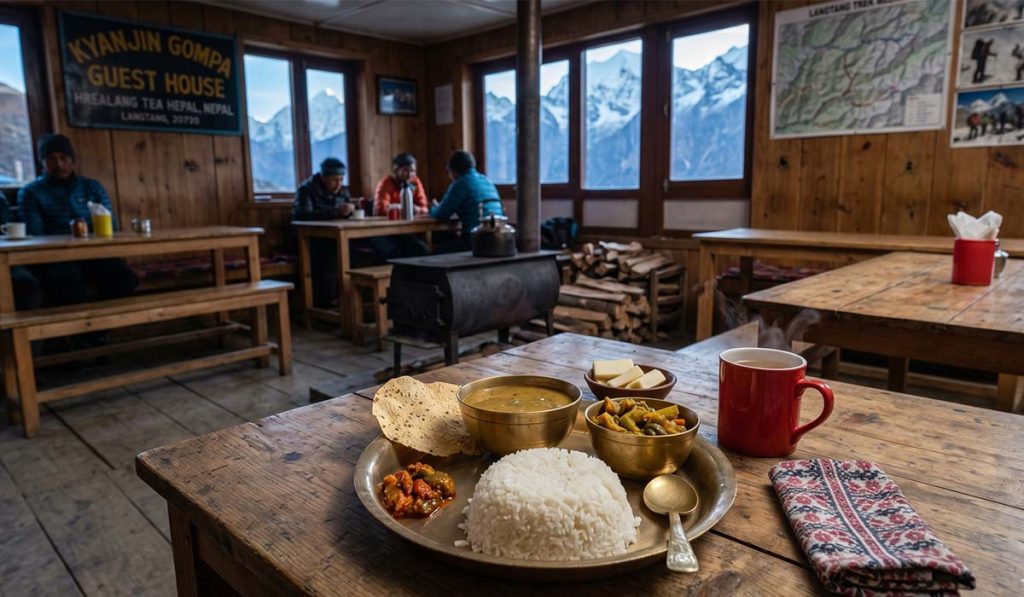
A Langtang solo trek is usually done as a teahouse trek, which makes logistics fairly manageable. You will find basic lodges in the main overnight stops, with simple rooms and common dining halls. Food is similar to other popular trekking areas in Nepal: dal bhat, noodles, fried rice, soup, pancakes, potatoes, eggs, tea, and coffee.
Costs rise with altitude because supplies are carried higher into the valley. Solo trekkers should expect less bargaining power than groups, especially in peak season, and it is wise to keep extra cash for price changes, snacks, charging, hot showers, and transport delays. Card facilities should never be assumed.
One thing many people underestimate is the comfort factor. On paper, staying in teahouses sounds easy. In reality, long cold evenings, limited power, patchy connectivity, and basic facilities feel different when you are alone every day. Some trekkers love that simplicity. Others discover that they would have enjoyed the route more with a guide or trekking partner.
When solo makes sense and when it does not
A solo Langtang trek makes the most sense for trekkers who already understand altitude basics, have experience with multi-day mountain walking, and are comfortable managing changing plans without stress. If you are patient, observant, and realistic about your pace, the route can be a very rewarding independent journey.
It makes less sense if this is your first trek in Nepal, your first time above 3,000 meters, or your first solo mountain trip anywhere. In those cases, the issue is not courage. It is efficiency and safety. A local guide helps with pace, trail conditions, weather judgment, lodge coordination, and small cultural interactions that improve the experience. That support is especially valuable when road conditions shift or if you need to adapt the itinerary.
There is also a middle option that many trekkers overlook. You can keep the spirit of a solo trip while hiring a guide or porter-guide. You still get space to walk quietly and absorb the landscape, but you are not carrying the full burden of route decisions and risk management alone.
Best season for a Langtang solo trek
Spring and autumn are the strongest seasons. In spring, rhododendron forests are active, temperatures are generally comfortable, and the valley looks alive. In autumn, skies are often clearer and mountain views are at their best. These are also the easier seasons for solo logistics because lodges are open and trails are more active.
Winter can be beautiful, but cold temperatures and snow increase the difficulty. Fewer trekkers on the trail means less informal support if something goes wrong. Monsoon season brings lush landscapes, but cloud, rain, leeches at lower elevations, and transport disruption can make solo trekking less appealing.
If your aim is confidence rather than just adventure, choose a stable season and avoid building your plan around the edge months.
A practical decision, not a pride test
There is nothing weak about deciding not to do Langtang alone. In Nepal, mountain judgment matters more than mountain ego. The best trekking plan is the one that fits your experience, your comfort level, and the current rules on the ground.
If you are well prepared, the Langtang Valley can be one of the most satisfying shorter treks in Nepal. If you are unsure, getting local advice before you go will usually save money, reduce stress, and make the walk itself far more enjoyable. The mountains will still feel just as big, and you will be free to focus on the part that matters most – walking through them with confidence.

