
Choosing between Nepal’s three best-known trekking regions is harder than many trekkers expect. The question is not simply which route is most famous, but which one fits your time, budget, fitness, and the kind of mountain experience you actually want. When comparing the Langtang trek vs Everest and Annapurna, the best choice often comes down to trade-offs rather than one region being clearly better than the others.
Langtang is often overlooked because Everest has global name recognition and Annapurna offers many route options. But in practice, Langtang gives many trekkers something the other two regions cannot – a shorter, quieter, and more accessible Himalayan trek that still delivers big mountain scenery, Tamang culture, and real altitude experience. Everest and Annapurna remain outstanding, but they suit different priorities.
Langtang trek vs Everest and Annapurna at a glance
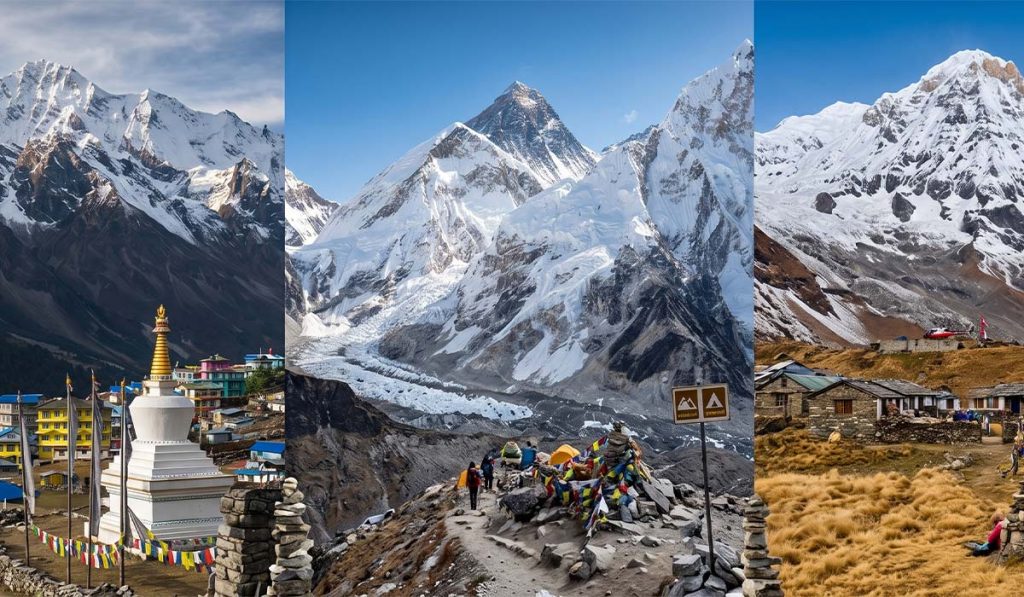
If your priority is iconic views and the emotional pull of trekking toward the world’s highest mountain, Everest is hard to beat. If you want variety, flexible itineraries, and route choices ranging from moderate lodge treks to major circuit adventures, Annapurna is usually the most versatile region. If you want a rewarding trek without flights, with fewer crowds and a shorter overall schedule, Langtang is one of the smartest options in Nepal.
That broad answer helps, but it is not enough for planning. The more useful comparison is how these regions differ in access, scenery, difficulty, altitude, crowd levels, accommodation, and overall feel on the trail.
Which region is easiest to reach?
Langtang is the simplest of the three. Most Langtang treks begin with a drive from Kathmandu to Syabrubesi or a nearby starting point. That means no domestic mountain flight, fewer weather-related transport disruptions, and an easier start for travelers who want to keep logistics simple.
Everest usually begins with a flight to Lukla, unless you choose a longer overland approach. The flight is part of the adventure, but it also adds uncertainty. Delays and cancellations are common in poor weather, especially during busy trekking seasons. If your travel schedule is tight, this matters.
Annapurna sits in the middle. Many treks start after a drive or a short flight to Pokhara, followed by road access to the trailhead. Access is generally easier than Everest and sometimes longer than Langtang, depending on the route. For trekkers who want convenience without giving up route variety, Annapurna has an advantage.
Scenery: what kind of Himalayan experience do you want?
Everest is the most dramatic in terms of fame and scale. The landscape feels high, stark, and expansive. You are trekking through Sherpa villages toward peaks that many people have known their whole lives from photographs and documentaries. Ama Dablam, Lhotse, Nuptse, and Everest itself create a powerful visual experience. There is also a deep mountaineering atmosphere in the Khumbu that many trekkers find unforgettable.
Annapurna offers the greatest variety. Depending on the route, you may walk through subtropical forest, terraced farmland, rhododendron hills, dry alpine valleys, and high passes. The Annapurna region feels broader and more diverse than either Langtang or Everest. On treks like the Annapurna Circuit, that changing landscape is part of the appeal.
Langtang feels more intimate. The valley is narrower, the mountains rise sharply above the trail, and the scenery comes closer to you. Langtang Lirung dominates the skyline, and sections of the trail combine forest, river gorge, yak pasture, and open alpine terrain in a compact route. It may not have Everest’s global prestige or Annapurna’s range of ecosystems, but it often surprises trekkers with how much mountain beauty it packs into a shorter trek.
Crowd levels and trail atmosphere
This is where Langtang stands out.
Everest Base Camp and the main Annapurna trails can be busy in peak months, especially October to November and March to April. That popularity brings benefits. Trails are well established, tea houses are numerous, and there is a strong sense of trekking community. But some trekkers are disappointed when they find crowded dining rooms, busy viewpoints, and a more commercial trail experience than expected.
Langtang usually feels quieter. You still meet other trekkers, but the trail often has more space, more silence, and a slower rhythm. For travelers who want a less crowded route without moving into remote camping-style expeditions, Langtang is one of the best alternatives in Nepal.
That said, quieter does not always mean better for everyone. Some solo trekkers prefer the social energy and infrastructure of Everest or Annapurna. Others value the sense of remoteness that Langtang provides.
Difficulty and altitude
None of these regions should be treated casually. Even the more accessible routes in Nepal involve long walking days, steep ascents, and the effects of altitude.
Everest is often the most demanding from an altitude perspective. Typical Everest Base Camp itineraries reach well above 5,000 meters, and acclimatization is a serious part of the plan. The trail itself is not technical in normal conditions, but the elevation makes the trek harder than many first-time visitors expect.
Annapurna depends on the route. Poon Hill is relatively beginner-friendly, while Annapurna Circuit with Thorong La Pass is much more challenging. This is one reason Annapurna appeals to a wide range of trekkers. You can choose a shorter and easier trek or commit to a longer high-pass journey.
Langtang usually falls between the two. A standard Langtang Valley Trek is demanding enough to feel like a proper Himalayan trek, especially if you hike to Kyanjin Ri or Tserko Ri for viewpoints. However, it is generally less extreme than Everest Base Camp in terms of overall altitude exposure and often more manageable for trekkers with limited time or moderate trekking experience.
If you are new to Nepal trekking, Langtang and some Annapurna routes are often more forgiving starting points than Everest. That does not mean easy. It means the balance of challenge and logistics is more approachable.
Accommodation and comfort on the trail
Everest and Annapurna have the strongest tea house networks overall, though standards vary by village and season. In both regions, you can usually expect a wider range of lodges on popular routes, with some villages offering relatively comfortable stays by trekking standards.
Langtang also has good tea house accommodation, but the range is narrower. Facilities are usually simpler, and you should keep expectations practical. Rooms are basic, dining halls are social, and comfort improves when trekkers arrive prepared for mountain conditions rather than expecting hotel standards.
For most people, this difference is not a deal-breaker. Still, if accommodation quality is a major factor, Everest and Annapurna generally offer more choice.
Cost: which trek is more budget-friendly?
Langtang is usually the most affordable of the three. The main reason is simple: no Lukla flight. Transport costs are lower, and overall trip length is often shorter, which reduces guide, porter, food, and accommodation expenses.
Everest is usually the most expensive, especially once flights, higher food prices in the Khumbu, and longer itineraries are included. Annapurna can range widely depending on the route, but in many cases it sits between Langtang and Everest.
For trekkers trying to balance value and experience, Langtang makes a strong case. It offers serious mountain scenery and a meaningful cultural trek without the higher price tag of Everest.
Cultural experience
Everest is deeply tied to Sherpa culture, monasteries, and the legacy of Himalayan climbing. That gives the region a distinct identity beyond the mountain views. Annapurna is more culturally varied, with Gurung, Thakali, and Manangi communities depending on the route.
Langtang offers strong Tamang and Tibetan-influenced culture. The villages, food, local traditions, and mountain lifestyle create a very personal cultural experience, partly because the valley feels smaller and less spread out than Annapurna. Many trekkers come away from Langtang feeling more connected to the local rhythm of the trail.
Who should choose Langtang, Everest, or Annapurna?
Choose Everest if your main goal is to experience the Khumbu, see the world’s highest mountain region up close, and complete one of the classic treks on earth. It is ideal for trekkers who accept higher costs, busier trails, and altitude demands in exchange for iconic scenery and prestige.
Choose Annapurna if you want flexibility. It suits trekkers who are still deciding between a shorter scenic trek and a longer, more varied route. Annapurna is also a strong option for mixed groups, since there are many ways to match distance and difficulty to different ability levels.
Choose Langtang if you want a quieter Himalayan trek with strong scenery, real cultural depth, simpler access from Kathmandu, and a shorter commitment. It is especially good for trekkers who want mountain immersion without the flight logistics and higher cost of Everest.
The best trek depends on what you want most
There is no universal winner in the Langtang trek vs Everest and Annapurna debate. Everest has the strongest iconic appeal. Annapurna gives the most variety. Langtang offers one of the best balances of accessibility, scenery, and value.
If you have two weeks, a moderate budget, and want a less crowded trail that still feels fully Himalayan, Langtang is often the smartest pick. If your dream has always been Everest, no substitute will feel the same. And if you want the widest choice of routes and landscapes, Annapurna remains one of Nepal’s most adaptable trekking regions.
The right trek is the one that matches your expectations before you arrive, not the one with the biggest name. That is usually the decision trekkers are happiest with once they are actually on the trail.

