
The trek does not begin in the mountains. For most people, getting to the Langtang Trek’s Trailhead means one long, bumpy, and often underestimated road journey from Kathmandu to Syabrubesi. If you plan that transfer well, the first day of your Langtang trip feels organized and manageable. If you do not, the trek can start with delays, confusion, and unnecessary fatigue.
Syabrubesi is the usual starting point for the Langtang Valley Trek. It sits northwest of Kathmandu in Rasuwa District and serves as the main road-access village for trekkers heading into Langtang National Park. There is no direct flight option that replaces this overland approach, so every trekker should understand what the journey involves before building an itinerary.
Getting to the Langtang Trek’s Trailhead in Practical Terms
The road distance from Kathmandu to Syabrubesi is not huge on paper, but travel time in Nepal is measured less by mileage and more by road condition, traffic, weather, and occasional disruptions. In good conditions, the drive usually takes around 7 to 9 hours. In the monsoon season, after landslides or during road repair periods, it can take longer.
This is the most important expectation to set early. Many first-time visitors assume the transfer will feel like a straightforward highway drive. It is not. The route includes paved sections, rough stretches, dust in the dry season, mud in the wet season, and slow movement through settlements and hillside roads. It is completely normal for the day to feel longer than expected.
Most trekkers leave Kathmandu early in the morning. An early departure gives you a better chance of reaching Syabrubesi in daylight, checking into a lodge comfortably, and starting the trek the following morning without stress. Arriving late is not always a problem, but it leaves less room for delays.
The Kathmandu to Syabrubesi Route
The journey generally begins from Kathmandu and heads out through the northern side of the valley. The road passes through towns and roadside trading areas before continuing toward the Rasuwa region. Along the way, the landscape starts changing from urban congestion to terraced hillsides, river valleys, and mountain roads.
One reason this transfer matters is that it gradually shifts your mind into trek mode. By the time you are deep into the road journey, you are already leaving behind city pace and entering the geography that defines the Langtang region. Still, this is a functional travel day more than a scenic pleasure ride. Some sections are beautiful, but comfort is not the main feature.
Depending on current road conditions, drivers may adjust speed and timing significantly. After heavy rain, certain areas can become slow or temporarily blocked. In peak trekking seasons, traffic can also add time near Kathmandu or on narrower road sections. That is why it is wise not to schedule anything too tight on the same day.
Transport Options to Reach Syabrubesi
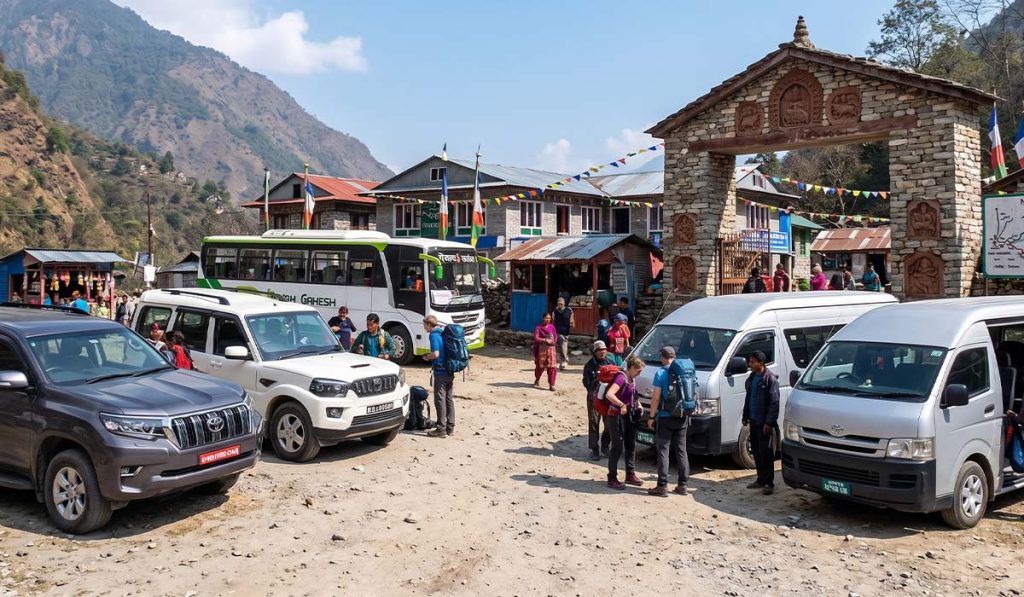
There are three common ways to get to Syabrubesi: local bus, shared jeep, or private jeep. The right choice depends on your budget, comfort level, group size, and tolerance for rough roads.
Local buses are the cheapest option and are used by both locals and budget travelers. They usually leave early and can be crowded. They also tend to be slower, with more stops along the route. If your budget is the top priority and you are comfortable with a less predictable ride, the bus is possible. For some trekkers, though, starting a mountain trek after a packed bus journey is not ideal.
Shared jeeps are a middle-ground option. They are faster than buses in many cases and generally more comfortable, though still far from luxurious on rough road sections. Space can be limited, especially if the vehicle is full and luggage is packed tightly. If you are traveling solo or as a pair and want to manage costs without taking the bus, a shared jeep often makes sense.
Private jeeps are the easiest and most reliable choice for many trekkers. They cost more, but the benefits are clear: flexible departure time, better control over stops, more space, and a smoother overall start to the trip. This matters even more if you are carrying a lot of gear, traveling with family, or trying to keep the first days of the itinerary efficient. On a difficult road, privacy and flexibility have real value.
What the Journey Feels Like
It helps to be honest about this section. The road to Syabrubesi is not the glamorous part of the Langtang experience. It can be dusty, jolting, and tiring. If you are prone to motion sickness, prepare in advance. Keep water accessible, avoid overly heavy meals before departure, and carry any medication you normally use for winding roads.
At the same time, this journey has its own role in the trek. You watch the landscape open up. Rivers begin to dominate the valleys. The settlements become smaller and more mountain-oriented. By the time you reach Syabrubesi, the trek already feels real.
That psychological transition matters, especially for trekkers who have just arrived in Nepal and are still adjusting to the pace, noise, and energy of Kathmandu. The road day is not always comfortable, but it helps bridge the gap between city arrival and trail life.
Should You Stay Overnight in Syabrubesi?
Yes, in most cases you should. Even if the drive goes well, it is better to begin the trek the next morning rather than trying to push onward immediately. Syabrubesi has basic lodges and is well established as a trekking gateway, so spending the night there is normal and practical.
This overnight stop gives you time to reorganize your bag, check trekking essentials, eat properly, and start fresh. It also provides a buffer if the road journey runs late. Starting the hike after a long road transfer often feels harder than people expect, especially if they are already tired from international travel.
For trekkers using a guide or arranged trip, this stage is usually straightforward because transport and accommodation are already coordinated. Independent trekkers should still have a lodge option in mind, especially during busy trekking months.
Best Time to Travel to Syabrubesi
The best road conditions are usually found in the main trekking seasons: spring and autumn. These months tend to offer more stable weather, better visibility, and fewer disruptions than the monsoon period. That does not mean the road is smooth, only that it is generally more manageable.
During the monsoon, rain can affect travel time significantly. Landslides, muddy sections, and temporary delays are real possibilities. Winter travel is possible, but cold weather and local conditions can still affect comfort and timing. If your schedule is short, the shoulder periods and monsoon require extra caution when planning transport days.
This is one reason experienced operators often recommend keeping some flexibility around overland transfers in Nepal. The mountain itinerary may look clear on paper, but road logistics need breathing room.
Key Things to Prepare Before the Drive
A little preparation makes the transfer much easier. Keep your passport, permits, cash, water, snacks, rain layer, warm layer, and any personal medication with you rather than buried deep in your duffel. Roadside food stops are common, but options can be basic and timing is not always ideal.
Mobile network coverage may work in some sections and disappear in others. Do not depend on constant connectivity. It is also wise to charge your phone and power bank before departure. If you are using a camera, keep it easy to reach, because there are stretches where the valley scenery is worth the effort.
If you are joining the trek after landing in Kathmandu the same day or the night before, give yourself enough recovery time. Rushing directly from an international flight into a demanding road transfer is possible, but not always pleasant. One extra night in Kathmandu before departure often improves the overall trip.
Common Mistakes Trekkers Make
The first mistake is underestimating the drive. People focus so much on the trekking days that they treat the approach to Syabrubesi like a minor transfer. It is not minor. It is a full travel day with real logistical weight.
The second mistake is building the itinerary too tightly. If you must be back in Kathmandu by a certain hour, or if you plan to connect immediately to another destination, any road delay becomes stressful. Nepal travel works better when you leave some margin.
The third is choosing transport based only on price. Budget matters, of course, but the cheapest option is not always the best value if it leaves you exhausted before the trek even starts. For some travelers, spending more on a private jeep improves the whole experience.
Final Advice for the Journey to Syabrubesi
Reaching Syabrubesi is part of the Langtang adventure, not just the prelude. Treat it like an important stage of the trek, give it enough time, and choose the transport option that fits your energy, budget, and expectations. Once you arrive, rest well, look up toward the hills, and know that the real trail begins the next morning.

