The right first trek in Nepal is not necessarily the shortest one or the one with the lowest advertised difficulty. A beginner-friendly Himalayan route needs manageable daily distances, reliable lodging, straightforward logistics, and an altitude profile that gives your body time to adjust. The best beginner treks in Nepal combine those practical advantages with the mountain views that make a first visit worthwhile.
“Beginner” also does not mean effortless. Most Nepal treks involve sustained uphill walking, uneven stone steps, changing weather, and several consecutive days on the trail. You do not need mountaineering experience for the routes below, but you do need basic fitness, sensible pacing, and respect for altitude.
What Makes a Nepal Trek Suitable for Beginners?
A good first Himalayan trek usually stays below extreme altitude, has established teahouses, and allows enough flexibility to add a rest day if needed. Routes close to Pokhara or Kathmandu are generally easier to organize, while more remote regions demand extra planning and a higher tolerance for rough roads and changing flights.
Altitude deserves the most attention. Acute mountain sickness can affect fit hikers as well as first-time trekkers. A route that reaches 10,000 feet may feel very different from one that climbs beyond 15,000 feet, even if the daily mileage looks similar. For a first trek, choose an itinerary with gradual ascent and avoid treating the highest viewpoint as a race.
Trail surface matters, too. Many popular beginner routes include long stair sections, particularly in the Annapurna region. A trek can be low in altitude but still demanding on knees and calves. Trekking poles and focused training on hills or stair climbs make a meaningful difference.
7 Best Beginner Treks in Nepal
1. Ghorepani Poon Hill Trek
The Ghorepani Poon Hill Trek is one of the strongest choices for a first-time trekker with limited time. Most itineraries take four to five days, beginning near Pokhara and using a well-established network of teahouses. The sunrise view from Poon Hill includes Dhaulagiri, Annapurna South, Machhapuchhre, and other major peaks, providing a genuine Himalayan experience without a long expedition-style commitment.
The main trade-off is terrain. Stone staircases around Ulleri and other villages can be strenuous, especially on the ascent. The maximum sleeping altitude is moderate compared with high Himalayan routes, so altitude risk is lower, but the trek still requires steady cardiovascular fitness. Spring and fall are the most reliable seasons, while winter can bring cold mornings and occasional snow.
2. Mardi Himal Trek
Mardi Himal offers a more ridge-focused experience than Poon Hill, with forests, open slopes, and close views of Machhapuchhre. It usually takes five to seven days, and the route is compact enough for travelers who want a higher mountain setting without committing to a two-week trek.
It is suitable for active beginners, not completely unprepared walkers. The climb toward High Camp and the viewpoint is steep, and the trail can be muddy in monsoon conditions or icy in winter. Sleeping elevations are higher than on Poon Hill, so a gradual itinerary is preferable. Choose this trek if you are comfortable with several demanding uphill days and want a quieter alternative to the busiest Annapurna trails.
3. Langtang Valley Trek
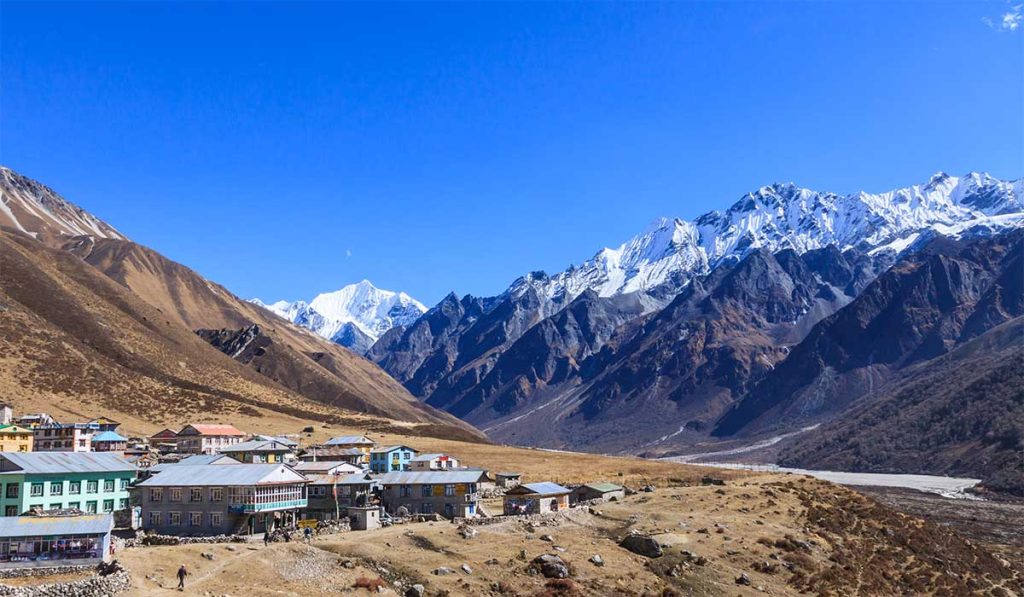
The Langtang Valley Trek is an excellent first longer trek for hikers who want to spend about a week in the Himalaya. The route follows the Langtang Khola through forest and villages before opening into a broad high valley below Langtang Lirung. Teahouses are common, daily stages are logical, and the trek is accessible by road from Kathmandu.
The standard route reaches Kyanjin Gompa at roughly 12,500 feet, making acclimatization more relevant than on Poon Hill. Most beginners can manage it with a conservative ascent, hydration, adequate food intake, and a willingness to stop if symptoms develop. An optional hike to Kyanjin Ri is rewarding but steep. It should be treated as an acclimatized day hike, not an obligation.
4. Pikey Peak Trek
Pikey Peak is a practical choice for travelers who want an Everest-region panorama without the cost, flight dependency, and higher altitude of the Everest Base Camp route. A typical itinerary lasts five to seven days and reaches a summit viewpoint around 13,400 feet, with broad views toward Everest, Makalu, Kanchenjunga, and the Khumbu peaks in clear weather.
This is a quieter trek with simpler facilities than the main Everest corridor. That appeal comes with a trade-off: road journeys can be long and rough, and daily accommodation choices may be more limited. The walking is generally manageable for beginners who have trained, but the summit morning is often cold and starts before dawn. Pack proper insulating layers rather than relying on a lightweight sightseeing wardrobe.
5. Helambu Trek
Helambu is one of the closest multi-day trekking areas to Kathmandu, making it useful for first-time visitors who want to avoid domestic flights and lengthy transfers. The route passes through Sherpa and Hyolmo communities, terraced hillsides, and forested trails, usually over five to seven days.
Its relatively modest elevation makes Helambu a sensible option for travelers concerned about altitude. However, it should not be dismissed as an easy stroll. The terrain includes repeated climbs and descents, and trail conditions can vary by season. It is best for beginners who value cultural villages and moderate mountain scenery more than standing directly below the highest peaks.
6. Australian Camp and Dhampus Trek
For travelers with only two or three days, the Australian Camp and Dhampus route near Pokhara is an appropriate introduction to trekking in Nepal. It provides village stays, forest paths, and views toward the Annapurna range without significant altitude exposure. It can also work as a warm-up before a longer trek or as a test of how your boots, pack, and knees respond to Nepal’s stone trails.
This is not the trek to choose if your goal is a remote Himalayan environment. Its strength is ease of access and low commitment. Families, cautious first-timers, and travelers arriving from a long international flight may find it a more realistic starting point than immediately heading to a high viewpoint.
7. Ghandruk Trek
The Ghandruk Trek is another short Annapurna-region option, often completed in three to five days. The Gurung village of Ghandruk has strong views of Annapurna South, Hiunchuli, and Machhapuchhre, along with comfortable teahouse infrastructure and a relatively simple approach from Pokhara.
The route is beginner-friendly from an altitude perspective, but its stairs are substantial. Descents can be particularly hard on untrained knees, so do not assume a downhill day will be easy. This trek suits travelers who want a cultural experience and major mountain views but are not ready for a week at higher elevations.
Choosing Between the Best Beginner Treks in Nepal
If you have four or five days and want the safest all-around first choice, Poon Hill is difficult to beat. It has dependable facilities, moderate elevation, and a clear sense of achievement. If you have a week and stronger fitness, Langtang Valley offers a fuller Himalayan journey with more time in high mountain terrain.
Mardi Himal is best for hikers who want dramatic ridgeline scenery and can handle steeper trails. Pikey Peak suits those drawn to Everest views but not the intensity of the classic Khumbu trek. Helambu, Ghandruk, and Australian Camp are sensible choices when logistics, altitude caution, or a shorter schedule matter more than reaching a high pass.
Do not select solely by maximum elevation or social media photos. Ask how many hours you will walk each day, where you will sleep, how quickly the itinerary gains elevation, and whether there is time to adjust if weather or health changes the plan. A slightly longer itinerary is often safer and more enjoyable than an aggressive schedule.
Preparation That Matters Before Your First Trek
Train for the movement you will actually do. For six to eight weeks before departure, combine regular walking or hiking with uphill sessions, stair climbing, and strength work for your legs and core. Build toward carrying a light daypack for several hours. You do not need to be an elite athlete, but arriving without any hill training makes the first two days much harder than necessary.
Bring broken-in hiking boots with reliable traction, a waterproof shell, warm layers, sun protection, and a properly fitted daypack. Temperatures can shift quickly after sunset, even on lower routes. Travel insurance should cover trekking at your planned maximum elevation, medical treatment, and helicopter evacuation. Read the policy wording rather than assuming all adventure activities are included.
Permits, guide requirements, and local access rules can change. Confirm current requirements before finalizing transportation or an independent itinerary. A guide can be particularly helpful for first-time visitors who want support with route decisions, teahouse coordination, weather changes, and recognizing when altitude symptoms require a change of plan.
Your first Nepal trek should leave you tired, impressed, and eager for another trail – not depleted by an itinerary that was too ambitious. Choose the route that fits your current conditioning and available time, then give yourself permission to walk slowly enough to enjoy the mountains safely.