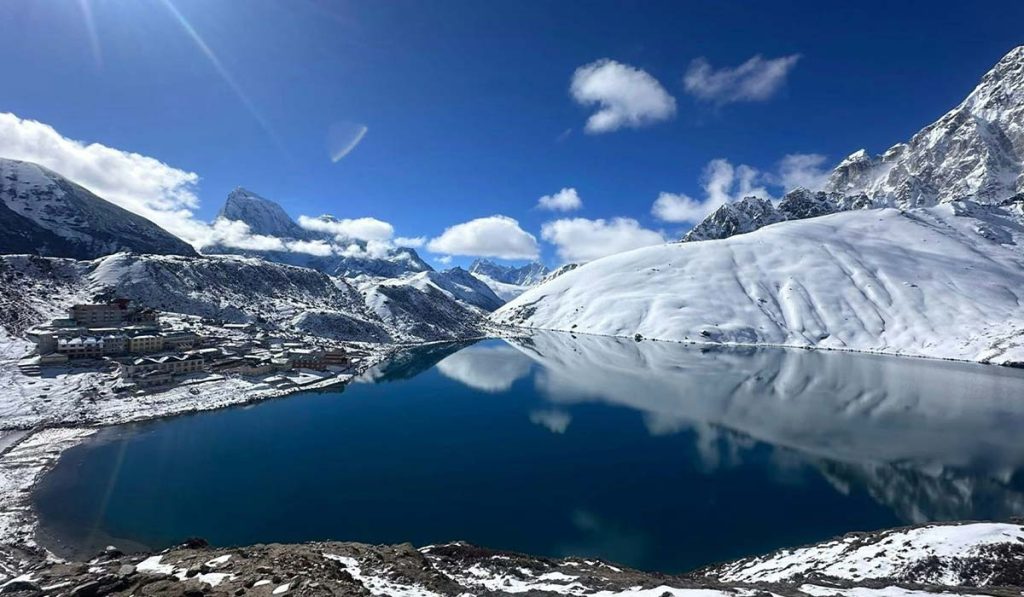
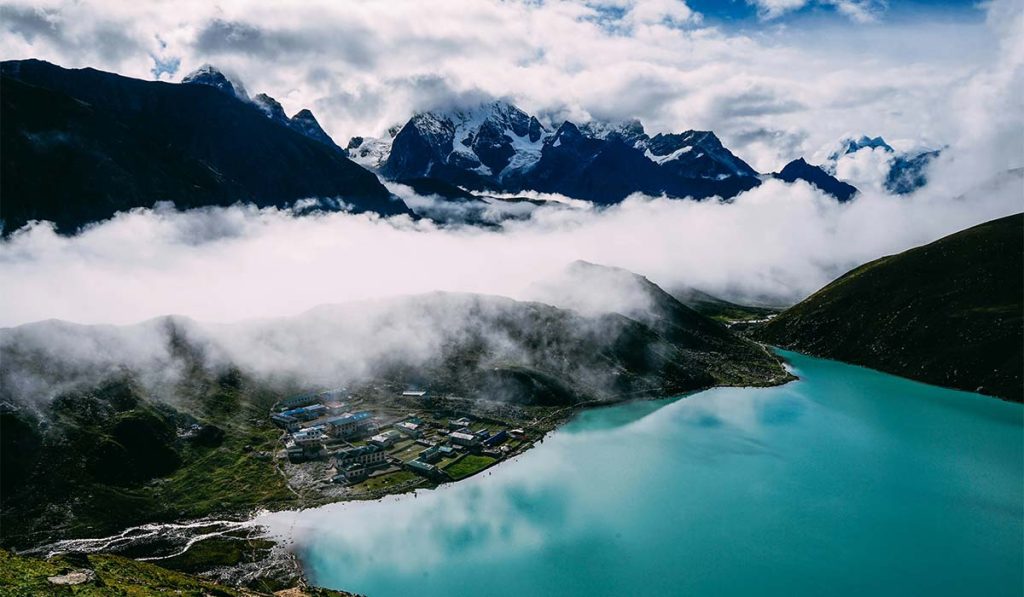
At 5,357 meters, Climbing Gokyo Ri is one of the most rewarding short ascents in the Everest region – and one of the most underestimated. The trail is not technical, but the altitude is serious, the early morning cold can be sharp, and even strong trekkers feel the effort on the final steep sections. If you are adding Gokyo Ri to your trek plan, the key is not just motivation. It is timing, acclimatization, and knowing what the climb actually demands.
For many trekkers, Gokyo Ri becomes the highlight of the entire Gokyo Lake Trek route. The summit view opens toward Everest, Lhotse, Makalu, and Cho Oyu, with the turquoise Gokyo Lakes spread below and the Ngozumpa Glacier stretching across the valley. It gives a wider and quieter mountain panorama than many first-time trekkers expect. But the view only feels good if you reach the top safely and with enough energy to enjoy it.
How difficult is Climbing Gokyo Ri?
Climbing Gokyo Ri is best described as a strenuous high-altitude side trip rather than a technical climb. You do not need ropes, crampons, or mountaineering experience in normal trekking conditions. What you do need is decent fitness, steady pacing, and proper acclimatization before attempting the summit.
The route usually starts from Gokyo village at around 4,790 meters. That means you begin already at a high sleeping altitude. From there, the trail climbs roughly 550 to 600 vertical meters to the top. On paper, that may not sound extreme. At this elevation, it feels much harder than the same gain at lower altitude.
The trail is steep in sections, especially above the lower slopes where the path becomes more exposed and rocky. Trekkers often notice that the first half feels manageable, while the upper section becomes slower due to thinner air and colder wind. If you have acclimatized well in Namche, Machhermo, or by spending an extra night in Gokyo, the climb is very realistic for most trekkers. If you are rushing the itinerary, even a short summit can become difficult.
Best time for the Gokyo Ri climb
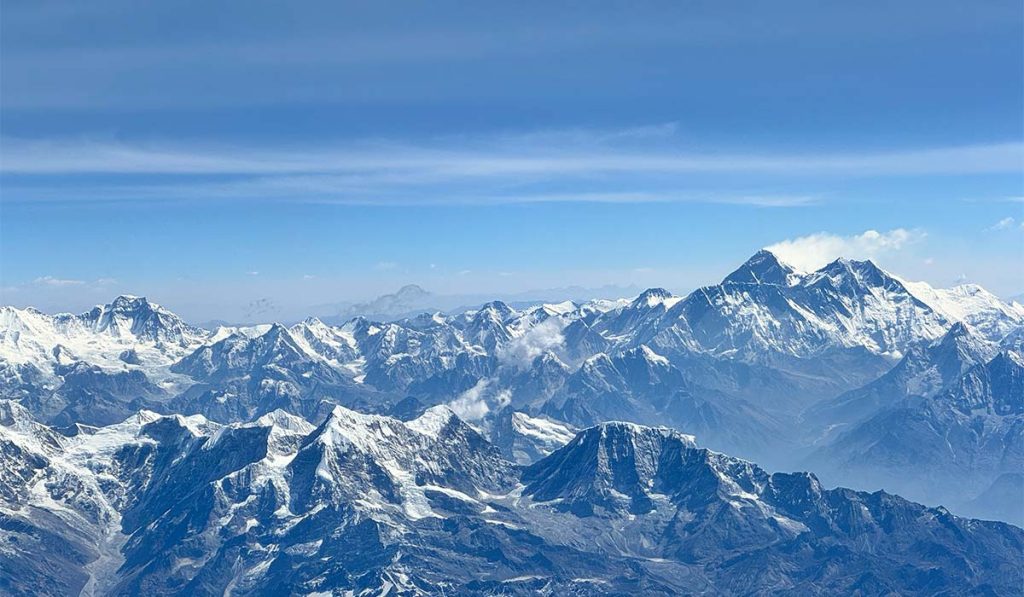
The best seasons are spring from March to May and autumn from late September to November. These months usually offer the clearest mountain views, more stable weather, and better trail conditions.
Spring is excellent if you want slightly warmer mornings and colorful lower trails. Snow can still remain on some upper sections, especially early in the season, but the route is generally straightforward. Autumn is often the clearest season for long mountain views. The air tends to be crisp, and the visibility from the summit can be outstanding.
Winter climbs are possible, but they are colder and more demanding. Snow and ice may make the trail slower, and frozen conditions can affect comfort and safety. During the monsoon, cloud cover often blocks the main viewpoint, and wet trails can reduce the quality of the experience. If your main goal is the summit panorama, clear-season timing matters a lot.
When to start the climb
Most trekkers begin very early, usually before sunrise. This is the right approach for two reasons. First, morning conditions are often clearer, giving you the best chance of open mountain views. Second, winds can become stronger later in the day, especially on exposed ridges and viewpoints.
A typical summit push from Gokyo takes around 2 to 4 hours up, depending on fitness, altitude response, and trail conditions. The descent often takes 1.5 to 2.5 hours. Some trekkers return to Gokyo for breakfast and rest, while others continue the day’s trek afterward if the itinerary allows. That second option should be chosen carefully. After a hard early climb at over 5,000 meters, energy levels can drop quickly.
Route and trail conditions
The standard route starts directly above Gokyo village. At first, the trail rises on a clear hillside path. As you gain height, the path becomes steeper and rockier, with a few switchbacks and loose sections. There are no technical obstacles in normal conditions, but you should still watch your footing, especially on descent.
One mistake trekkers make is going too fast in the first 30 minutes because the summit looks close. At this altitude, a fast start often leads to heavy breathing, fatigue, and unnecessary headache. A better strategy is to keep a slow, even rhythm from the beginning. Rest briefly when needed, but do not sit too long in the cold unless you are layering up properly.
The upper section offers increasingly wide views over the lakes and glacier. On a clear day, this part of the climb is both physically tough and mentally rewarding. The summit itself is a rocky viewpoint marked by prayer flags and panoramic views in nearly every direction.
Altitude and acclimatization matter more than fitness
This is the most important point for anyone planning Gokyo Ri. Strong hikers from low elevation often assume they can simply push through because the climb is short. That is not how altitude works.
If you have ascended too quickly, symptoms such as headache, nausea, poor sleep, dizziness, or loss of appetite can make Climbing Gokyo Ri unpleasant or unsafe. Even if symptoms are mild in Gokyo village, the additional elevation gain can make them worse. The summit is optional. Your health is not.
A good itinerary usually includes gradual ascent days and at least one acclimatization-focused day before sleeping at Gokyo. Many trekkers come via Dole and Machhermo, which helps the body adjust naturally. If you are already feeling weak, sleeping badly, or showing signs of altitude sickness, it is better to rest than force a summit attempt.
What to wear and carry for the ascent
Because the climb is short, some trekkers underestimate the need for proper layers. Early mornings at this altitude can be bitterly cold, especially with wind. Start with warm layers that you can adjust as the sun rises.
A down jacket or warm insulated layer, base layer, fleece, gloves, hat, sunglasses, and good trekking boots are standard. Carry water in an insulated bottle if possible, since freezing conditions are common in colder months. A headlamp is necessary for pre-dawn starts. Trekking poles are very helpful, especially on the descent when knees and balance are tested more than expected.
You do not need to carry your full trekking bag. Most people leave larger gear at the lodge in Gokyo and climb with a light daypack. That alone can make the ascent more comfortable.
Is Gokyo Ri harder than Kala Patthar?
Trekkers often compare these two Everest viewpoints. The answer depends on your route, your acclimatization, and how your body handles altitude.
Kala Patthar is slightly higher, but many trekkers attempt it after several days of steady altitude gain through the Everest Base Camp route. Gokyo Ri is lower, yet it can feel equally hard because it is very steep from a high starting point and often done in cold morning conditions. Some trekkers actually find Gokyo Ri more enjoyable because the trail is quieter and the summit view includes the lakes and glacier, not just the Everest side.
If you are choosing only one, the better option depends on your itinerary priorities. If you want a more varied landscape and a calmer viewpoint experience, Gokyo Ri has strong appeal.
Can beginners climb Gokyo Ri?
Yes, many first-time trekkers reach the summit successfully. The key is not previous Himalayan experience but proper preparation. A beginner who follows a sensible itinerary, walks slowly, stays hydrated, and listens to altitude symptoms has a much better chance than a fit but rushed trekker.
Training before the trip should focus on sustained uphill walking, stair climbing, and building comfort with several hours of movement on consecutive days. You do not need elite endurance. You need consistency, patience, and realistic expectations.
For trekkers planning the route with local support, this is where experienced advice makes a difference. A guide who understands pace, weather, and altitude decision-making can help turn a hard climb into a safe and memorable one.
What makes the summit worth it
Many Himalayan viewpoints are judged only by whether Everest is visible. Gokyo Ri offers more than that. From the top, you see a full high-mountain landscape – giant peaks, glacial terrain, frozen valleys, and the chain of lakes below Gokyo. It feels less crowded, more spacious, and in many ways more complete than viewpoints that focus on a single mountain.
That is why so many trekkers remember this climb so clearly. It is not just about reaching 5,357 meters. It is the feeling of standing above the lakes after earning every step in thin air. If you plan carefully, respect the altitude, and choose the right weather window, Gokyo Ri can be one of the strongest viewpoint days anywhere in the Everest region.