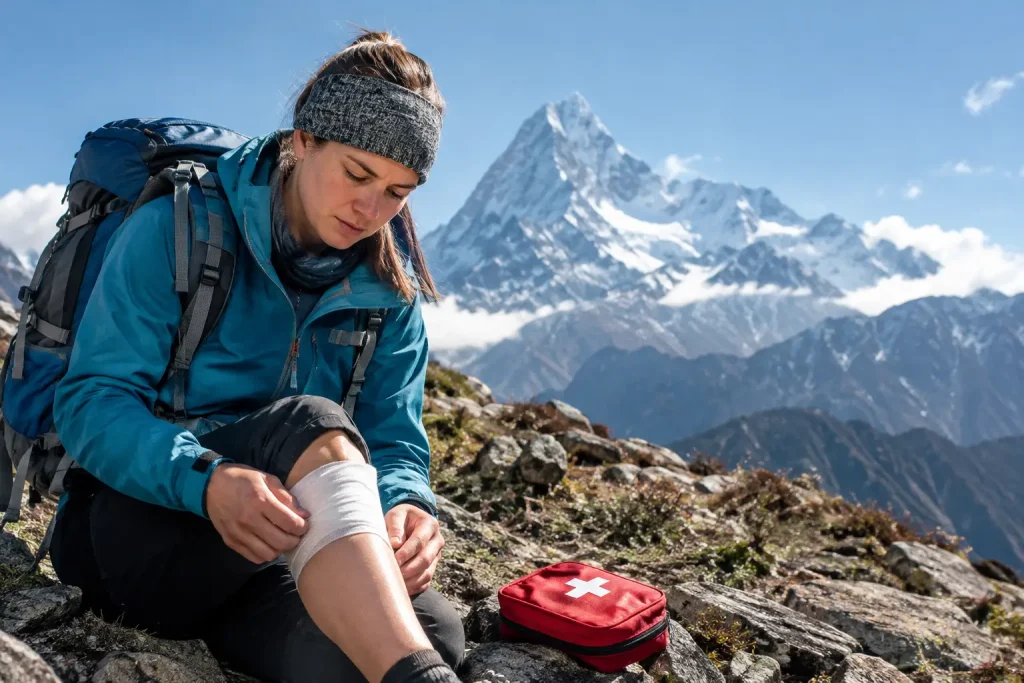
A teahouse bedroom in the Everest, Langtang, or Annapurna region can feel surprisingly cold even when the afternoon outside is sunny. So, how cold are teahouses? On most higher-elevation treks in Nepal, expect unheated bedrooms that may hover near freezing overnight, particularly from late fall through early spring. The dining room is usually warmer, but only while the stove is burning.
That reality does not make teahouse trekking uncomfortable by default. It means your sleeping bag, base layers, and expectations matter more than the room itself. Trekkers who prepare for cold nights generally sleep well. Those relying on thin blankets or a summer-weight sleeping bag often have a very long night.
How Cold Are Teahouses at Night?
Most teahouse bedrooms do not have central heating, radiators, or insulated walls. Rooms are typically simple wooden or stone structures with two single beds, foam mattresses, pillows, blankets, and a shared bathroom down the hall. At higher elevations, the indoor temperature commonly follows the outdoor temperature closely once the sun goes down.
On popular Nepal treks, a realistic overnight range is around 35 to 50 F (2 to 10 C) in lower villages and roughly 25 to 40 F (-4 to 4 C) in high-altitude teahouses. Rooms can occasionally fall below freezing during cold spells, especially if windows are not sealed well or the building is exposed to wind.
The coldest indoor nights tend to occur above 13,000 feet (4,000 meters), where villages such as Dingboche, Lobuche, Gorak Shep, Gokyo, Thorong Phedi, and High Camp sit in exposed alpine terrain. At these elevations, outside temperatures can drop sharply after sunset. A room with a closed door and a few blankets may be less cold than outdoors, but it will not feel heated.
The Dining Room Is Warmer, but Not All Night
The dining room is the social center of most teahouses. In the evening, owners often light a stove fueled by yak dung, wood, or another locally available fuel. This creates a noticeably warmer place to eat, read, charge devices, and talk with other trekkers.
The catch is timing. The stove is usually lit around dinner and may be turned off once guests go to bed. Fuel is costly and difficult to transport to high villages, so it is not reasonable to expect heat throughout the night. By morning, the dining room may be nearly as cold as the bedrooms.
Do not sleep in the dining room unless a lodge specifically permits it. It can be tempting during a cold night, but dining rooms are often closed, cleaned, or used by staff after dinner. More importantly, using an indoor stove area as a sleeping space can create safety concerns.
What Determines Teahouse Temperature?
Elevation is the largest factor, but it is not the only one. A lodge at 11,500 feet in a sunny, sheltered village may feel warmer than a lodge at the same elevation on a windy ridge. Construction quality also varies substantially between teahouses.
Several conditions affect how cold your room feels:
- Season: December through February brings the coldest nights. October, November, March, and early April can also be very cold above the tree line.
- Altitude and exposure: Higher, windier settlements cool quickly after sunset. Clear skies often mean colder nights because heat escapes rapidly.
- Building materials: Stone walls hold cold, while older wooden structures can have gaps around doors and windows. Newer lodges may be better sealed, but there is no universal standard.
- Room location: Interior rooms, upstairs rooms, and rooms beside an occupied space can be warmer than a corner room facing the wind.
- Weather: Snow, cloud, wind, and a prolonged storm can make a normally manageable room feel much colder.
It also depends on your own metabolism. Trekkers arriving tired, underfed, dehydrated, or chilled from the day’s hike tend to feel cold more intensely. At altitude, poor sleep and reduced appetite can compound the problem.
Cold Teahouses by Trek and Season
The Everest region generally has the coldest teahouse conditions among Nepal’s most popular lodge treks because routes reach high, exposed villages. On the Everest Base Camp and Gokyo Lakes routes, cold bedrooms become routine above Namche Bazaar, with the biggest difference felt from Dingboche or Dole onward. Gorak Shep and Gokyo can be particularly cold in the shoulder seasons.
The Annapurna region varies more. Poon Hill and lower Annapurna routes have chilly mornings, especially in Ghorepani, but many nights occur at lower elevation and are less severe. The Annapurna Circuit becomes much colder as it approaches Manang, Yak Kharka, Thorong Phedi, and Thorong La. Mardi Himal High Camp can also be cold because of its exposed elevation and basic facilities.
Langtang is often more moderate than Everest at comparable trekking stages, yet Kyanjin Gompa can still deliver freezing nights in late fall, winter, and early spring. Pikey Peak has cold, exposed overnight stops despite a lower maximum elevation than Everest Base Camp. The key planning lesson is simple: route elevation matters, but the coldest overnight stop matters more than the trek’s average elevation.
The Sleeping Bag Rating You Actually Need
For most spring and fall lodge treks, bring a sleeping bag with a comfort rating around 15 to 25 F (-9 to -4 C). The comfort rating is more useful than the lower limit or survival rating printed on some bags. If a bag is rated only for survival at 15 F, it may not keep an average sleeper comfortable at that temperature.
For winter trekking or routes with repeated nights above 14,000 feet, a sleeping bag with a comfort rating near 0 to 10 F (-18 to -12 C) is a safer choice. Some teahouses provide thick blankets, but do not plan your sleep system around them. Blankets vary in cleanliness, weight, and availability during peak season.
A sleeping bag liner can add a small amount of warmth and keeps the inside of a rented bag cleaner. It is useful, but it is not a substitute for an adequately rated sleeping bag. A thin liner will not turn a 40 F bag into a reliable high-altitude system.
How to Stay Warm in a Teahouse Room
Your goal is to enter the sleeping bag warm and keep body heat from escaping. Put on dry base layers before bed, along with warm socks and a beanie. If your hiking layers are damp with sweat or snow, do not wear them to sleep. Moisture makes cold feel much worse.
Eat a full dinner and drink enough water throughout the day. Your body needs calories and hydration to produce heat. Avoid excessive alcohol, which can make you feel warm briefly while increasing heat loss and worsening sleep and acclimatization.
Fill a durable bottle with hot water if the lodge can provide it, then place it inside your sleeping bag near your feet. Check that the lid seals completely and keep the bottle inside a sock or cover to prevent burns. This is one of the most effective low-tech ways to warm a bed. Keep tomorrow’s clothing inside the bag too, so cold pants and socks are not your first challenge in the morning.
Do not seal your face deep inside the sleeping bag all night. Your breath adds condensation, which can dampen the insulation. Instead, use the hood properly, wear a hat, and leave a small opening for airflow.
Practical Gear Beyond the Sleeping Bag
A warm sleeping bag does most of the work, but a few small items improve comfort significantly. Pack thermal base layers, a fleece or light insulated jacket for evening use, wool socks reserved for sleeping, a beanie, and gloves for early mornings. A headlamp is essential because teahouse rooms and hallways may have limited lighting or power cuts.
Earplugs can be nearly as valuable as insulation. Teahouse walls are thin, and people often wake early for sunrise hikes, flights, or passes. Better sleep supports recovery and altitude acclimatization, which is more valuable than carrying unnecessary luxury items.
If you rent gear in Kathmandu, inspect the sleeping bag before leaving the city. Check the zipper, loft, odor, and stated temperature rating. Ask whether the rating is a comfort rating or a lower limit. A visibly flattened bag provides less insulation than its label suggests.
When Cold Becomes a Safety Concern
Feeling chilly in bed is normal. Persistent shivering that does not improve with dry layers, food, warm fluids, and an adequate sleeping bag is not something to ignore. The same applies if cold exposure occurs alongside confusion, poor coordination, extreme fatigue, or inability to warm up.
At altitude, do not assume every symptom is caused by the cold. Headache, nausea, dizziness, shortness of breath at rest, and worsening weakness can indicate altitude illness. Tell your guide or lodge staff, stop ascending, and follow an appropriate acclimatization plan. A warm room would be pleasant, but it is not a treatment for altitude sickness.
Teahouse nights are part of the Himalayan trekking experience: basic, cold, and often quieter than expected once the stove goes out. Plan for the highest and coldest place you will sleep, not the mild weather you see at the trailhead, and your mornings will start with far more energy for the trail ahead.