
One of the most common surprises on the Langtang route is that you can stay more connected than many trekkers expect – but not as consistently as they hope. If you are researching Internet, Electricity & Connectivity Langtang trek logistics, the short answer is this: yes, you will usually find phone signal, charging, and Wi-Fi at several stops, but quality drops with altitude, weather, crowd levels, and the specific village you are sleeping in.
That matters because many trekkers now travel with more than just a camera and a headlamp. You may need to message family, check weather updates, access online payments, recharge a phone, charge camera batteries, or stay available for work emergencies. In Langtang, these things are possible, but you should never plan as if power and internet will be guaranteed every evening.
What to expect on the Langtang trek
Compared with some remote trekking areas in Nepal, Langtang is relatively accessible. The trail is shorter to reach from Kathmandu, the teahouse network is established, and many villages have adapted to the needs of modern trekkers. That gives Langtang a practical advantage if connectivity matters to you.
Still, this is a mountain trail, not a city corridor. After leaving Kathmandu and driving toward Syabrubesi, service becomes less predictable. Once you begin trekking, electricity and internet usually depend on local infrastructure, solar backup, small hydropower where available, weather conditions, and how many people are using the same resources.
In lower and mid-route villages, you will often find enough access to keep your phone alive and send basic messages. In higher places, expect slower service, occasional outages, and teahouses that charge extra for every device.
Internet, Electricity & Connectivity on the Langtang trek by area
In Syabrubesi, where many trekkers start or finish, you can usually expect the best connectivity on the route outside Kathmandu. Mobile data may work reasonably well, and some lodges offer Wi-Fi. Charging devices is generally straightforward, though blackouts can still happen.
As you move through Lama Hotel and onward toward Langtang Village, the situation becomes more mixed. Some teahouses provide Wi-Fi, but speed can be slow and reliability uneven. Mobile networks may work in one lodge and fail completely a short distance later. Charging is usually available in dining halls or at reception areas, often for a fee.
In Langtang Village and Kyanjin Gompa, electricity is commonly available through local systems and solar support, but trekkers should not assume unlimited power. If the lodge is full, charging can take time because many people need the same sockets. Wi-Fi may be available in some teahouses, but it is often best for messaging rather than video calls, large uploads, or steady remote work.
If you take acclimatization hikes above your overnight stop, such as toward Kyanjin Ri or Tserko Ri, do not expect meaningful connectivity on the trail itself. Download anything important in advance.
Mobile network coverage in Langtang
The two networks trekkers usually rely on in Nepal are NTC and Ncell. In Langtang, NTC is often considered the more dependable option in mountain areas, but coverage can still be patchy. Ncell may work well in some lower sections and poorly in others. Neither should be treated as fully reliable throughout the trek.
If staying reachable is important, buying a local SIM card in Kathmandu is usually the smartest choice. International roaming is expensive and often less dependable. A local SIM gives you the best chance of sending texts, making short calls, and using limited mobile data where signal exists.
That said, signal strength changes quickly in the mountains. A room with thick stone walls may block service. Step outside and you may suddenly get a usable connection. Cloud cover, rain, snow, and congestion also affect performance. This is why experienced trekkers treat mobile coverage as a bonus, not a guarantee.
Wi-Fi in Langtang teahouses
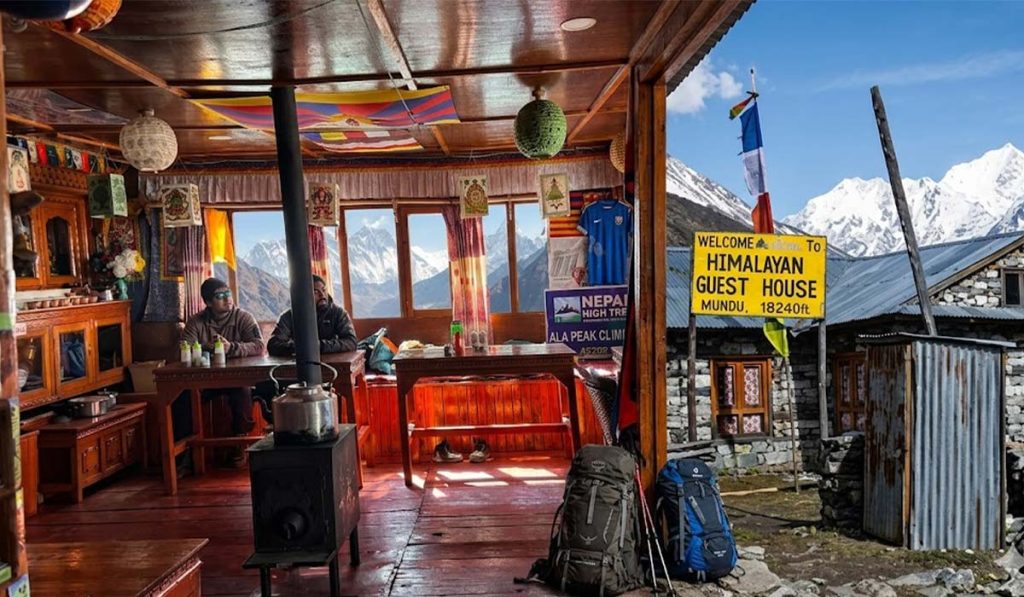
Many trekkers ask whether Langtang has Wi-Fi in every lodge. The honest answer is no, but many teahouses on the main route do offer some form of internet access. Usually it is paid Wi-Fi, and the quality depends on the village and provider.
In some places, the connection is good enough for WhatsApp, email, and checking basic route information. In others, even opening a simple website can take time. Video meetings, cloud backups, and streaming are not realistic expectations in most lodges.
Teahouse owners often pay a high cost to maintain internet access in the mountains. So when a lodge charges for Wi-Fi, that is normal. It is also common for Wi-Fi to work better early in the morning or later at night when fewer people are online.
If you absolutely need regular communication, carry both a local SIM and enough cash to pay for lodge Wi-Fi. Depending on only one method is risky.
Electricity and charging devices on the trail
Electricity on the Langtang trek is available in many overnight stops, but access is limited compared with hotels in cities. Some lodges have in-room charging points, while others only allow charging in shared dining spaces. In busy season, you may need to wait your turn.
Most teahouses charge per device or per hour. The higher you go, the more likely you are to pay extra. Costs are not extreme, but they add up if you are charging a phone, camera batteries, smartwatch, power bank, and maybe a drone battery where permitted.
A bigger issue than price is timing. Power may be available only during certain parts of the evening. Solar-backed systems can also be affected by poor weather. If several cloudy days stack up, charging availability can become tighter than usual.
For that reason, carry a good-quality power bank. It gives you a buffer if your lodge has no free socket, the power cuts out, or your device charges too slowly in cold conditions. Cold weather also drains batteries faster, especially at higher altitude. Keep phones and spare batteries inside your sleeping bag or down jacket at night if temperatures drop sharply.
Practical tips to stay connected without stress
The best approach in Langtang is simple: plan for partial access, not full convenience. Before leaving Kathmandu, buy a local SIM, charge every device fully, download offline maps, save booking details as screenshots, and let family know that communication may be irregular.
Bring a power bank with enough capacity for at least two or three full phone charges. If you use a camera heavily, carry spare batteries. A universal adapter is useful, but in Nepal the plug type is usually manageable at most lodges if you already carry a standard travel adapter.
Try to charge devices whenever the chance appears rather than waiting until the battery is nearly dead. On mountain treks, the next charging stop may not be as reliable as the previous one.
Also, keep your needs realistic. If your priority is checking in with home once a day, Langtang usually supports that. If your priority is uploading videos, joining work calls, and editing in the cloud each night, the route may feel frustrating.
Trade-offs trekkers should understand
Langtang is a good choice for trekkers who want a Himalayan experience without being completely cut off. That is one of its strengths. But there is a trade-off. The more you expect mountain lodges to function like urban accommodations, the more disappointed you may feel.
Reliable electricity and internet are helpful, especially for safety and family contact. But they are secondary systems in a high-altitude environment where weather, terrain, and basic logistics still come first. Teahouses prioritize heating, meals, and overnight comfort before strong internet performance.
This is also why flexibility matters. If one village has poor Wi-Fi or limited charging, it does not mean the whole trek lacks connectivity. It usually means conditions changed that day. A practical mindset helps far more than chasing perfect service.
Is Langtang suitable if you need to be reachable?
For most trekkers, yes. If you only need occasional messages, short calls, map access, and device charging, Langtang is usually manageable. It is one of the more realistic trekking routes in Nepal for travelers who want some contact with home while still enjoying a genuine mountain trail.
If your work or personal situation requires uninterrupted internet, then no Himalayan teahouse trek is the right place to depend on that standard. In that case, build in extra buffer days before and after the trek or tell people in advance that your availability will be limited.
That is the right way to think about connectivity in Langtang. You can usually stay in touch, keep your essentials charged, and access internet from time to time. Just prepare well, carry backup power, and treat every good signal on the trail as useful – not owed.

