
Many trekkers ask about the Highest Point of the Langtang trek because altitude often decides whether the trip feels enjoyable or exhausting. In Langtang, the answer depends on your exact itinerary. For most trekkers, the highest sleeping point is Kyanjin Gompa at 3,870 meters, while the highest hiking point is usually Kyanjin Ri or Tserko Ri.
That difference matters. Sleeping altitude affects acclimatization and safety, but hiking altitude shapes the hardest and most rewarding day of the trek. If you are planning Langtang Valley, you should know both.
What is the highest point of the Langtang trek?
On the standard Langtang Valley Trek, the highest overnight stop is Kyanjin Gompa at 3,870 meters (12,697 feet). This is the final settlement on the classic route and the place where most trekkers spend one or two nights.
From Kyanjin Gompa, trekkers usually take an acclimatization hike to one of two viewpoints. Kyanjin Ri is commonly reached at around 4,773 meters (15,659 feet), although exact figures vary slightly depending on the point you stand on. Tserko Ri is higher, at about 4,984 meters (16,352 feet), and is often considered the highest point reached on the Langtang trek if that side trip is included.
So if someone asks for the Highest Point of the Langtang trek, the practical answer is this: Kyanjin Gompa is the highest place you sleep, and Tserko Ri is usually the highest place you hike.
Why the highest point can vary
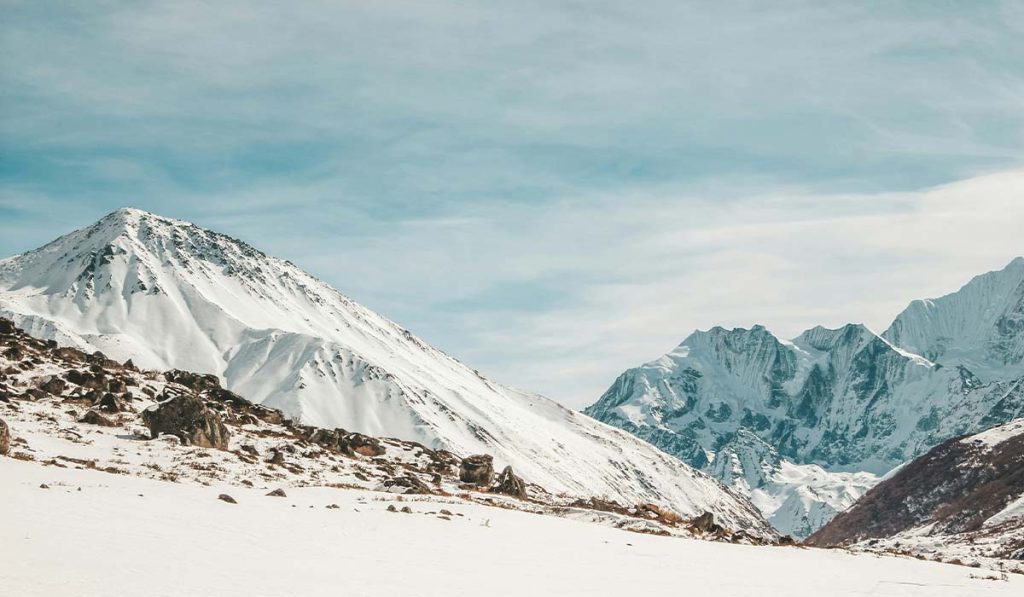
Not every Langtang itinerary is the same. Some trekkers complete only the main valley route to Kyanjin Gompa and return. Others add Kyanjin Ri for acclimatization and panoramic views. Stronger trekkers with a good weather window often go to Tserko Ri, which is higher and more demanding.
This is why you may see different altitude numbers online. Some sources refer to the highest overnight altitude. Others refer to the highest viewpoint. Both are correct, but they are describing different parts of the trek.
If your itinerary includes Gosainkunda or the Laurebina La crossing as part of a longer Langtang region trek, then your highest point may be different again. But for the classic Langtang Valley Trek, Tserko Ri is the top altitude most trekkers aim for.
Kyanjin Ri or Tserko Ri: which one is higher?
Tserko Ri is higher than Kyanjin Ri and gives a bigger altitude gain from Kyanjin Gompa. It is also the tougher climb. The trail is longer, the air feels thinner, and the final sections can be tiring, especially if you have not adjusted well to altitude.
Kyanjin Ri is shorter and more accessible, which makes it a better choice for many trekkers. You still get outstanding mountain views, including Langtang Lirung and the surrounding peaks, without pushing as high as Tserko Ri. For some people, this is the smarter option, especially if they have mild headache, poor sleep, or low energy after arriving at Kyanjin.
In the field, the best choice is not always the highest one. It depends on your acclimatization, weather, pace, and overall condition.
How difficult is the highest section?
The route to Kyanjin Gompa is manageable for most reasonably fit trekkers, but the air becomes noticeably thinner above 3,000 meters. Once you start hiking to Kyanjin Ri or Tserko Ri, the challenge shifts from trail distance to altitude and steepness.
Tserko Ri is the more demanding climb because you gain over 1,100 meters from Kyanjin Gompa and return the same day. Even strong hikers can feel slow there. The trail is not technical in normal conditions, but it is physically demanding. Early starts are best because mornings are clearer and winds are often lighter.
Kyanjin Ri is shorter but still steep. You should not underestimate it just because it is the easier option.
Altitude safety at the highest point of the Langtang trek
This is where practical planning matters more than ambition. Many trekkers do well in Langtang because the itinerary rises gradually through Lama Hotel, Langtang village, and Kyanjin Gompa. Even so, altitude sickness can happen to anyone.
The most common early signs are headache, loss of appetite, nausea, unusual fatigue, and poor sleep. If symptoms worsen at Kyanjin Gompa, pushing higher is a mistake. A viewpoint can wait. Your body may need rest, or you may need to descend.
Good acclimatization comes from a steady pace, proper hydration, enough food, and not racing uphill. Adding an extra night at Kyanjin Gompa can be a very sensible decision, especially for first-time high-altitude trekkers.
What should trekkers expect at the top?
On a clear day, the reward is enormous. From Kyanjin Ri or Tserko Ri, you get wide Himalayan views, glacial terrain, and a much better sense of the scale of the Langtang Valley than you do from the main trail alone.
But the top can also be cold, windy, and exposed. Weather changes fast in the mountains. A sunny morning in Kyanjin can turn into cloud, snow flurries, or strong wind higher up. That is why warm layers, gloves, sun protection, and enough water matter even on a short side hike.
For most trekkers, the Highest Point of the Langtang trek is less about reaching a number and more about reaching it safely. If you prepare well, walk at the right pace, and respect altitude, the high point becomes one of the most memorable days in Langtang. If conditions are not right, turning back is also good mountain judgment.

