If you need to message family, check weather updates, or handle a bit of remote work, mobile network and internet on the Mardi Himal Trek matter more than many trekkers expect. The short answer is simple: you can get some connection on this route, but it is inconsistent, slower at higher elevations, and never something you should fully rely on for important communication.
Mardi Himal is one of the more accessible treks in the Annapurna region, but that does not mean you will have stable coverage from start to finish. Signal strength changes with altitude, terrain, weather, lodge location, and even the time of day. A room with a ridge-facing window may have a weak data signal, while the dining hall has none.
How the mobile network and internet on the Mardi Himal Trek actually work
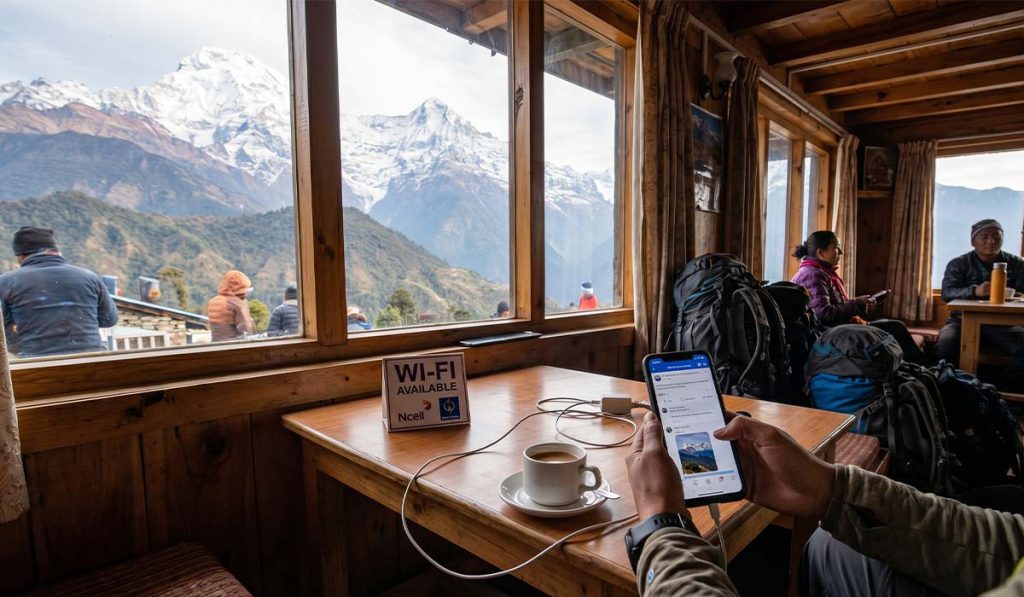
Most trekkers use either Ncell or Nepal Telecom, also called NTC. On the Mardi Himal route, both can work in lower sections, especially around Kande, Australian Camp, Dhampus, Pothana, Deurali, and sometimes Forest Camp or Low Camp. As you move higher toward Badal Danda, High Camp, and Mardi Himal Base Camp, coverage becomes much less dependable.
In real trekking conditions, NTC often performs a little better in remote areas of Nepal, but that is not a guaranteed rule on every part of this trail. Some days, you may get enough signal for WhatsApp messages and basic browsing. On other days, even a simple text can fail to send.
Mobile data is usually more realistic than expecting strong call quality. Voice calls can drop quickly, especially on exposed slopes or in bad weather. If your goal is just to send occasional updates, a local SIM card with data is usually enough.
Where are you most likely to get a signal?
Lower trail sections give you the best chance of staying connected. Near road-access villages and popular teahouse stops, there is often at least some mobile coverage. Once you climb above the forest line, the route becomes more exposed and remote, and the connection gets more unpredictable.
At Low Camp, some trekkers manage basic internet access through mobile data or lodge Wi-Fi. At Badal Danda and High Camp, you may still find a usable signal in certain spots, but not consistently. Base Camp is the least reliable place to expect anything. If you get signal there, treat it as a bonus rather than part of your plan.
This is why it is smart to send important messages before heading to the higher section of the trek. If you want to update family, confirm a pickup, or check the next day’s forecast, do it when the signal is available instead of waiting.
Teahouse Wi-Fi on the Mardi Himal route
Some lodges on the Mardi Himal Trek offer Wi-Fi, especially in lower and mid-route teahouses. The service is usually paid separately, and the quality varies a lot. In one lodge, it may support messaging and light browsing. In another, it may connect but barely load anything.
Do not expect city-level internet. Wi-Fi in trekking lodges often depends on shared bandwidth, weather conditions, power supply, and the number of people using it at the same time. Even where Wi-Fi is available, it is often weak in bedrooms and better near the dining area.
For most trekkers, lodge Wi-Fi is useful for quick communication, not for uploading large videos, taking work calls, or streaming content. If staying connected is important, keep your expectations low and your needs simple.
Best option for trekkers who need connectivity
A local SIM card is the most practical choice. Buying either Ncell or NTC in Kathmandu or Pokhara is easy if you carry your passport and a passport photo, though many shops can help with the process. For Mardi Himal, many experienced guides recommend NTC first, with the understanding that coverage still remains patchy in the upper section.
If your communication needs are important, having both a SIM data package and access to occasional lodge Wi-Fi gives you the best backup. Also download offline maps, keep hotel and agency contacts saved offline, and tell family in advance that you may be out of reach for stretches of the trek.
What affects connectivity on this trek
Terrain is the biggest factor. The Mardi Himal trail moves through forest, ridgelines, and steep mountain sections where towers do not cover every angle. Weather also matters. Cloud, rain, and storms can affect already weak service.
Power supply is another issue. Even if there is a signal, your phone is useless with a dead battery. Charging is available in many teahouses, usually for a fee at higher stops, but electricity can be limited. Carrying a power bank is a much better plan than depending on charging at every lodge.
Your phone setup also matters. Make sure roaming is off if you are using a local SIM for data, and check that your handset supports Nepalese network bands. A dual-SIM phone can be helpful if you want to compare coverage.
Practical advice before you go
If you only need occasional contact, Mardi Himal is manageable. If you must be reachable every day for business, family emergencies, or remote work, this trek is not the best route to depend on for stable internet.
Set expectations early. Tell people there may be one or two days when you cannot reply. Download maps, booking details, permits, and emergency numbers before leaving Pokhara. Keep cash with you because online payments and digital transfers are not dependable on the trail.
From field experience, the trekkers who handle connectivity best are the ones who treat internet access as helpful when available, not essential. On Mardi Himal, a working signal is useful, but the real plan should always be self-sufficiency, a charged phone, and good preparation.