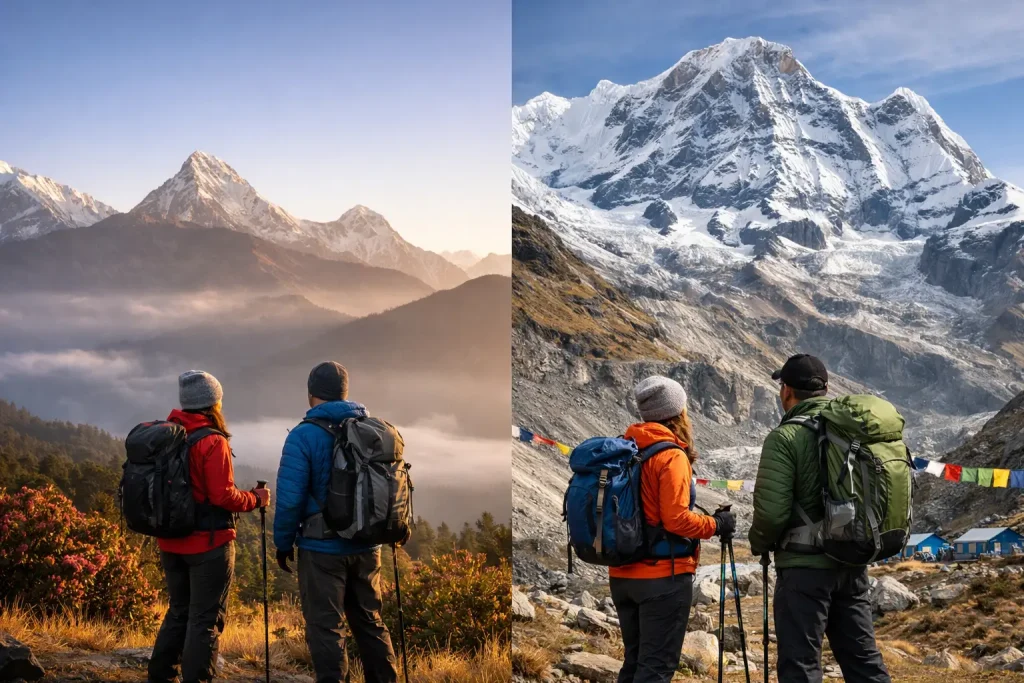
Few Himalayan viewpoints give such a big reward for such a short climb. The Ghorepani to Poon Hill Sunrise Hike is one of the best early-morning walks in Nepal because it delivers wide mountain views without requiring technical skill, extreme altitude, or a long expedition. For many trekkers in the Annapurna region, this short ascent becomes the most memorable part of the journey.
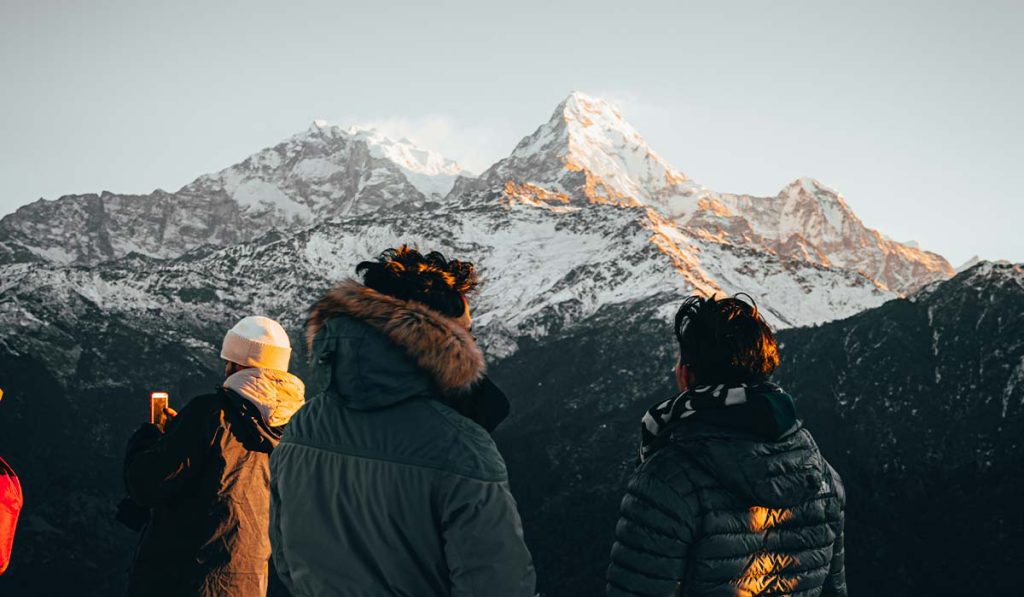
What makes the Ghorepani Poon Hill Trek special is not only the sunrise itself. It is the full experience – leaving Ghorepani in the dark with a headlamp, climbing steadily through the cold morning air, and reaching the viewpoint just as the first light hits Dhaulagiri, Annapurna South, Hiunchuli, Machhapuchhre, and the long chain of surrounding peaks. It feels accessible, but it still carries the atmosphere of a real Himalayan morning.
What the Ghorepani to Poon Hill Sunrise Hike is really like
This hike is a pre-dawn climb from the village of Ghorepani to the Poon Hill viewpoint. Ghorepani sits at about 2,860 meters, while Poon Hill is around 3,210 meters. That means the actual altitude gain is modest, roughly 350 meters, but the timing and cold conditions can make it feel harder than the number suggests.
Most trekkers start between 4:30 and 5:30 a.m., depending on the season and sunrise time. The route follows a well-established stone stair trail through forest and open slopes. In clear weather, the climb usually takes 45 minutes to 1.5 hours. Fast walkers may do it quicker, but many people prefer a steady pace because the air is thinner and the trail can be crowded during peak trekking months.
The descent back to Ghorepani is much faster, often 30 to 45 minutes. After breakfast, trekkers usually continue toward Tadapani, return toward Ulleri, or follow their larger Annapurna itinerary.
Distance, time, and trail conditions
The round-trip distance from Ghorepani to Poon Hill and back is short, generally around 3 kilometers to 4 kilometers depending on the lodge location in Ghorepani. That is why this is often described as an easy viewpoint hike. Still, short does not always mean effortless.
The trail is mostly uphill on the way to the viewpoint, with long sections of uneven stone steps. In dry conditions, it is straightforward. During winter, frost or light snow can make the stairs slippery. In monsoon or just after rain, the stones can also be slick, so good footwear matters more than people expect on such a short outing.
If you are already trekking comfortably in the Annapurna foothills, this section is manageable. If this is your first experience walking uphill at altitude before sunrise, expect to move slower than usual. That is completely normal.
How difficult is the hike?
The Ghorepani to Poon Hill Sunrise Hike is moderate rather than difficult. For fit trekkers, it is a short climb. For beginners, older travelers, or those still adjusting to altitude, it can feel demanding because of the steep staircase and cold morning start.
The main challenge is not distance. It is the combination of darkness, elevation, cold temperatures, and continuous uphill walking. Many trekkers notice shortness of breath even though they have walked longer distances elsewhere. At over 3,000 meters, your pace naturally slows.
This hike suits a wide range of travelers, including families, first-time trekkers, and people on shorter Nepal itineraries. You do not need mountaineering experience. You do need a reasonable fitness base, warm layers, and enough patience to walk at your own pace rather than chasing faster groups.
Why sunrise matters here
Poon Hill is worth visiting at any time of day, but sunrise is the reason most people go. The mountain panorama opens gradually as the sky brightens, and the color change across the peaks is the main attraction. On a clear morning, the first light on Dhaulagiri and the Annapurna range is what people remember.
If you go later in the day, clouds are more likely to build and soften the views. Morning usually offers the clearest window, especially in autumn and late winter to spring. That said, mountain weather always has the final say. Even in good trekking seasons, some mornings are cloudy. It is part of trekking in Nepal, and it is better to expect that possibility than to assume a guaranteed perfect sunrise.
Best season for the Ghorepani to Poon Hill Sunrise Hike
Autumn, from late September to November, is the most reliable season for clear skies and sharp mountain visibility. The trail is lively, tea houses are open and busy, and sunrise conditions are often excellent. This is also the busiest period, so expect more people on the trail and at the viewpoint.
Spring, from March to May, is another very good time. Rhododendron forests around Ghorepani can be especially beautiful, and temperatures are usually more comfortable than deep winter. Views can still be excellent, although afternoon haze becomes more common as the season warms.
Winter, from December to February, offers crisp mountain views and fewer crowds, but mornings are much colder. Snow and ice can affect the trail, and you need to dress properly for pre-dawn temperatures below freezing.
Monsoon, from June to early September, is the least favorable season for sunrise views. Rain, cloud cover, mud, and leeches on lower trails can affect the experience. Some trekkers still go, but this is not the best period if your main goal is the classic panorama.
What to wear and carry for the early start
Because the hike begins before sunrise, many trekkers underestimate the cold. Even in peak trekking season, the air can feel sharp before dawn. Dress in layers so you can adjust after the sun comes up.
A warm base layer, fleece or insulated mid-layer, and a light down jacket usually work well. Gloves, a beanie, and a headlamp are highly useful. Good trekking shoes with grip are better than casual sneakers, especially if there is frost or wet stone on the trail.
You do not need to carry much, but a few things make the walk easier: water, a headlamp, a warm hat, gloves, and your camera or phone. Some trekkers bring trekking poles, which can help on the descent if your knees are sensitive on stone stairs.
Permits, entry fees, and local logistics
Poon Hill lies within the Annapurna Conservation Area, so trekkers need the required permit documentation for the broader trekking route they are following. In practice, most people combine this sunrise hike with the Ghorepani trek, Annapurna Base Camp route variation, or a short Annapurna foothills itinerary.
There is also an entry ticket at the Poon Hill viewpoint area, which is typically checked near the top. Policies and fees can change, so it is wise to confirm current details before starting the trek.
Accommodation is simple because you sleep in Ghorepani the night before. The village has many tea houses, but during busy trekking months rooms can fill early. If you are trekking independently, arriving with enough time to secure a room is sensible. If you are trekking with a local operator such as Himalaya Wanderer, these logistics are usually handled in advance.
Common mistakes trekkers make
The biggest mistake is starting too late. If you leave the lodge too close to sunrise, you may spend the whole climb rushing and reach the viewpoint after the best light has passed. Check the local sunrise time the day before and give yourself margin.
Another common mistake is underdressing. Trekkers often assume a short hike means light clothing is enough, then end up standing in freezing wind at the top. The opposite can also happen on the climb, so wear layers you can remove easily.
Pacing is another issue. Many people go too fast in the first 15 minutes and feel exhausted halfway up. A slow, even rhythm works better at this altitude. The goal is not speed. The goal is to reach the viewpoint comfortably and enjoy the morning.
Finally, do not rely completely on the weather forecast. Conditions in the mountains can change overnight. If the sky is partly cloudy, it may still clear enough for a beautiful sunrise. Unless conditions are unsafe, it is often worth making the attempt.
Is it worth it?
For most trekkers, yes. This is one of the most rewarding short hikes in Nepal because it gives a real Himalayan sunrise experience without requiring many extra days, high technical ability, or major altitude exposure. It is especially good for travelers who want mountain views but are not aiming for a long, demanding expedition.
The trade-off is that Poon Hill is popular. In peak season, you will share the viewpoint with many other trekkers. If solitude is your top priority, this may not be your ideal sunrise spot. But if your goal is a reliable, scenic, and achievable Himalayan viewpoint, it remains one of the best choices in the Annapurna region.
If you plan it well, start early, and go with realistic expectations about weather and crowds, the walk from Ghorepani in the dark to that first burst of light over the mountains feels every bit as rewarding as people say.