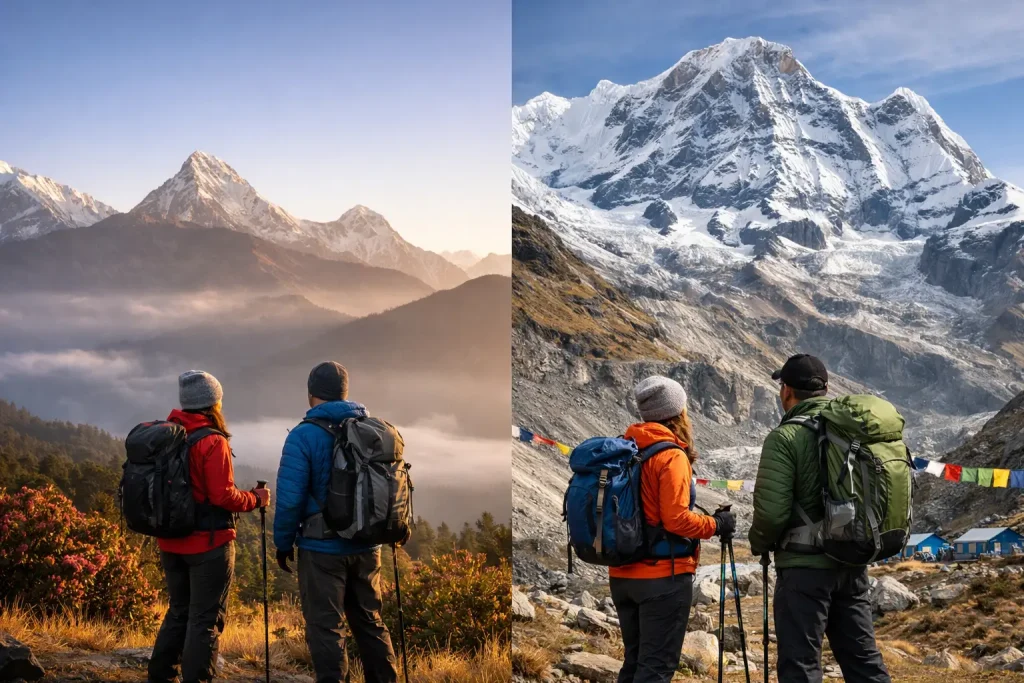
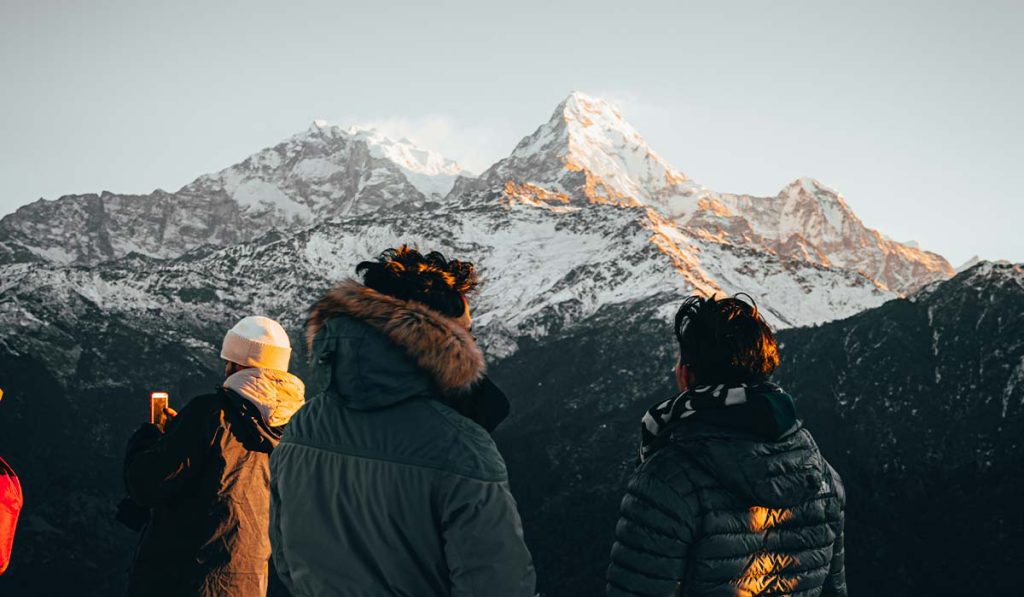
If you want clear Himalayan views without committing to a long high-altitude expedition, the Best Time of Year for the Poon Hill trek matters more than most trekkers expect. This short trek is accessible for many travelers, but the experience can change a lot by season. The same sunrise viewpoint can offer crisp mountain panoramas in one month, dense cloud in another, and muddy trails or cold mornings depending on when you go.
Poon Hill is one of the most popular short treks in the Annapurna region, usually combined with Ghorepani, Tadapani, and Ghandruk. The route is not extremely high compared to Everest Base Camp or Annapurna Circuit, but weather still shapes visibility, trail condition, accommodation pressure, and your overall comfort. If your main goal is to see Annapurna South, Dhaulagiri, Machhapuchhre, and Hiunchuli glowing at sunrise, timing is a practical planning decision, not a minor detail.
Best Time of Year for Poon Hill by season
For most trekkers, the best seasons for Poon Hill are spring and autumn. These two windows give the most balanced combination of stable weather, mountain views, comfortable daytime walking temperatures, and reliable trail conditions.
Spring, from March to May, is especially attractive if you want a colorful trail. The rhododendron forests around Ulleri, Ghorepani, and nearby ridgelines bloom during this period, and that adds a lot to the walk. Mornings are often clear, although haze can build later in the day, especially as temperatures rise. It is a good season for trekkers who enjoy both scenery on the trail and mountain views from the viewpoint.
Autumn, from late September to November, is often considered the most reliable season overall. After the monsoon clears, the air is usually cleaner, the skies are sharper, and the long-range views are often at their best. Trails are in good condition, and temperatures are moderate. If a trekker asks for the safest answer without many seasonal compromises, autumn is usually it.
Winter and monsoon are still possible, but they come with trade-offs. Winter can be very rewarding for quiet trails and sharp mountain visibility, but cold mornings and occasional snow can make the climb to Poon Hill less comfortable. Monsoon brings lush landscapes and fewer trekkers, but clouds, rain, leeches on lower sections, and limited views can reduce the classic sunrise experience.
Spring at Poon Hill
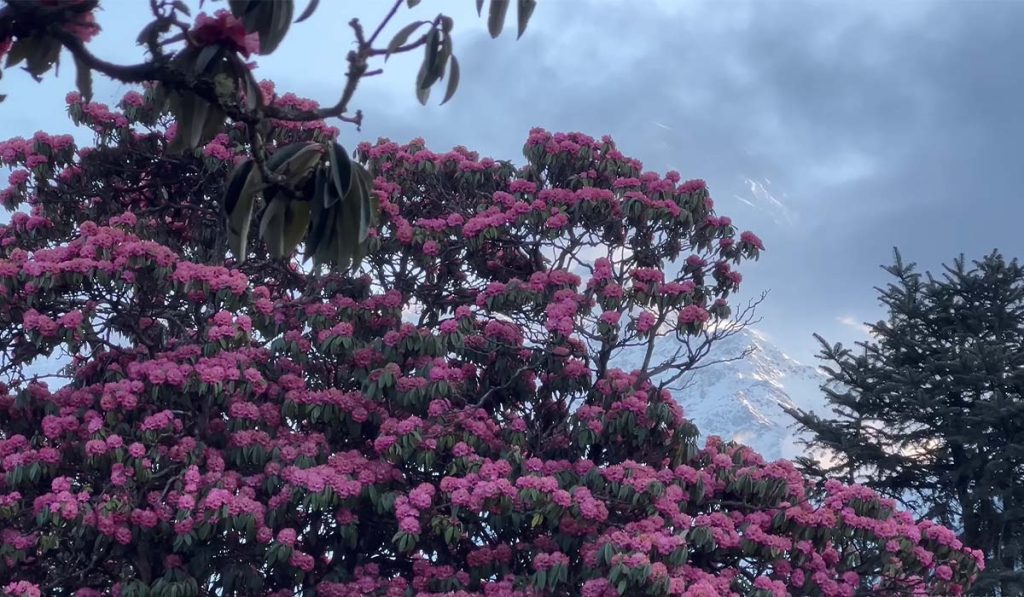
Spring is one of the strongest answers to the question of the best time of year for Poon Hill, especially for first-time visitors to Nepal. Daytime conditions are usually pleasant for walking, and teahouses operate normally with a steady but manageable number of trekkers.
March is cooler and often clearer than later spring. The forests begin to come alive, and the higher sections can still feel fresh in the mornings. By April, the route is usually at its most photogenic. Rhododendron bloom is often at its peak, and the hills around Ghorepani become especially beautiful. May is warmer, and cloud build-up becomes more common in the afternoons, but morning walks and sunrise viewpoints can still be very good.
The main thing to understand about spring is that it is not identical from start to finish. Early spring tends to offer slightly better clarity, while mid-spring gives the best forest scenery. Late spring gets warmer and can feel a bit hazier. So if your priority is flowers, April is hard to beat. If your priority is cleaner mountain views with fewer seasonal shifts, late March can be a smarter pick.
Autumn at Poon Hill
Autumn is the most dependable trekking season for Poon Hill. Once the monsoon retreats, the landscape is freshly washed, the air often feels cleaner, and mountain visibility improves quickly.
October is usually the standout month. Trails are dry enough for comfortable walking, temperatures are friendly, and the odds of a rewarding sunrise are high. November is also excellent, with very stable conditions and crisp views, though mornings become colder. Late September can work well too, but in some years the monsoon lingers a bit, so flexibility helps.
The only real downside of autumn is popularity. Ghorepani and surrounding villages can get busy, especially in October. If you prefer quieter trails and more relaxed teahouse availability, aim for late September if the weather has settled, or early November after the biggest rush. The route is still manageable, but the sense of solitude is lower than in winter or monsoon.
Winter trekking on Poon Hill
Winter, from December to February, is a good option for trekkers who do not mind cold conditions. Poon Hill is not an extreme winter trek, but mornings can be very cold, especially before sunrise when most people climb from Ghorepani to the viewpoint.
The advantage is that winter often brings excellent mountain clarity. On stable days, the snow peaks can look especially sharp against deep blue skies. Trails are quieter, and teahouses are less crowded. For photographers and trekkers who prefer a calmer route, this can be a very satisfying season.
The challenge is comfort. Water can freeze at higher points, early starts are tough, and occasional snowfall may affect the trail. Usually this does not make the route impossible, but it can make it slower and more slippery. If you are trekking with children, are very sensitive to cold, or want the easiest overall experience, spring or autumn is usually better.
Monsoon and summer conditions
June to early September is the least recommended period for most trekkers. The landscape becomes intensely green, farmland looks beautiful, and the villages have a different kind of life during this season. But Poon Hill is mainly known for mountain views, and monsoon weather often hides them behind cloud.
Rain can make stone steps slick, lower trails muddy, and insects more noticeable. Leeches can be a nuisance in forested sections, especially after rainfall. Flights and road connections in Nepal can also face delays during the monsoon period, which matters if your trekking schedule is tight.
That said, this season is not a complete write-off. Trekkers who enjoy quiet routes, do not mind rain, and can accept uncertain mountain views may still find value in it. Just do not choose monsoon if the main dream is a clear sunrise panorama from Poon Hill.
Month-by-month quick view
If you want the simplest planning version, October and April are usually the top picks. October is stronger for crisp views and stable weather. April is stronger for blooming forests and scenic trail beauty.
March and November are also excellent. March is a little cooler and often pleasantly clear. November is crisp and reliable, though colder in the mornings. December and February can be good for quiet trekking if you prepare for cold weather. January is the coldest month and less comfortable for many travelers. May is warmer and less predictable for visibility. June, July, and August are the weakest months if views are your priority. September improves as the month goes on, but conditions vary year to year.
How to choose the best season for your goal
The best time is not always the same for every trekker. If you care most about classic mountain views, choose autumn, especially October or early November. If you want a balance of mountain scenery and colorful forests, choose spring, especially late March through April.
If you dislike crowds and can handle cold, winter may suit you better than peak autumn. If your travel dates fall in monsoon, it is still possible to trek, but you should set realistic expectations. The route itself remains attractive, but the signature panoramic reward may not show up.
This is where practical planning matters. A short trek can feel disappointing if the one sunrise morning is fully clouded. Building in an extra night around Ghorepani or nearby villages can help if your schedule allows. Even on a short route, one flexible day improves your chances.
Weather, sunrise, and visibility realities
Many trekkers assume that if a season is labeled good, the view is guaranteed. That is never true in the Himalayas. Poon Hill is famous for sunrise, but cloud movement, local moisture, and overnight weather all affect what you actually see.
In the best seasons, early mornings are generally the clearest. By midday or afternoon, clouds often build around the ridges. This is one reason trekkers leave Ghorepani before dawn. It is not only about sunrise colors. It is also about catching the mountains before weather changes.
A good local guide or experienced operator can help you read these patterns better. At Himalaya Wanderer, this is the kind of route planning detail that often makes a short trek more rewarding. Even when conditions are not perfect, timing your walks and overnight stops well can improve the experience.
Final answer for most trekkers
If you want one clear recommendation, go in October or April. These months give the strongest overall Poon Hill experience for most people, with the best mix of scenery, accessibility, and enjoyable trekking conditions. If your top priority is the clearest mountain panorama, lean toward October. If you want forests in bloom and a more colorful trail, lean toward April.
For trekkers who want fewer compromises, spring and autumn remain the safest choices. Pick your month based on whether you value sharper views, blooming hillsides, fewer crowds, or warmer temperatures, and Poon Hill will reward good timing with one of the finest short treks in Nepal.