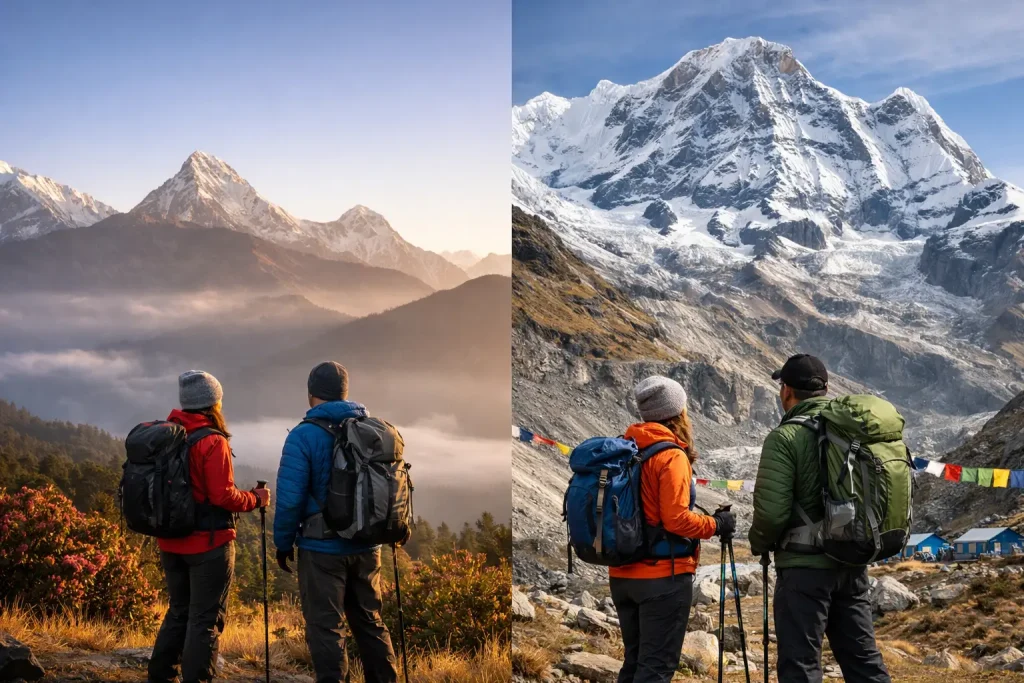
Sunrise from Poon Hill is one of the shortest ways to see a serious Himalayan panorama in Nepal. The Luxury Poon Hill Trek takes that classic route and removes much of the rough edge – longer hot showers, better rooms, cleaner lodges, smoother transfers, and a more comfortable pace without losing the mountain experience itself. For many trekkers, that balance is exactly the point.
This is not a five-star city holiday, moved into the mountains. Even on a luxury version, you are still walking village trails, climbing stone steps, and sleeping in trekking lodges. But compared with a standard teahouse trek, the difference is noticeable. If you want big Annapurna views, manageable trekking days, and more comfort at the end of each stage, this route makes a lot of sense.
What makes the Poon Hill trek “luxury”?
On this trek, luxury usually means better logistics and better recovery rather than extreme indulgence. Expect private transportation where possible, quality hotels in Pokhara and Kathmandu if included, upgraded lodges on the trail when available, attached bathrooms in some places, better food choices, and a more thoughtfully paced itinerary.
The route itself does not change much. You still trek through the lower Annapurna region, passing through villages such as Ulleri, Ghorepani, and Ghandruk. You still climb before dawn to Poon Hill for the sunrise view. What changes is how the trip is organized around your comfort.
That may include starting from a more convenient road point to reduce the longest stair sections, choosing the best available rooms at each stop, using porters so you carry only a daypack, and building in enough time to enjoy the trail instead of rushing through it. On a short trek like this, good planning has a bigger impact than many travelers expect.
Why trekkers choose a Luxury Poon Hill Trek
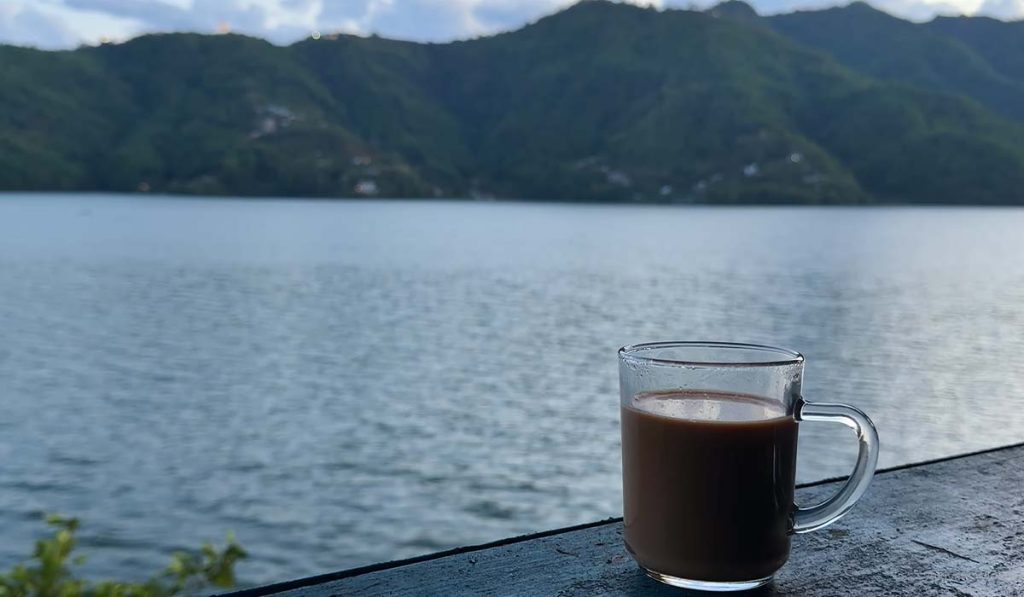
The biggest reason is simple: not everyone wants to “rough it” to earn a mountain view. Some travelers are visiting Nepal with family, some are combining trekking with a broader cultural trip, and some are active but not interested in basic lodge conditions after a full day on the trail.
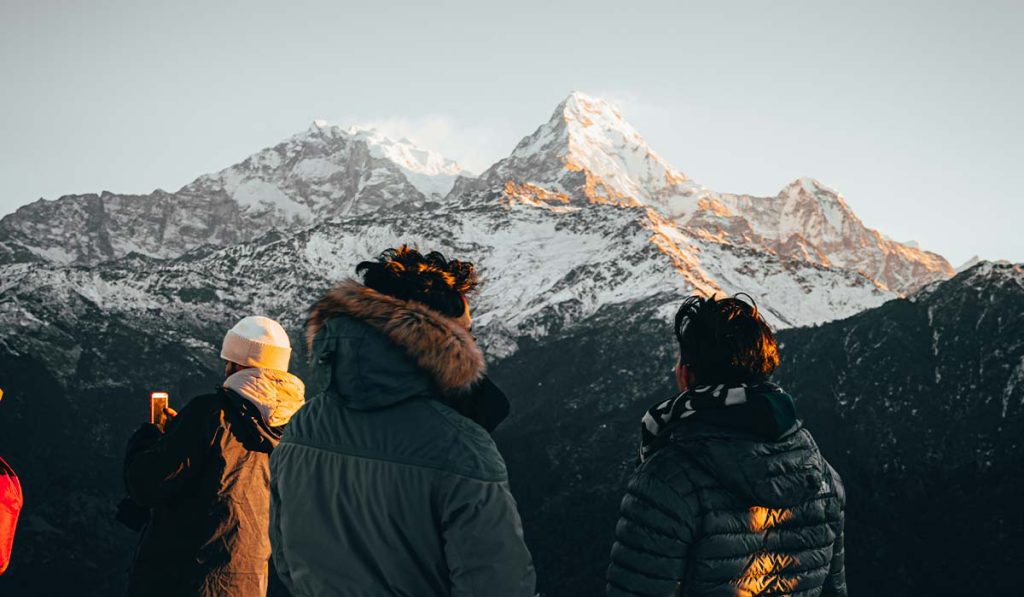
Poon Hill is especially attractive because it delivers strong rewards for relatively moderate effort. On clear days, the viewpoint opens up wide views of Annapurna South, Dhaulagiri, Machhapuchhre, Hiunchuli, and other surrounding peaks. You get rhododendron forests, Gurung and Magar villages, terraced hillsides, and a genuine trekking atmosphere, but you do not need two weeks away from work or high-altitude expedition fitness.
The luxury version also suits first-time trekkers. It lowers some of the uncertainty that makes beginners nervous – where to sleep, how basic the toilets will be, whether food choices will be limited, and how hard the route will feel day after day. Comfort does not eliminate the physical challenge, but it helps many people enjoy the trek more fully.
Route and itinerary expectations
Most Luxury Poon Hill Trek itineraries run for 4 to 6 trekking days, with additional time for arrival, briefing, and travel between Kathmandu and Pokhara if those cities are included. A common outline is to drive to the trailhead area, trek to Ulleri or Banthanti, continue to Ghorepani, hike up to Poon Hill for sunrise, then descend toward Tadapani or Ghandruk before driving back to Pokhara.
Some itineraries reduce walking on the first day by driving farther on improved roads. That can make the trek more comfortable, especially for travelers who want to avoid a very long stair-heavy start. The trade-off is that road access can reduce the feeling of walking continuously from lower villages, and road conditions vary by season.
The classic climb to Poon Hill is still early and cold. Luxury does not change that. You usually leave before dawn with a headlamp, climb steadily for around 45 minutes to an hour from Ghorepani, and wait for first light over the Annapurna and Dhaulagiri ranges. This is the centerpiece of the route, and in good weather, it earns the early wake-up call.
Accommodation in a luxury version
This is where expectations need to stay realistic. In Kathmandu and Pokhara, luxury can mean genuinely high-end hotels. On the trekking trail, luxury means the best available lodge standard in that specific village. In places like Ghandruk and Ghorepani, some lodges offer very comfortable rooms by trekking standards, with neat interiors, good bedding, better dining spaces, and occasionally attached bathrooms.
Still, mountain infrastructure has limits. Heating is usually in the common dining hall rather than the bedroom. Hot showers may depend on a gas or solar supply. Wi-Fi, if available, can be slow. During peak trekking months, even premium rooms can be limited. That is why booking early matters more on a luxury trek than many people realize.
A well-planned trip focuses on the villages with the best overnight options and avoids overpromising. Honest operators will explain that trail comfort in Nepal is relative. Good comfort is very achievable on this route, but it is not the same as a luxury resort holiday.
How difficult is the trek?
The Luxury Poon Hill Trek is still a real trek, not a sightseeing walk. The main challenge is the stairs, especially around Ulleri and on various ascents and descents between villages. Daily walking generally ranges from 4 to 6 hours, depending on the itinerary and road access.
Altitude is less of a concern here than on Everest Base Camp or Annapurna Circuit. Poon Hill sits at 3,210 meters, and most trekkers tolerate that height well. Acute mountain sickness is less common on this route, but it should not be ignored entirely. Good pacing, hydration, and a sensible itinerary still matter.
If you are reasonably active, this trek is manageable with some preparation. Walking practice, stair climbing, and light cardio in the weeks before your trip will help. Trekking poles are especially useful because the downhill sections can be harder on the knees than the ascents.
Best season for a Luxury Poon Hill Trek
Spring and autumn are the strongest seasons. From March to May, the hills are greener, rhododendrons may be in bloom, and temperatures are generally pleasant. From late September to November, skies are often clearer, and mountain views can be especially sharp after the monsoon.
Winter treks are possible and can be rewarding if you do not mind cold mornings. The trails are often quieter, but sunrise at Poon Hill can be very cold, and lodge comfort matters more. Monsoon season is the least predictable for views. The forests are lush, but clouds, rain, and leeches on lower trails can affect the experience.
If your priority is the best possible sunrise panorama, aim for stable weather in autumn or spring. If your priority is quieter trails and you are flexible about conditions, winter can still work well with the right gear.
Cost and what affects the price
A Luxury Poon Hill Trek costs more than a standard teahouse version because you are paying for upgraded accommodation, better transport, porter support, guide services, and smoother organization. Prices vary depending on season, group size, hotel category in the cities, and exactly how much road transfer is used.
The biggest pricing differences usually come from three things: whether your package includes high-quality hotels before and after the trek, whether private transport is used instead of tourist buses, and how strong the lodge standards are on the trail. Solo travelers also tend to pay more per person than couples or small groups.
It is worth checking what “luxury” includes before booking. Sometimes the label is used loosely. Ask whether attached bathrooms are available in each village, whether porter service is included, what type of transport is provided, and whether meals are included throughout the trek. Clear answers usually tell you a lot about the quality of the operator.
Is it right for you?
This trek is a strong choice if you want a short Himalayan trek with good scenery and less hardship. It suits couples, older trekkers, first-time visitors to Nepal, families with trekking interests, and travelers who value comfort but still want to walk through real mountain villages.
It may not be the best fit if your goal is isolation, wilderness camping, or a very remote trail. Poon Hill is popular for good reason, and in peak seasons you will share the route with many other trekkers. A luxury package can improve your experience, but it does not make the trail private.
For many travelers, that is an acceptable trade-off. The route is accessible, rewarding, and logistically easier than longer high-altitude treks. When done well, it offers one of the most comfortable introductions to trekking in Nepal.
Practical planning advice
Pack for changing temperatures rather than extreme altitude. Mornings can be cold, afternoons may feel warm, and the weather can shift quickly. Good layers, a down jacket, gloves, sun protection, and broken-in walking shoes are enough for most trekkers.
Do not overpack just because it is a luxury trek. Even with porter support, lighter bags make travel easier. Keep essentials in your daypack – water, a warm layer, snacks, sunscreen, personal medication, and a camera for Poon Hill sunrise.
Finally, choose a trekking company that speaks plainly about comfort levels on the trail. The best experience comes from clear expectations, a realistic itinerary, and a guide who knows how to adjust the pace to the group. That approach matters more than fancy marketing, and it is what turns a short scenic trek into a genuinely satisfying Himalayan journey.