The choice between the Manaslu Circuit versus Annapurna Circuit usually comes down to one practical question: do you want a quieter, more remote expedition-style trek, or a more developed route with broader accommodation and itinerary options? Both are major Himalayan journeys, both cross a high pass above 16,000 feet, and both demand sound acclimatization. Their day-to-day realities, however, are very different.
The Manaslu Circuit is the stronger choice for trekkers seeking isolation, Tibetan-influenced culture, and a route that still feels comparatively wild. The Annapurna Circuit suits travelers who want dramatic variety, easier logistics, and more flexibility around comfort, route length, and side trips. Neither is automatically “better.” The right choice depends on your experience, fitness, budget, and tolerance for limited services.
Manaslu Circuit versus Annapurna Circuit at a glance
The Manaslu Circuit typically takes 14 to 18 days, depending on your approach route, acclimatization plan, and exit from the Annapurna region. Its high point is Larkya La Pass at about 16,752 feet (5,106 meters). The trail follows the Budhi Gandaki valley through villages such as Jagat, Deng, Namrung, Samagaun, and Samdo before crossing into the lower Annapurna region.
The Annapurna Circuit can take roughly 12 to 18 days. Modern road access has shortened several sections, so the final duration depends heavily on where you begin and end walking. Its high point is Thorong La Pass at 17,769 feet (5,416 meters), usually crossed from Manang to Muktinath. The route moves from subtropical valleys into dry trans-Himalayan terrain, then descends toward Mustang.
Both treks are strenuous. Annapurna reaches a slightly higher elevation, while Manaslu is generally more remote and has fewer easy bailout points once you are deep in the valley.
Difficulty and fitness requirements
For most reasonably fit hikers, neither route requires technical climbing skills. You will not need ropes, crampons, or mountaineering experience in normal trekking seasons. You will need endurance for repeated long days, uneven stone trails, steep ascents and descents, and cold mornings at altitude.
The Annapurna Circuit is often considered the more accessible first long Himalayan circuit because villages are frequent, guesthouse choice is wider, and the route is easier to customize. Trekkers can add rest days in Manang, shorten road sections, or choose alternate hikes such as Ice Lake when they are acclimatizing well. That flexibility is valuable for first-time high-altitude trekkers.
Manaslu is not necessarily harder mile for mile, but it asks for more self-sufficiency and stronger judgment. Trails can be narrower, bridges more exposed, and daily services more limited. Weather delays, trail changes, or illness require a more measured response because transport options are sparse. A guided Manaslu itinerary also tends to move as a group, so your pace and schedule may be less flexible.
A useful baseline for either trek is the ability to walk for six to eight hours on consecutive days with a daypack. Train with uphill hiking, stair climbing, leg strength work, and longer back-to-back weekend walks. Cardiovascular fitness helps, but it does not prevent altitude illness.
Altitude is the deciding safety factor
Thorong La is higher than Larkya La, but the risk of acute mountain sickness is not determined by pass elevation alone. Your sleeping elevation, ascent rate, rest days, hydration, illness history, and response to symptoms all matter.
Manaslu commonly includes two nights around Samagaun at approximately 11,500 feet (3,500 meters), often with an acclimatization hike toward Manaslu Base Camp or Pungyen Gompa. On Annapurna, Manang at about 11,350 feet (3,540 meters) is the classic acclimatization stop. Neither rest day should be skipped simply because you feel strong on arrival.
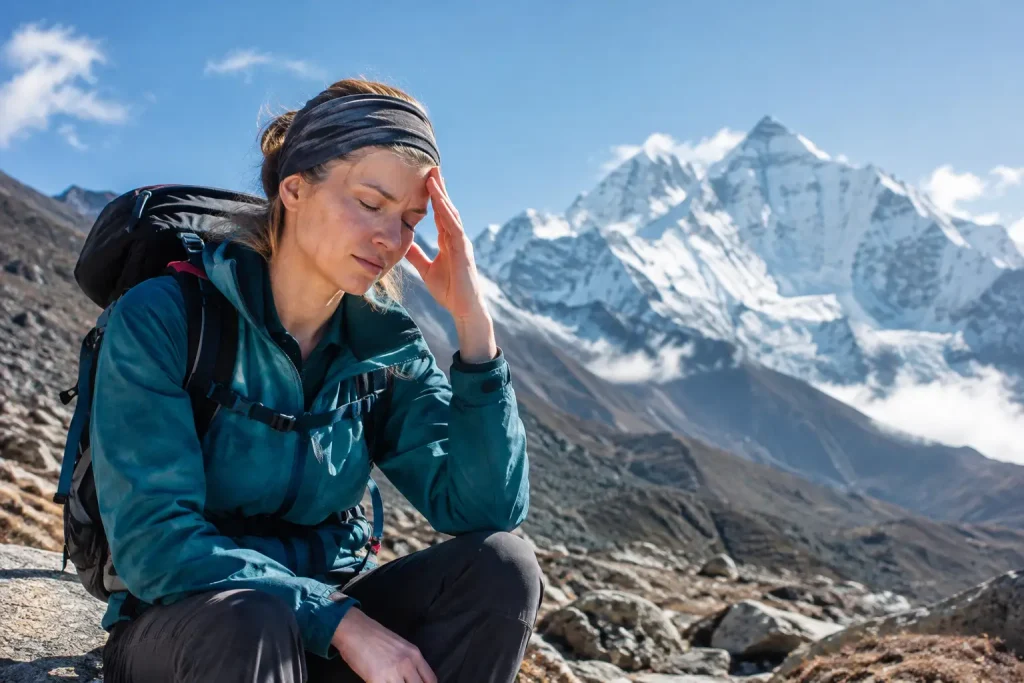
Choose an itinerary that builds in contingency time. Headache, nausea, dizziness, unusual fatigue, or poor coordination at altitude should never be managed by pushing higher. Descent is the primary treatment for worsening symptoms. Comprehensive travel insurance that covers high-altitude trekking and emergency helicopter evacuation is essential on both routes.
Scenery, culture, and trail atmosphere
Manaslu delivers a more continuous sense of entering a remote Himalayan valley. The lower Budhi Gandaki is steep and lush, with suspension bridges above a powerful river. Higher up, the scenery opens into broad glacial valleys below Manaslu, the world’s eighth-highest mountain. Samagaun and Samdo have a strong Tibetan Buddhist character, visible in monasteries, mani walls, prayer flags, and stone-built settlements.
Annapurna offers more geographic contrast. You may begin among rice terraces and forest, walk beneath Annapurna II and Gangapurna near Manang, then cross into the arid, wind-carved landscapes around Muktinath and Jomsom. The route also offers more side-trip options, including Tilicho Lake, which can turn the trek into a longer and more demanding itinerary.
For solitude, Manaslu usually wins. The restricted-area permit system limits independent traffic, and the route has fewer trekkers than Annapurna in peak season. Annapurna can be busy in October and November, especially near Manang, Thorong Phedi, and the pass. Its social atmosphere may be a benefit if you are trekking alone and prefer more fellow travelers around you.
Permits and guide requirements
Permits are one of the clearest differences in the Manaslu Circuit versus Annapurna Circuit comparison.
The Manaslu Circuit passes through a restricted area. Foreign trekkers must trek with a licensed Nepali guide through a registered agency and generally need at least two foreign trekkers on the permit application. You will need a Manaslu Restricted Area Permit, a Manaslu Conservation Area Permit, and an Annapurna Conservation Area Permit for the exit section. Permit prices vary by season and the number of restricted-area days, so confirm current rates before booking.
The Annapurna Circuit requires an Annapurna Conservation Area Permit and typically a TIMS trekking card, subject to current Nepal Tourism Board rules. It is generally easier to arrange and has historically been possible to trek independently, although local regulations and enforcement can change. Even when a guide is not required, a guide can be a sensible choice for solo travelers, first-time Nepal visitors, or anyone concerned about route planning and altitude decisions.
Manaslu’s rules raise the overall trip cost, but they also provide a clearer support structure. Your agency handles permits, transport coordination, guide staffing, and logistics in a region where last-minute changes are harder to manage.
Accommodation, food, and comfort
Both routes use teahouses rather than camping for most standard itineraries. Expect simple private rooms, shared bathrooms in many villages, charging fees, and limited heating outside common dining areas. Bring a warm sleeping bag, since room heating is uncommon at higher elevations.
Annapurna has a much broader range of lodges and menus. In popular villages, you can often find bakeries, coffee, pizza, Wi-Fi, hot showers, and a choice of rooms. Services become simpler near the pass, but overall comfort is more predictable.
Manaslu teahouses are improving every year, yet choice remains limited. Menus are smaller at higher elevations, Wi-Fi can be unreliable, and hot showers may not be available or practical in every stop. Dal bhat remains the most dependable meal for sustained energy: rice, lentils, vegetables, and often refills. Plan to carry cash, as ATMs are not available on the trail and digital payment cannot be relied upon.
Cost and logistics
Annapurna is usually the less expensive route because permits are simpler, independent travel may be possible, and road access makes transportation easier. A guided trip can still be worthwhile, but you have more freedom to choose your level of support.
Manaslu costs more because a guide and agency are required, restricted-area permits carry additional fees, and access involves long overland travel on rough roads. The starting point at Machha Khola or nearby villages can take a full day from Kathmandu, with seasonal road conditions affecting journey times. The trek commonly finishes around Dharapani, from where you continue by road toward Besisahar and Kathmandu.
Annapurna logistics are more flexible but can feel less pure as a continuous wilderness walk. Roads now reach many sections of the traditional circuit, particularly on the western side. Some trekkers see this as a drawback; others appreciate the option to shorten the trek if weather, fitness, or schedule changes. If you want to preserve the walking experience, plan your start and finish points carefully.
Best season for each trek
October through November and March through April are the most dependable seasons for both circuits. Autumn generally brings clearer mountain views after the monsoon, while spring offers warmer conditions and rhododendron blooms at lower elevations.
Manaslu can feel especially cold and snowbound near Larkya La in winter. Annapurna also sees winter pass closures, although its better-developed infrastructure can make route adjustments easier. During the summer monsoon, Manaslu’s lower valley is vulnerable to heavy rain, leeches, landslides, and road disruption. Annapurna’s rain-shadow sections are drier, but the approach trails still receive monsoon weather.
Which circuit should you choose?
Choose the Manaslu Circuit if you want a more remote route, quieter trails, Tibetan Himalayan culture, and are comfortable committing to a guided group structure. It is an excellent fit for trekkers who have already completed a multi-day hike or who are prepared to train seriously for a less forgiving environment.
Choose the Annapurna Circuit if you want a first major Nepal circuit with more services, more itinerary options, and easier logistics. It remains a serious high-altitude trek, not a casual walk, but its flexibility can make it the more practical choice for travelers with a fixed schedule or limited Himalayan experience.
Whichever route you choose, protect the acclimatization days, carry the right cold-weather gear, and leave room in your schedule for delays. In the Himalaya, the strongest plan is not the fastest itinerary on paper, but the one that gives you time to make safe decisions when conditions change.