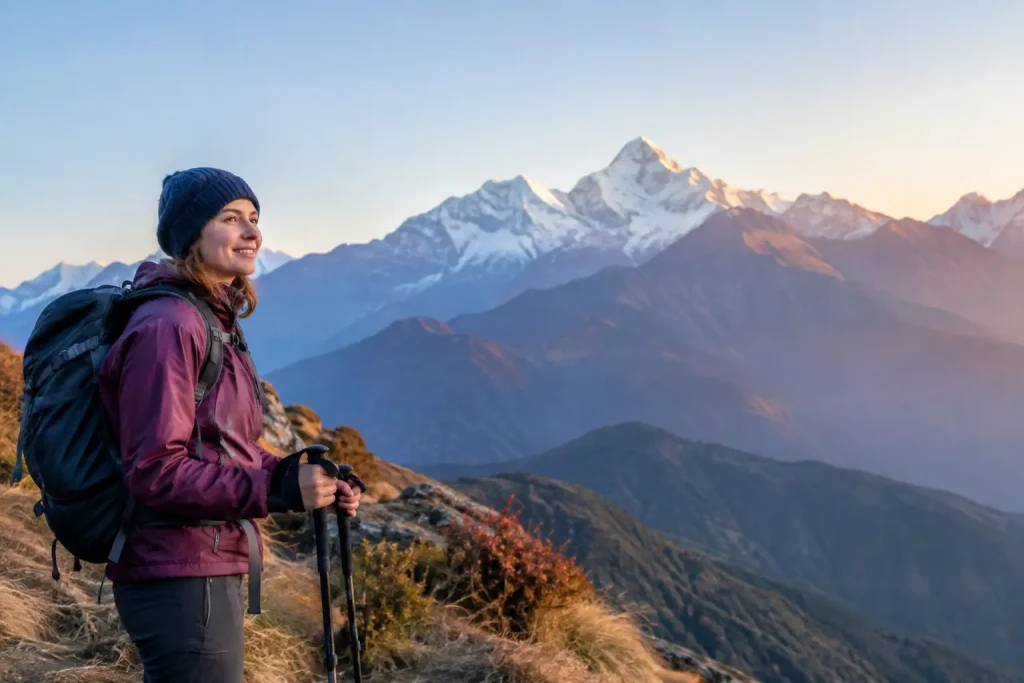
The Annapurna Base Camp versus Circuit decision comes down to more than the number of days you have. Annapurna Base Camp is a focused journey into a high Himalayan sanctuary, while the Annapurna Circuit is a longer, more varied crossing of valleys, high passes, and distinct cultural landscapes. Both are exceptional Nepal treks, but the right choice depends on your altitude experience, fitness, schedule, and tolerance for changing conditions.
Annapurna Base Camp vs. Annapurna Circuit at a glance
Annapurna Base Camp, often called the ABC Trek, usually takes 7 to 12 days depending on your starting point, acclimatization plan, and side trips. The route climbs through terraced farmland, rhododendron forests, and riverside villages before reaching Annapurna Base Camp at about 13,550 feet (4,130 meters). Most trekkers return by a similar route, often via Jhinu Danda and its natural hot springs.
The Annapurna Circuit generally takes 12 to 18 days. Its traditional high point is Thorong La Pass at 17,769 feet (5,416 meters), making it substantially more demanding from an altitude perspective. The trail travels around the Annapurna massif, beginning in the greener Marsyangdi Valley and descending into the dry, Tibetan-influenced landscape of Manang, Muktinath, and the Kali Gandaki Valley.
If you want a shorter Himalayan trek with major mountain views and fewer moving parts, ABC is usually the better fit. If you have more time, stronger endurance, and a specific interest in crossing a high pass, the Circuit offers a broader expedition-style experience.
Route experience and scenery
Annapurna Base Camp: a direct approach to the mountains
ABC delivers one of Nepal’s most dramatic destination moments. The final approach enters the Annapurna Sanctuary, a glacial basin enclosed by peaks including Annapurna South, Hiunchuli, Machhapuchhre, and Annapurna I. Waking at base camp for sunrise is the central reward of the trek.
The landscape changes quickly over a relatively compact route. You will pass through Gurung and Magar villages, bamboo and rhododendron forest, stone staircases, and narrow river valleys before the terrain becomes open and alpine. The downside is that much of the return journey retraces your outward route. Trekkers who prefer a new view every day may find this less satisfying than a circuit trek.
Annapurna Circuit: greater variety over more days
The Circuit is less about one final viewpoint and more about the progression of the journey. It begins with subtropical valleys and farming settlements, gradually transitions to arid highland terrain around Manang, then crosses Thorong La before dropping toward Muktinath. The scenery on either side of the pass feels markedly different.
You also encounter a wider range of villages, monasteries, prayer wheels, and mountain cultures. The Manang Valley is particularly valuable for acclimatization because it has useful day hikes, including the climb toward Ice Lake and viewpoints above the town. The trade-off is that some lower sections have road access, and the amount of vehicle traffic can vary by itinerary and season.
Difficulty and fitness requirements
Neither trek requires technical climbing skills, ropes, or mountaineering experience. Both require the ability to walk for several consecutive days on uneven trails, climb sustained stone steps, and manage long descents. A regular hiking background is helpful, but structured preparation matters more than prior trekking prestige.
ABC is physically demanding because of its repeated uphill and downhill terrain. Expect several days of substantial elevation gain, especially on the sections around Ulleri, Chhomrong, Bamboo, and Deurali. The route is achievable for fit first-time Himalayan trekkers who train consistently and allow enough days for a gradual ascent.
The Annapurna Circuit requires more endurance. Daily walking time can be longer, the trek lasts more days, and the crossing of Thorong La often begins before dawn in cold and windy conditions. You should be comfortable hiking for six to eight hours with a daypack and recovering well enough to do it again the following morning.
For either route, train for at least eight to twelve weeks if possible. Focus on uphill walking, stair climbing, leg strength, aerobic conditioning, and longer weekend hikes. The Circuit particularly rewards hikers who arrive with a strong endurance base rather than relying on determination alone.
Altitude: the biggest practical difference
Altitude is the clearest separator in the Annapurna Base Camp versus Circuit comparison. ABC reaches 4,130 meters, which is high enough for acute mountain sickness to occur. Headache, nausea, poor sleep, loss of appetite, and unusual fatigue should be taken seriously. However, the Circuit climbs considerably higher and requires crossing Thorong La at 5,416 meters.
At that elevation, the margin for poor acclimatization is smaller. Weather can also turn quickly, with snow, wind, and freezing temperatures creating a harder day even for strong hikers. A good Circuit itinerary should include at least one acclimatization day in Manang and should not rush the ascent simply to save time.
No level of fitness makes someone immune to altitude illness. The safest approach is gradual ascent, conservative pacing, hydration, adequate food, and a willingness to stop ascending or descend when symptoms worsen. Travel insurance that covers high-altitude trekking and emergency helicopter evacuation is essential for both routes.
Time, logistics, and flexibility
ABC is easier to fit into a Nepal itinerary. Most trekkers travel from Pokhara to a trailhead near Ghandruk, Jhinu Danda, Siwai, or another access point depending on road conditions and their planned route. This makes it practical for travelers with roughly two weeks in Nepal, including arrival, buffer days, and time in Pokhara or Kathmandu.
The Circuit needs more flexibility. Treks commonly begin with overland travel from Kathmandu toward Besisahar and the Marsyangdi Valley, then finish near Muktinath, Jomsom, or Tatopani. Some itineraries use jeeps to bypass road sections, while others prioritize walking as much of the classic route as possible. Your final route can change based on landslides, road conditions, weather, and how well your group acclimatizes.
Both treks use teahouses, so you do not need to carry camping equipment. Accommodation becomes more basic as elevation increases, and rooms can fill quickly during peak trekking months. A guide can be especially helpful for pacing, local logistics, and changing trail conditions, even on established routes.
Permits and planning considerations
The Annapurna Conservation Area Permit is required for both routes. Nepal’s trekking regulations, TIMS procedures, and guide requirements can change, so confirm the current rules before departure rather than relying on an older blog post or a previous traveler’s experience.
Pack for cold mornings and evenings on either trek, but use a warmer sleep system and more serious layers for the Circuit. For Thorong La, insulated gloves, a warm hat, wind protection, and reliable footwear are not optional comfort items. They are part of safe high-altitude planning.
Budget also tends to be higher for the Circuit because it has more trekking days, more meals, additional transport, and potentially more guide or porter costs. ABC is not necessarily cheap, especially in peak season, but it is generally the lower-commitment option.
Best season for each trek
October through November and March through April are the most reliable periods for both routes. Autumn usually brings clearer skies and stable mountain views, while spring offers warmer daytime temperatures and rhododendron blooms on lower parts of the ABC route.
The Circuit is more sensitive to winter conditions because Thorong La can close or become unsafe after heavy snowfall. It can still be possible in winter with an experienced team, favorable weather, and schedule flexibility, but it is not the best choice for a first high-altitude trekker seeking predictable conditions.
Monsoon brings rain, leeches, cloud cover, and a greater chance of landslides on lower trails. ABC is especially exposed to wet forest conditions during this period. Parts of the Circuit lie in a rain-shadow region near Manang and Mustang, but reaching them still requires travel through wetter areas.
Which Annapurna trek should you choose?
Choose Annapurna Base Camp if you have one to two trekking weeks, want a clear destination, and prefer a lower maximum altitude. It is an excellent first major trek in Nepal for hikers who prepare well, respect acclimatization, and want close-up views of Annapurna’s highest peaks.
Choose the Annapurna Circuit if you have at least two weeks, enjoy changing landscapes and cultural variety, and are prepared for a demanding high-pass day. It is better suited to trekkers with more time, strong conditioning, or previous experience sleeping above 11,500 feet (3,500 meters), although first-time high-altitude trekkers can complete it with a careful itinerary.
The better route is not the one with the higher pass or the more famous name. It is the one that lets you walk steadily, acclimatize properly, and finish with enough energy to remember the mountains rather than just the effort it took to reach them.