
On the Langtang route, stomach issues are one of the fastest ways to ruin an otherwise beautiful trek. Drinking Water & Hygiene on the Langtang Valley Trek deserves more attention than many trekkers give it, because even fit hikers can struggle badly if they drink unsafe water or get careless with hand hygiene at altitude.
The good news is that staying healthy here is usually straightforward if you prepare properly and stay disciplined each day. Langtang is not a remote expedition where you need to carry extreme purification systems, but it is also not a place where you should assume every tap, jug, or stream is safe. A little caution goes a long way.
Why water and hygiene matter so much in Langtang
The Langtang trek passes through villages, teahouses, grazing areas, and mountain terrain where water sources can be affected by livestock, poor storage, pipe contamination, or simple handling mistakes. Clear water in the Himalayas often looks pure, but appearance tells you very little. The problem is not only the source. The bigger risk is often what happens between source and bottle.
When trekkers get sick in Langtang, the usual issue is not dramatic altitude illness alone. More often, it is a mix of dehydration, poor appetite, fatigue, and stomach upset. That combination can make the trail feel much harder than it should. If you are dealing with diarrhea or vomiting, even a moderate walking day becomes exhausting, and your recovery at altitude is slower.
Hydration also affects acclimatization. You do not prevent altitude sickness just by drinking more water, but dehydration can make you feel worse and can overlap with altitude symptoms like headache, weakness, and nausea. That is why water safety and daily hygiene are not small details. They are part of basic trekking safety.
Safe drinking water on the Langtang trek
In most teahouses along the Langtang Valley route, you can get drinking water in a few forms. The most common are boiled water, filtered water, bottled water in lower sections, and untreated tap or pipe water. Of these, boiled water is usually the most trusted option in the villages, especially at higher overnight stops where bottled water becomes less practical and less responsible from a waste perspective.
Boiled water is widely used by trekkers because it is simple and usually reliable when served hot or freshly prepared. Still, there is a small real-world difference between water that has been properly boiled and handled well, and water that was boiled earlier and later poured into a container that was not very clean. In the mountains, systems are practical rather than perfect. So even with boiled water, choose reputable teahouses and use your own clean bottle.
Filtered water can also be available, especially in places that cater regularly to trekkers. Sometimes this is safe and well managed. Sometimes the filter maintenance is unclear. If you do not know how carefully the system is maintained, it is reasonable to treat filtered water again yourself.
Untreated tap water, lodge tap water, and water directly from streams should not be considered safe to drink. This is true even when local people use it. Their bodies may be adapted in ways yours is not, and many local residents also boil or otherwise treat water before drinking.
The best way to treat your own water
For Langtang, the most practical approach is to carry a reusable bottle and your own treatment method. Water purification tablets are light, cheap, and reliable when used correctly. They are one of the easiest backup systems for trekkers who do not want to think too much about gear.
A filter bottle or squeeze filter is also a good option, especially if you prefer the taste over chemically treated water. Good filters work well for common trekking use, but they require care. If the filter freezes overnight in very cold conditions, performance can be affected. You also need to keep the mouthpiece and bottle threads clean, which many trekkers forget.
UV purifiers can work, but they depend on battery life and clearer water. They are less convenient as a single system on a multi-day trek unless you are already used to using one.
In practical terms, the safest routine is simple: refill from the cleanest available source, then treat the water yourself unless you fully trust that it has been freshly boiled and handled properly. Many experienced trekkers still treat boiled or filtered water as a second layer of safety. That may sound cautious, but stomach illness on trek is more inconvenient than carrying a few extra tablets.
How much water should you drink each day?
There is no perfect number that fits everyone. Temperature, pace, altitude, and your own body all matter. On most Langtang trekking days, many people do well with around 3 to 4 liters over the full day, including water at meals, on the trail, and in the evening. Some will need more.
A common mistake is drinking too little because the weather feels cool. Another is trying to drink a huge amount at night instead of steadily through the day. Sip regularly while walking, drink at lunch, and have enough in the evening to recover for the next morning.
Your urine color can help as a rough guide. Pale yellow is usually fine. Dark yellow often means you need more fluids. But do not obsess over this if you are taking vitamins or medications that change color.
Electrolyte powder can help, especially if you sweat heavily or lose appetite. It is not essential for every trekker, but it can be useful if plain water becomes unappealing after several days.
Hygiene habits that prevent most stomach problems
The simplest protection is hand hygiene. Many cases of stomach illness come from contaminated hands rather than directly from water itself. On trek, you touch door handles, money, shared tables, toilet latches, railings, and your own dusty gear all day. Then you eat snacks with your fingers.
Carry a small alcohol-based hand sanitizer and use it before every meal and after every toilet stop. If soap and water are available, wash properly, especially before dinner and breakfast. Soap works very well when used thoroughly, but in cold trekking conditions many people rush it. Better 20 careful seconds than a quick splash.
Keep your drinking bottle clean too. This matters more than many trekkers realize. If you refill a clean bottle with treated water but drink from a dirty cap or mouthpiece, you can still create problems for yourself. Rinse bottles daily, clean threads and lids, and avoid touching the drinking surface with dirty hands.
It also helps to separate clean and dirty items in your pack. For example, do not stuff snacks into the same pocket as used tissues or a damp toilet kit.
Toilets, toilet paper, and washing on the trail
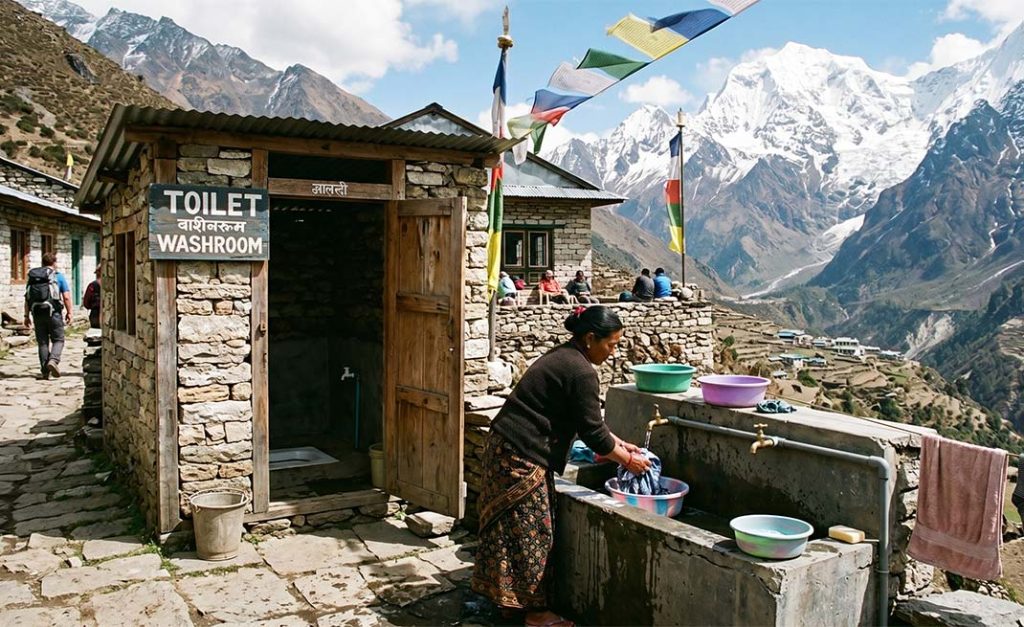
Teahouse toilets in Langtang are usually basic. In lower villages you may find more standard facilities, while higher up they can be quite simple, especially in colder months. Do not expect toilet paper to be provided consistently. Carry your own and keep it dry in a sealed bag.
Many toilets do not have running water inside, and handwashing stations may be outside or limited. That is why sanitizer is essential, not optional. Wet wipes can help for general cleanliness, but they should never be flushed. Pack them out or dispose of them only where appropriate.
For personal washing, warm water is not always available in generous amounts. On cold trekking days, many people reduce bathing and then feel less fresh as the trek goes on. That is normal. Full showers are less important than keeping hands, face, socks, underwear, and toilet hygiene under control. A small quick-dry towel, biodegradable soap used carefully, and spare undergarments make a real difference.
If you are menstruating on trek, pack all supplies in advance and bring a reliable method for carrying used items out discreetly and hygienically. Do not count on finding what you need in the mountains.
Food hygiene matters too
You can purify every drop of water and still get sick from careless eating. Meals at established teahouses are usually safe when freshly cooked and served hot. Food that sits exposed for long periods is a bigger risk, especially in warmer lower sections.
Choose cooked meals over raw items when possible. Be a little more cautious with uncooked salads, cut fruit, and anything washed in uncertain water. If you want fruit, bananas and oranges are easier choices because you peel them yourself.
Shared snacks are another weak point. If one person in a group has dirty hands and everyone grabs from the same bag, that bag becomes a small contamination point. It sounds minor, but this is exactly how stomach bugs travel through trekking groups.
A few practical mistakes to avoid
Trekkers often begin well in Syabrubesi and then get casual after two or three days. They refill from a tap because the water looks clean, skip sanitizer when tired, or borrow someone else’s bottle. These are the habits that usually cause trouble.
Another common mistake is relying only on bottled water. It creates plastic waste, becomes expensive, and is less available higher on the route. A reusable system with treatment is better for both practicality and the trail.
Finally, do not ignore early symptoms. If you develop diarrhea, stomach cramps, vomiting, or signs of dehydration, respond quickly. Rest, keep drinking treated fluids in small amounts, and avoid pushing hard uphill just to stay on schedule. In the mountains, patience is often the smarter decision.
Langtang is one of Nepal’s most rewarding treks because it feels close to the high mountains without the long logistics of some other regions. A clean bottle, treated water, and disciplined hygiene may sound like small things, but on this trail they often make the difference between a strong enjoyable trek and several difficult days you did not need to have.

