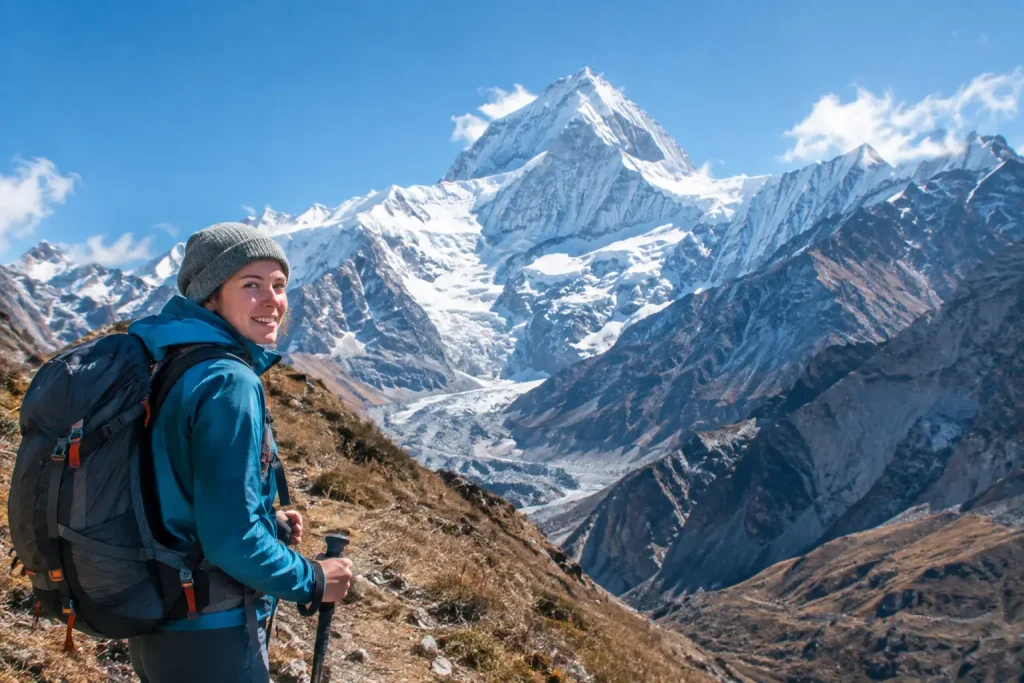
The Kanchenjunga trek guide starts with one fact that shapes every decision: this is Nepal’s most remote major trekking region. Days are longer, flights can change with the weather, and there are fewer easy exit points than on the Everest or Annapurna routes. In return, prepared trekkers experience a quieter side of the Himalaya, with exceptional mountain views and villages that still feel far removed from Nepal’s busier trekking corridors.
What Is the Kanchenjunga Trek?
The Kanchenjunga region lies in far eastern Nepal beside the Indian border. Trekking routes approach Kanchenjunga, the world’s third-highest mountain, from the south, the north, or both sides on a longer circuit. Most itineraries begin with travel from Kathmandu to Bhadrapur, followed by a long road journey to Taplejung and the trailhead villages.
This is not a single fixed trail. The South Base Camp route leads toward Oktang and views of the Yalung Glacier, while the North Base Camp route reaches Pangpema, beneath the enormous north face of Kanchenjunga. A full circuit connects both approaches through high, remote terrain and usually requires three weeks or more.
Choosing the Right Kanchenjunga Route
South Base Camp
The southern approach is often the better choice for trekkers with roughly 14 to 18 days available. It passes through forest, terraced farmland, and settlements including Yamphudin before climbing toward Tseram, Ramche, and Oktang. The high point is generally around 4,700 meters, or 15,400 feet, depending on the itinerary and viewpoint reached.
This route still requires serious endurance, but it is somewhat shorter and less complex than the full circuit. It can suit a strong first-time high-altitude trekker who has trained well, travels with a qualified guide, and keeps the itinerary conservative.
North Base Camp
The northern approach usually takes 16 to 20 days. The trail travels through villages such as Ghunsa and climbs to Lhonak before reaching Pangpema at about 5,140 meters, or 16,860 feet. It is a more demanding altitude objective, with colder conditions and longer distances from reliable medical support.
Choose the north side if you have previous trekking experience at altitude or can build in extra acclimatization days. The scale of the terrain is a major reward, but this route is not one to compress simply to fit a vacation schedule.
Full Kanchenjunga Circuit
A circuit linking both base camps commonly takes 22 to 28 days, depending on road access, rest days, and weather. It includes a high crossing near Sele La and demands consistent fitness over a long expedition-style itinerary. This is the best option for experienced trekkers who want a complete journey rather than a quick base camp visit.
The trade-off is straightforward: the circuit offers greater variety and a stronger sense of expedition, but it also raises the cost, weather exposure, and chance that a delayed flight or road closure will affect the plan.
How Difficult Is the Kanchenjunga Trek?
Kanchenjunga is strenuous rather than technical. You do not need ropes or climbing skills on the standard trekking routes, but you do need the ability to walk for multiple consecutive days on steep, uneven trails. Typical days can involve five to eight hours of hiking, with longer days possible when conditions or itinerary changes require it.
Altitude is the primary challenge. North Base Camp exceeds 5,000 meters, and even the southern route involves several nights above 4,000 meters. At these elevations, pace slows, sleep can worsen, and a normal uphill feels far harder than it does at home.
Remote logistics add another layer. Tea houses exist along much of the trail, but facilities are simpler and less predictable than in the Everest region. Menu options narrow at higher elevations, charging may be limited, and trail conditions can change after rain or snow. Trekkers should be comfortable adapting without assuming every day will run exactly as planned.
Fitness and Training Before You Go
Start structured training at least 10 to 12 weeks before departure. Your goal is not speed. It is the capacity to hike steadily day after day while carrying a daypack at altitude.
Build aerobic fitness with uphill hiking, stair climbing, cycling, running, or a combination of these. Add two weekly strength sessions focused on squats, lunges, step-ups, calf raises, core stability, and back strength. In the final month, complete long hikes on consecutive days with the boots and pack you intend to use in Nepal.
A useful benchmark is being able to hike six to eight hours on hilly terrain while carrying 15 to 20 pounds, then repeat a shorter hike the following day. This does not guarantee comfort at altitude, but it gives you the durable leg strength the trail requires.
Permits, Guides, and Restricted-Area Rules
Kanchenjunga is a restricted area, so independent trekking is not permitted. Foreign trekkers must travel with a licensed Nepali guide through a registered trekking agency. You will also need the Kanchenjunga Conservation Area Permit and a restricted-area permit for the relevant sections of the route.
Permit rules, group requirements, and fees can change, so confirm the current requirements before booking flights. A reputable operator will arrange permits, transport, staff, and required documentation, but travelers should still understand what has been included in their trip price.
A guide is more than a permit requirement here. On a remote route, local route knowledge, language support, weather judgment, and help arranging a descent if someone becomes ill have direct safety value. A porter can also make the trek more sustainable by reducing the weight on your back. Keep your own daypack limited to water, layers, medication, valuables, and daily essentials.
Best Time for the Kanchenjunga Trek
Spring, from late March through May, and fall, from October through November, are the primary trekking seasons. Spring brings rhododendron forests at lower elevations and gradually warmer temperatures, though haze can affect distant views later in the season. Fall usually offers clearer skies and stable visibility after the monsoon, but high camps become cold quickly.
Winter trekking is possible for experienced, well-equipped groups, but snow can make high passes and base camp approaches difficult or inaccessible. The summer monsoon brings leeches, slippery trails, cloud cover, and frequent transport disruptions. It is generally a poor choice for a first Kanchenjunga visit.
Even in peak season, build contingency time into your international plans. Flights to Bhadrapur and long road transfers are vulnerable to weather and road conditions, especially after heavy rain.
Altitude Safety on Kanchenjunga
No fitness level prevents altitude illness. The safest strategy is a sensible ascent profile, rest days, hydration, adequate food intake, and immediate attention to symptoms. Headache, nausea, dizziness, unusual fatigue, and poor sleep can signal acute mountain sickness.
Do not try to push through worsening symptoms to reach a scheduled destination. If symptoms are severe, persistent, or accompanied by confusion, loss of coordination, breathlessness at rest, or a wet cough, descend immediately and seek medical support. The descent is the treatment that matters most.
Choose an itinerary that includes acclimatization nights around Ghunsa, Tseram, or other appropriate intermediate stops. Avoid plans that gain sleeping altitude aggressively just because the total number of trekking days looks appealing on paper.
Costs, Insurance, and Practical Packing
A guided Kanchenjunga trek costs more than shorter, more accessible Nepal routes because it requires internal flights or long transfers, permits, guides, porters, food, accommodation, and operational support across many days. Pricing varies sharply based on group size, itinerary length, porter support, and whether contingencies are included.
Your travel insurance must specifically cover trekking to the highest altitude on your route and include emergency helicopter evacuation. Read the policy wording, not just the headline coverage amount. Some policies exclude remote trekking, rescue above a stated elevation, or claims linked to pre-existing conditions.
Pack for cold, wet, and variable conditions. A reliable down jacket, waterproof shell, warm sleeping bag, broken-in boots, gloves, sun protection, headlamp, water treatment, and a personal first-aid kit are essential. Bring spare batteries or a power bank, but do not depend on regular charging at high elevations.
Is Kanchenjunga Right for You?
Kanchenjunga is a strong choice if you want a longer, quieter Himalayan trek and are willing to trade convenience for depth of experience. It is less suitable if you have a tight schedule, need frequent comforts, or are uncertain about your response to sustained high altitude.
For a first Nepal trek, routes such as Langtang, Poon Hill, or Mardi Himal are often easier places to learn how your body handles Himalayan trails. But for trekkers with solid preparation and enough time, Kanchenjunga offers something increasingly rare: a major mountain journey where patience, fitness, and sound judgment matter more than checking off a famous viewpoint.
Give this trek the extra days, conservative pacing, and qualified support it deserves. The mountain will still be there if weather changes your plan, and making that decision early is often the mark of a capable trekker.