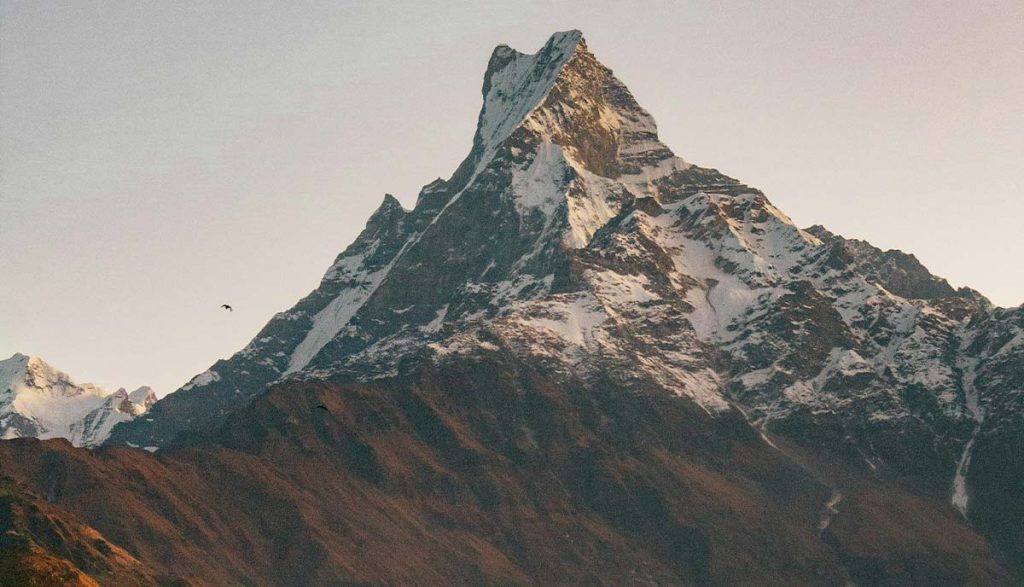
Few treks in Nepal change character as quickly as Mardi Himal. In a matter of days, you walk from damp rhododendron forest to open ridgelines and high alpine ground beneath Machhapuchhre. That sharp change in altitude is exactly why wildlife and biodiversity in the Mardi Himal Trek region are so interesting. The trail is not only about mountain views. It is also a transition zone where different habitats sit close together, supporting birds, mammals, insects, and plant life that shift noticeably with elevation.
For trekkers, this matters in a practical way. If you understand what lives in each belt of the trail, the walk becomes richer. You start noticing the calls in the forest before sunrise, the changing tree line, the shrubs that survive wind exposure, and the quiet difference between lower woodland and upper pasture. Mardi Himal is often chosen as a shorter trek in the Annapurna area, but its ecological variety is one of the reasons it feels bigger than the map suggests.
Why the Mardi Himal trail has rich biodiversity
The Mardi Himal route rises through several ecological zones over a relatively compact distance. Starting from the lower foothill settlements and climbing through dense temperate forest, the trail gradually reaches subalpine and alpine terrain. That compressed vertical range creates excellent conditions for biodiversity. Species that prefer humid woodland can exist not far below open high-country species adapted to colder, harsher ground.
Another reason is the region’s vegetation cover. Large sections of the trail pass through healthy forest, especially between lower camp areas and the upper ridges. These forests are not just scenic. They provide food, nesting sites, shelter, and migration corridors for many species. In spring, when rhododendrons bloom, the area becomes especially lively with birds and pollinating insects.
The weather also plays a role. Moisture from the south-facing slopes supports dense plant growth in many sections. At the same time, exposure increases sharply as you climb. This creates a natural layering of life. Lower down, you are in a green, sheltered environment. Higher up, only hardy grasses, shrubs, and alpine plants remain.
Wildlife and biodiversity in the Mardi Himal Trek region by altitude
The easiest way to understand the ecology of this trek is by elevation.
Lower forests and village edges
In the lower sections near cultivated land and mixed woodland, you may notice common hill birds, butterflies, and smaller mammals that live around human settlements and forest margins. These transition areas are often busy with bird activity in the morning and late afternoon. Because local communities manage farmland, grazing areas, and woodlands side by side, biodiversity here depends partly on how well that balance is maintained.
This is also where plant diversity feels most obvious. Ferns, mosses, orchids, and broadleaf species thrive in moist shade. In clear weather, many trekkers focus on the mountain backdrop, but the forest floor itself can be impressive, especially after light rain or during the greener months.
Mid-elevation rhododendron and oak forest
This belt is one of the ecological highlights of Mardi Himal. Rhododendron, oak, maple, and hemlock forests support a wide range of birds and small mammals. If you trek quietly, this is the zone where you are most likely to hear far more wildlife than you actually see. Calls from laughingthrushes, barbets, and other forest birds often carry through the trees, especially around dawn.
This section also provides habitat for shy mammals that avoid busy areas. Sightings are never guaranteed, and that is worth saying clearly. Even in a healthy ecosystem, mammals are often active at dawn, dusk, or at night, and they usually move away from noisy trekking groups. Still, the presence of an intact forest is a good sign. It means the route still functions as more than just a walking trail.
Upper forest edge, scrub, and pasture
As the trail climbs above denser tree cover, biodiversity changes rather than disappearing. You begin to see more exposed shrubs, grasses, and hardy flowering plants adapted to wind, cold nights, and thinner soil. Birdlife also shifts. Species that prefer open slopes and edge habitat become more likely than deep-forest birds.
This upper zone can feel quieter, but it is ecologically important. Forest edge and subalpine scrub often support specialized species that rely on both cover and open ground. Seasonal grazing can influence this habitat, and the impact depends on intensity. Moderate traditional use may coexist with biodiversity, but overuse can reduce vegetation quality and disturb ground-nesting species.
Animals you may encounter on the Mardi Himal trek
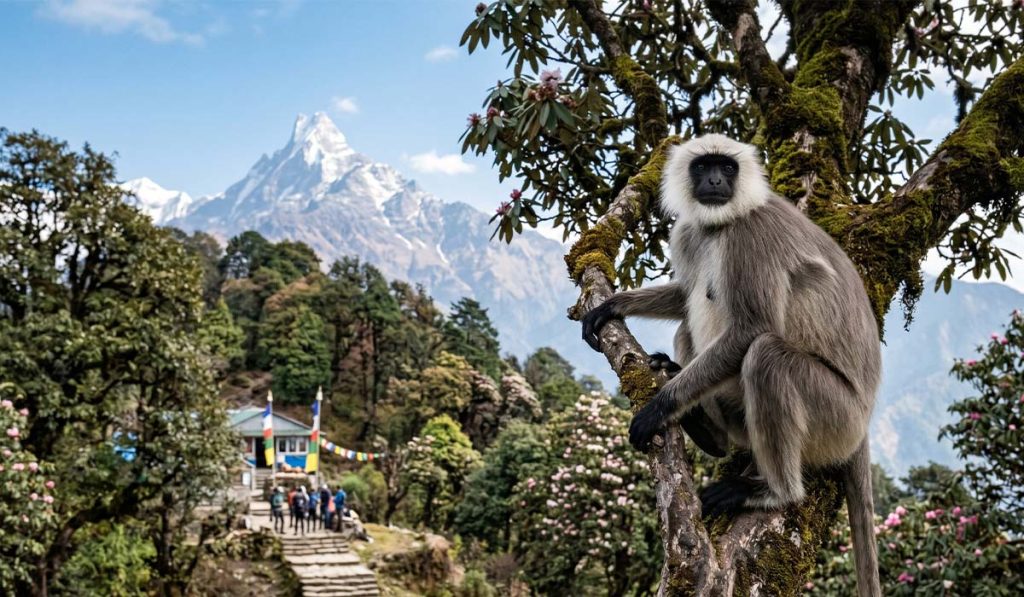
Most trekkers will not see large numbers of mammals on the route, and that is normal. The region rewards patience more than expectation. Birds are usually the most visible wildlife, while mammals tend to be elusive.
Birdwatchers often enjoy Mardi Himal more than they expect. Himalayan monal, Nepal’s national bird, is one of the species people hope to spot in suitable habitat, though sightings are a matter of timing and luck. Various pheasants, raptors, and forest songbirds also occur in the broader Annapurna landscape that includes Mardi Himal. On clear mornings, scanning ridges and listening carefully in wooded sections can be more productive than walking fast.
Among mammals, the area supports species typical of mid-hill and high-hill forest ecosystems. Depending on habitat and season, this can include langurs, martens, barking deer, and other shy forest animals. In the wider conservation landscape, there are also more secretive species with larger ranges, though trekkers should not build their itinerary around seeing them. The realistic expectation is not a safari-style experience. It is a mountain trek through a living habitat where wildlife signs, calls, movement, and occasional sightings add depth to the journey.
Reptiles and amphibians are less talked about by trekkers, but they are part of the region’s biodiversity too, especially in lower, wetter sections. Insects, including butterflies and pollinators, are often more noticeable in warmer months and around flowering periods.
Plant life that shapes the trail experience
If you want to understand Mardi Himal properly, look at the vegetation as much as the peaks. Plant communities define the atmosphere of each day’s walk.
Rhododendron is the best-known example. During blooming season, the forest can feel completely transformed, with red, pink, and white flowers adding color to otherwise shaded sections. But the botanical richness goes beyond rhododendron. Oak and mixed temperate forest support mosses, lichens, and understory plants that thrive in cool, moist conditions. Higher up, dwarf shrubs and alpine grasses take over, showing how plants adapt to exposure and shorter growing seasons.
These plant zones also influence wildlife movement. Birds feed on flowers, fruit, seeds, and insects linked to specific vegetation types. Mammals depend on cover, browse, and seasonal forage. So when trekkers talk about beautiful forests on Mardi Himal, they are also talking about the foundation of the region’s biodiversity.
What affects biodiversity on the Mardi Himal route
Like many popular trekking areas, Mardi Himal sits between conservation value and growing visitor pressure. More foot traffic brings local income and supports village livelihoods, which is important. But unmanaged growth can strain trails, increase litter, disturb wildlife, and pressure wood and water resources.
Season matters too. In peak trekking months, trails and teahouses are busier, and animals may stay farther from the main route. During quieter periods, the forest can feel more active, although weather conditions may be less comfortable for trekking. There is always a trade-off between the best trekking season for views and the best conditions for quiet wildlife observation.
Climate change is another long-term factor. Shifts in temperature and precipitation affect flowering times, forest health, snow patterns, and habitat boundaries. In mountain ecosystems, even modest changes can alter where species feed, breed, or migrate. Trekkers may not notice these changes immediately, but local guides and long-time operators often do.
How to trek responsibly around wildlife and biodiversity in the Mardi Himal Trek region
Responsible trekking here is straightforward, but it requires awareness. Walk quietly in forest sections, especially early in the day. Avoid playing music on the trail. Stay on the main path instead of cutting switchbacks or entering side habitat. Do not feed birds or animals, even if they seem accustomed to people.
Waste management matters more than many trekkers realize. Plastic wrappers, food scraps, and poorly managed toilet waste affect both habitat and water quality. Choosing lodges and trekking practices that minimize unnecessary waste helps keep pressure lower on this compact ecosystem.
Firewood use is another issue in some trekking areas. Where cleaner alternatives are available, they reduce strain on local forests. The same goes for water use, especially in busy trekking months when demand rises. These small choices may seem minor for one visitor, but multiplied across a season, they have a real effect.
Hiring an experienced local guide can also improve the experience. A good guide does more than lead the way. They can point out habitat changes, identify birds or animal signs, explain seasonal patterns, and help trekkers move through the landscape with more respect. That practical field knowledge often turns a scenic trek into a much more informed one.
Mardi Himal is often praised for its ridgeline views and relatively short itinerary, and rightly so. But the trail is more than a viewpoint route. It is a compact mountain ecosystem where forests, shrubs, alpine ground, and wildlife all change with each day of walking. If you slow down enough to notice those transitions, the trek gives you more than scenery. It gives you a clearer sense of how alive the Himalayan landscape really is.