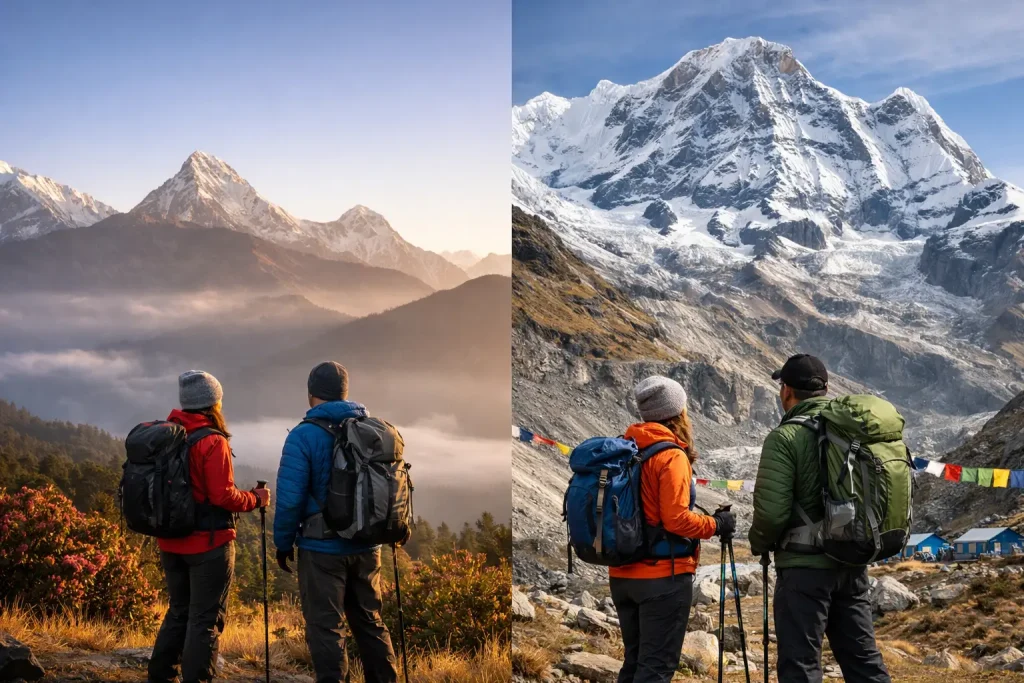
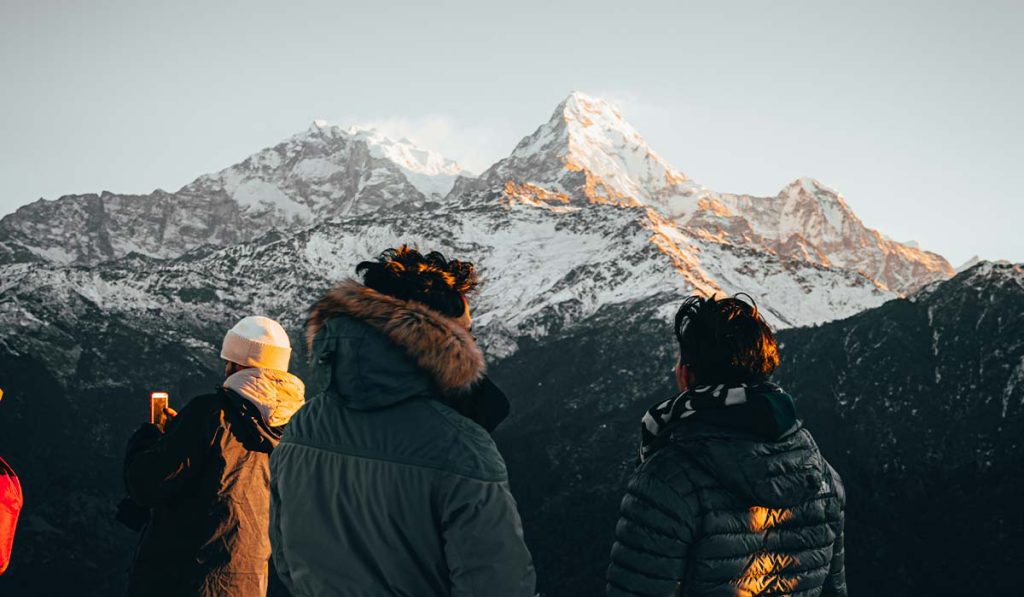
For many women, the biggest worry about Female Solo Trekking Poon Hill is not the walking itself. It is the question that comes before booking the flight – will I actually feel safe and comfortable on the trail? The good news is that Poon Hill is one of the more approachable treks in Nepal for solo female travelers, but that does not mean you should treat it casually. Good preparation makes the difference between a confident Himalayan walk and a stressful one.
Poon Hill sits in the Annapurna region and is popular for a reason. The route is relatively short, the altitude is moderate compared to the Everest or Annapurna Circuit trek, the villages are established, and the teahouse infrastructure is strong. You will usually meet other trekkers along the way, especially in peak seasons. For women traveling alone, that combination matters. You get mountain scenery, a real trekking experience, and a lower level of logistical complexity than on more remote trails.
Why Poon Hill works well for solo female trekkers
This trek is often recommended to first-time trekkers in Nepal, and that advice also applies to many women traveling alone. The trail is well-known, clearly followed by thousands of trekkers each year, and connected by villages where food and accommodation are easy to find. You are not committing to long, isolated sections where help is far away.
Another advantage is the trek length. Most itineraries take 4 to 5 days from the trailhead, depending on where you start and whether you include places like Ghandruk, Tadapani, or Jhinu Danda. That shorter timeline reduces both cost and fatigue. If you are testing your comfort level with solo trekking in Nepal for the first time, Poon Hill is a sensible place to start.
That said, “easier” does not mean effortless. There are many stone stair sections, especially around Ulleri, and some trekkers find them more tiring than expected. During monsoon or winter, the trail can also become slippery or cold. Solo trekking still requires judgment, pacing, and awareness.
Is female solo trekking to Poon Hill safe?
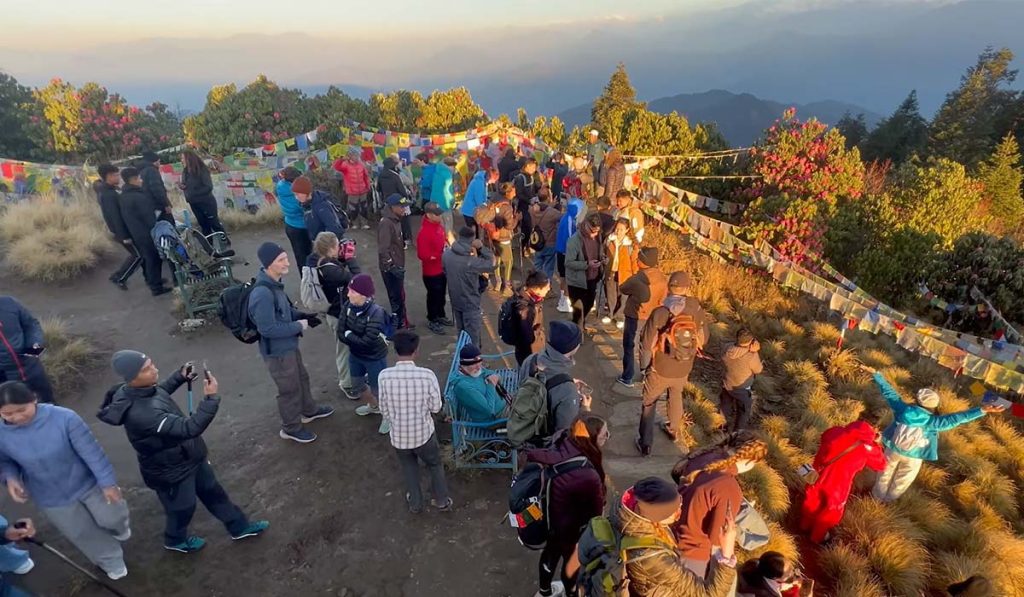
In practical terms, yes, Poon Hill is generally considered safe for solo female trekkers. The route passes through busy trekking villages such as Tikhedhunga, Ulleri, Ghorepani, Tadapani, and Ghandruk, and local people in these communities are very used to international visitors. Teahouse owners, guides, porters, and other trekkers are part of the normal rhythm of the route.
Most women who trek here alone are more likely to deal with common trekking problems than serious security issues. Those common problems include walking too fast, getting mild altitude symptoms, poor weather, blisters, dehydration, or arriving late at a stop without a room booked in peak season. These are manageable if you plan properly.
The main safety advice is simple. Start walking early, avoid arriving after dark, keep your family or a trusted contact updated on your route, and choose accommodation that feels established and professional. If something feels off, change your plan. You do not need to be polite at the expense of your comfort.
Solo female trekkers should also remember that trail safety and personal safety are not exactly the same thing. The trail itself is well traveled, but confidence comes from small habits: keeping your valuables organized, charging your phone whenever possible, carrying enough cash, and not depending on one single plan if transport or weather changes.
Permits, rules, and whether you need a guide
This is one area where travelers need current information, because trekking rules in Nepal can change. The Poon Hill trek typically requires an Annapurna Conservation Area Permit. Depending on the latest regulations and your route logistics, solo trekking policies may also affect whether you can trek independently or should go with a licensed guide.
Even when independent trekking is possible, many solo female travelers choose a guide for practical reasons rather than out of fear. A good guide helps with route pacing, tea house coordination, local communication, weather judgment, and transport timing. That can make the trip feel much lighter, especially if it is your first trek in Nepal.
The trade-off is cost and independence. If you enjoy making your own decisions and already have trekking experience, you may prefer to walk on your own. If you want extra local support and someone to handle the moving parts, a guide is often worth it. For some women, that support adds more freedom, not less.
Best season for a comfortable solo trek
Spring and autumn are the best seasons for most trekkers. In spring, the forests are greener and rhododendrons can be in bloom, especially around Ghorepani. In autumn, skies are often clearer and mountain views can be especially sharp after the monsoon. Both seasons also bring more trekkers to the trail, which many solo travelers appreciate.
Winter is possible, but mornings are cold and icy sections can appear. The sunrise trip to Poon Hill viewpoint can feel harsh before dawn if you are not prepared with proper layers and gloves. Monsoon brings lush landscapes but also muddy trails, leeches, cloud cover, and a higher chance of transport disruption.
For a solo female trekker, the best season is not only about mountain visibility. It is also about comfort, company on the trail, and predictable conditions. In that sense, October to November and March to April are usually the easiest windows.
Route choices and how hard the trek feels
The classic route often begins with a drive from Pokhara to Nayapul or nearby road access points, followed by trekking through Ulleri and Ghorepani, then an early morning hike to Poon Hill for sunrise. Many trekkers continue through Tadapani to Ghandruk before returning by road.
The biggest surprise for many first-timers is not altitude but stairs. The climb toward Ulleri can be demanding, especially if you have just arrived in Nepal and are not yet used to the terrain. Poon Hill itself is not an extreme-altitude trek, but the constant ups and downs can make the days feel longer than the map suggests.
If you are trekking alone, build your itinerary conservatively. There is no prize for rushing. A slower itinerary gives you more flexibility if the weather changes, if you want longer breaks, or if you simply feel tired. On this route, steady walking is usually better than ambitious daily targets.
Teahouses, food, and what to expect alone
Accommodation on the Poon Hill route is one of its strengths. Teahouses are widely available, and in the main villages, you usually have more than one option. Rooms are basic, with twin beds, simple bedding, and shared bathrooms in many places. Luxury is not the point, but comfort is usually enough for a short trek.
For solo women, choosing busy and well-reviewed teahouse areas is often the easiest approach. In peak season, villages like Ghorepani can fill quickly, so arriving earlier in the afternoon is wise. A room in a central lodge with a common dining hall often feels more comfortable than staying in a very quiet place on the edge of the village.
Food is standard trekking fare: dal bhat, noodles, fried rice, soup, eggs, potatoes, pancakes, tea, and coffee. Dal bhat remains the most reliable choice for energy and consistency. It may not be glamorous, but on a trek it does the job well.
Practical tips for female solo trekking to Poon Hill
Packing light matters, but packing smart matters more. Bring layers for cold mornings, a waterproof outer layer, a headlamp, a power bank, a water purification method, and basic medicine for stomach issues, blisters, and pain relief. Trekking poles help many people on the long stair descents.
Clothing does not need to be complicated, but modest and practical trekking wear tends to work best in village settings. Nepal is welcoming, yet dressing with some cultural awareness helps you blend in more comfortably.
You should also carry enough cash for the full trek plus a little extra. ATMs are not something to rely on once you are on the route. Mobile signal is available in many sections, but not always consistently enough to treat your phone as a complete safety system.
If you are unsure about route logistics, transport timing, or permit updates, getting local advice before you start is one of the smartest decisions you can make. This is where experienced operators such as Himalaya Wanderer can genuinely help, especially if you want support without overcomplicating a short trek.
When solo is a good idea, and when it is not
Poon Hill is a strong choice for independent-minded women, but it is not automatically the right fit for every traveler. If you have never trekked before, feel nervous about route planning, or know that isolation increases your stress, booking a guide may be the better version of “solo” for you. You still travel on your own terms, but with local backup.
On the other hand, if you are comfortable with basic trekking routines, know how to pace yourself, and like meeting people naturally along the route, solo trekking can be rewarding here. The trail offers enough social contact to prevent the experience from feeling too remote, while still giving you the freedom to walk at your own speed.
The best approach is the one that matches your actual comfort level, not the one that sounds most adventurous online. Poon Hill does not demand bravado. It rewards good decisions, realistic planning, and the kind of confidence that comes from being prepared before your boots hit the trail.