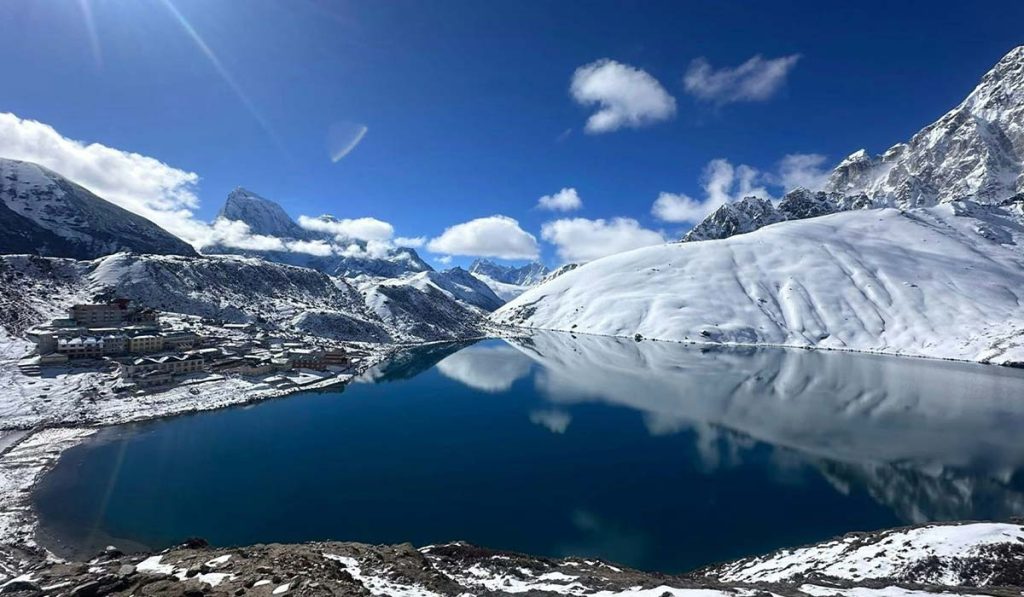
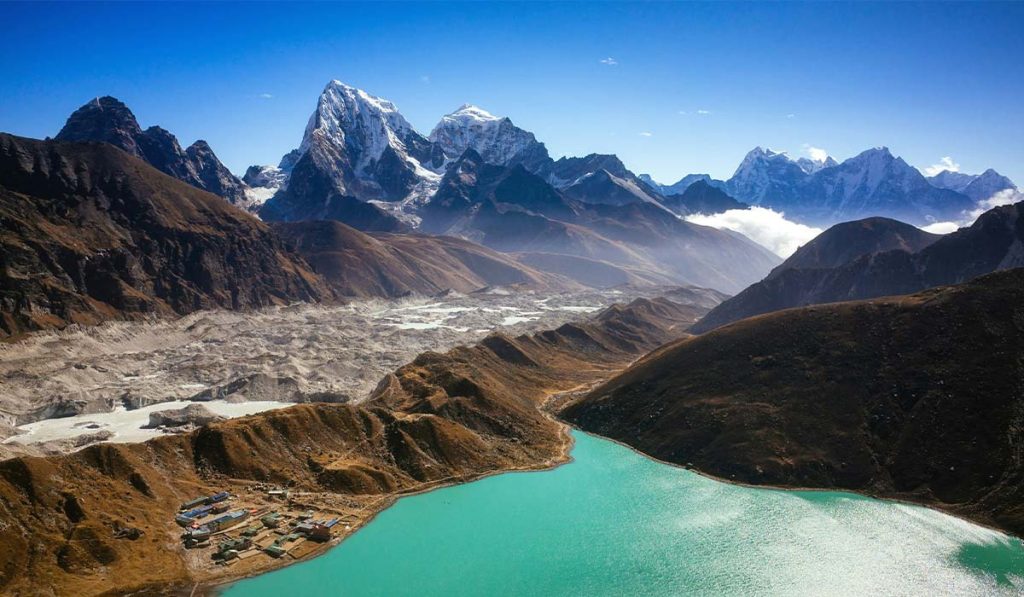
Many trekkers prepare for altitude, flights, and gear, then get confused by one of the simplest parts of the trip: permits. If you are planning the Gokyo route, understanding the Required Permits for the Gokyo Lakes Trek before you arrive in Nepal can save time, money, and unnecessary stress at the checkpoints.
The good news is that the permit process for Gokyo is more straightforward than many trekkers expect. The trail lies in the Everest region, and for most international trekkers, you need two main permits. What causes confusion is that older information still mentions documents that are no longer used in the same way, so it helps to know what is current and what is outdated.
Required Permits for Gokyo Lakes Trek
For the Gokyo Lakes Trek, you generally need the Sagarmatha National Park Entry Permit and the Khumbu Pasang Lhamu Rural Municipality Permit. These are the two standard permits checked on the route.
The Sagarmatha National Park Entry Permit is required because the trek passes through a protected national park area. This permit supports conservation, trail management, and protection of the Everest region’s natural environment. You will typically need to show it as you enter the park.
The Khumbu Pasang Lhamu Rural Municipality Permit is a local area permit introduced for trekkers entering the Khumbu region. This has replaced the older TIMS requirement for most trekkers on Everest region routes, including Gokyo. Many travelers still search for TIMS because it used to be part of Nepal trek planning in many regions, but for the Gokyo route, the local Khumbu permit is the key document instead.
If you are a Nepali citizen, SAARC traveler, or a foreign national from elsewhere, the fee structure can vary. That is why it is always wise to check the latest rate shortly before your trek. Permit costs in Nepal can change, and relying on older blogs often leads to the wrong budget estimate.
Current permit fees and what to expect
For most foreign trekkers, the Sagarmatha National Park Entry Permit and the Khumbu local permit are charged separately. In practical terms, you should budget for both, carry enough Nepalese rupees in cash, and keep some extra in case rates are revised.
The national park permit is usually issued at the Nepal Tourism Board office in Kathmandu or at the park entry point on the trail. The Khumbu Pasang Lhamu Rural Municipality Permit is commonly obtained at the local checkpoint in the Everest region, often around Lukla or Monjo depending on the route and current system in place.
This matters because many trekkers assume everything can be arranged in Kathmandu. In reality, one permit may be obtained before the flight, while the other is often handled in the trekking region itself. If you are trekking with an agency or guide, this process is usually arranged for you. If you are trekking independently where regulations allow, you should confirm exactly where each permit will be issued at the time of travel.
Carry your passport, a few passport-size photos just in case, and enough local currency. Photos are not always required for every permit office now, but bringing them is a simple backup. Digital systems have improved in some places, though you should not assume internet or card payment will be available.
Where to get the Gokyo permits
The permit collection point depends on your itinerary. Most trekkers begin with a flight from Kathmandu or Ramechhap to Lukla and then start walking toward Phakding, Namche Bazaar, and onward to Gokyo. On this standard approach, one permit may be secured in Kathmandu and the local permit is often issued in the Khumbu region.
If you are entering from Jiri, Salleri, or another lower trailhead instead of flying to Lukla, checkpoint timing can be different. The permits are still required, but you may encounter the checks at different stages of the route. This is one reason why route details matter. Permit planning is not only about what you need, but where you will be asked to show it.
A licensed trekking company can make this easier, especially if you are already managing flights, accommodation, and acclimatization days. For first-time Everest region trekkers, having the documents handled correctly removes one common source of confusion.
Do you need TIMS for the Gokyo Lakes Trek?
In most cases, no. For the Everest region, the Khumbu Pasang Lhamu Rural Municipality Permit has largely taken the place of the TIMS card for trekkers following common routes such as Everest Base Camp and Gokyo Lakes.
This is where many articles online create problems. Some still list TIMS plus a national park permit plus a local permit, which leads trekkers to think they need three separate documents. That is usually not the current requirement for Gokyo. The more accurate way to think about it is this: for the standard Gokyo Lakes Trek, the two main permits are the Sagarmatha National Park Entry Permit and the Khumbu local permit.
Because permit systems can be updated by local authorities or tourism bodies, check for current rules before departure. But if you see very old Everest trekking advice mentioning TIMS as mandatory for Gokyo, treat it carefully.
Are permits enough, or do you also need a guide?
This is where the answer depends on current trekking regulations. Nepal’s trekking rules have evolved, and there has been ongoing discussion and implementation around guide requirements in different regions. For the Everest region, independent trekking has remained more flexible than some restricted or tightly controlled areas, but practical conditions can change.
So permits and guide requirements are not always the same issue. Having the correct permits does not automatically mean you can trek under any style you choose. Before you finalize your plan, confirm whether solo trekking rules, local enforcement, or airline and checkpoint procedures have changed.
From a field perspective, many trekkers can complete the Gokyo Lakes Trek safely with proper planning, but a guide still adds real value. The route is not technically difficult in normal conditions, yet weather delays, altitude problems, and route changes around high passes can make local support worthwhile. If you plan to combine Gokyo with Cho La Pass or Everest Base Camp, that value increases.
Checkpoints, inspections, and common mistakes
On the Gokyo route, permits are normally checked at official points along the trail. Keep them accessible, not buried deep in your duffel bag. A damaged or missing document can create delays you do not want after a long day of walking.
One common mistake is assuming a flight ticket to Lukla somehow replaces permit checks. It does not. Another is carrying only digital copies on a phone. Battery drain, cold weather, and weak network are enough reasons to keep physical paperwork with you.
Trekkers also sometimes underestimate timing. If you arrive in Kathmandu late, fly out early, and still need to arrange documents, your schedule can become tight. Build a little flexibility into your pre-trek plan. In the Everest region, weather already creates enough uncertainty. Your permits should be the part that feels organized.
If you combine Gokyo with other routes
Many trekkers do not stop at Gokyo Lakes alone. Some continue to Gokyo Ri, cross Cho La Pass toward Everest Base Camp, or extend the trek deeper into the Khumbu. In most cases, the same core permits cover these connected routes within the same region and protected area.
That said, your permit needs can change if your trip includes a restricted area outside the standard Everest trekking zone. This is less common for Gokyo trekkers, but it matters for those building custom itineraries in Nepal. Whenever your route goes beyond the usual lodge trekking corridors, assume nothing and verify the rules.
Practical advice before you go
Permit planning for Gokyo is not difficult, but it rewards accuracy. Carry your passport, passport photos, cash in Nepalese rupees, and a couple of photocopies of your identification page. Keep your permits dry and easy to access. If someone else is arranging them for you, ask exactly which documents are included so there are no surprises at the first checkpoint.
Just as important, use current information. The Everest region is well organized, but online advice often lags behind reality. Fees change, offices shift procedures, and old TIMS-related details continue to circulate long after the rules have changed.
The Gokyo Lakes Trek is one of the most rewarding routes in the Khumbu, with quieter trails, wide glacier views, and the unforgettable turquoise lakes below Gokyo Ri. The permit side of the trip is not the exciting part, but getting it right means you can focus fully on the walk ahead.