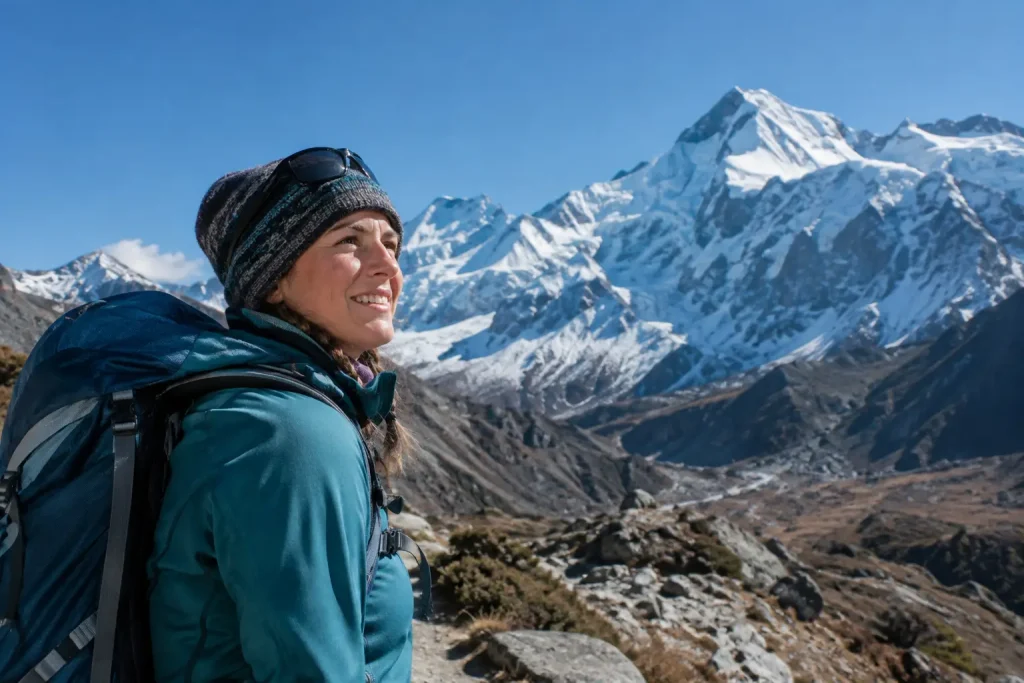
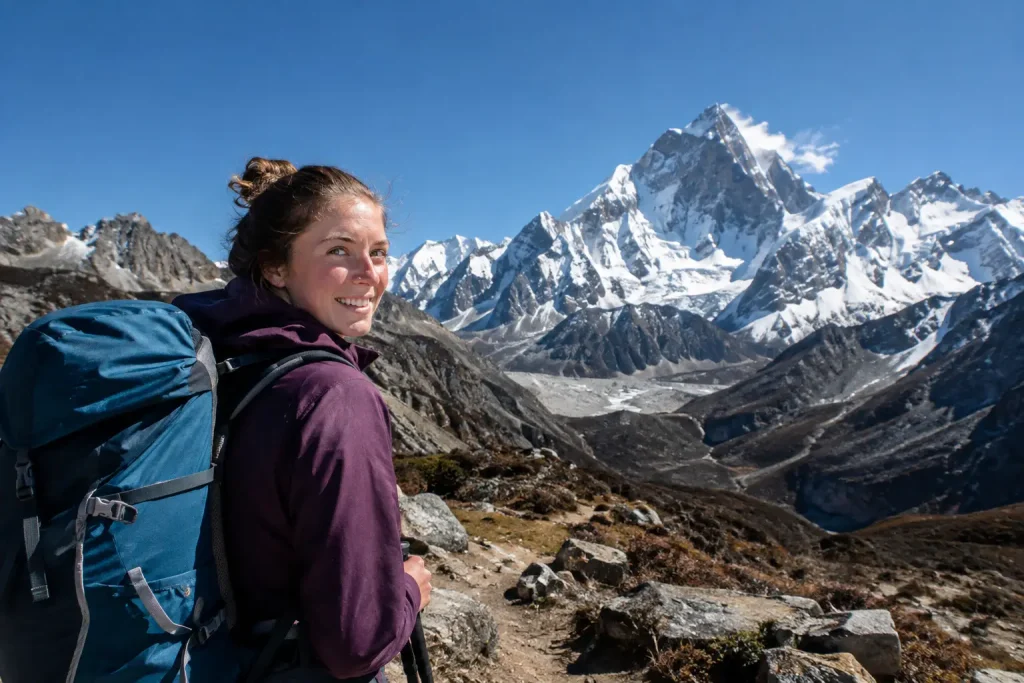
The defining moment of an Annapurna base camp experience is not the final sign at 13,550 feet. It is waking before sunrise inside a snowbound amphitheater, with Annapurna I, Annapurna South, Hiunchuli, and Machhapuchhre rising directly above the lodge roofs. This Annapurna base camp experience review looks beyond that moment at what the trek actually demands: sustained uphill walking, damp forest trails, basic lodging, changing weather, and a real but manageable altitude profile.
For trekkers who want a major Himalayan objective without committing to the length and high passes of the Everest region, Annapurna Base Camp is one of Nepal’s strongest choices. It is scenic, social, and achievable for prepared first-time high-altitude trekkers. It is not, however, an easy walk simply because the maximum elevation is lower than Everest Base Camp.
What the Annapurna Base Camp trek feels like
The route begins with a drive from Pokhara to a trailhead near Jhinu Danda, Samrung, or Ghandruk, depending on road conditions and itinerary. The early days move through terraced villages, suspension bridges, stone staircases, and dense rhododendron and bamboo forest. There is a strong sense of progression: warm lowland hills give way to cool gorge terrain, then to sparse alpine landscape above the tree line.
Most standard itineraries reach Chhomrong, then continue through Sinuwa, Bamboo, Dovan, Himalaya, and Deurali before arriving at Machhapuchhre Base Camp and Annapurna Base Camp. The changing terrain is one reason the route remains rewarding even on cloudy days. You are not walking across a single barren valley for a week. The landscape changes constantly, although the long ascent through the Modi Khola valley can feel repetitive when legs are tired.
The final approach from Deurali is where the scale becomes unmistakable. The valley narrows, vegetation thins, and the trail enters glacial terrain beneath steep mountain walls. At Annapurna Base Camp, the panorama is unusually close and complete. Few popular treks in Nepal offer such an immediate mountain enclosure without requiring technical climbing.
Annapurna Base Camp experience review: the strongest parts
The mountain scenery is the central reason to go. Annapurna Base Camp sits at approximately 4,130 meters, or 13,550 feet, beneath an extraordinary ring of high peaks. Sunrise is often the highlight, especially when early light reaches Annapurna South and Annapurna I. Even trekkers who have seen dramatic Himalayan views elsewhere often find the setting more immersive than expected.
The route also offers a better cultural and ecological mix than many higher, drier treks. You pass Gurung villages, farmland, forests, waterfalls, and rivers before reaching the alpine zone. This makes the journey feel complete rather than focused only on one viewpoint.
Lodges are another practical advantage. Teahouses provide beds, hot meals, and communal dining rooms throughout the route. You do not need camping equipment, and a guide or porter is not essential for carrying tents and food. For international travelers, this makes the trek more accessible than remote camping routes while still requiring independent preparation.
Finally, the trek is flexible. Most people complete it in 7 to 12 days from Pokhara, depending on the starting point, acclimatization schedule, and whether they add Poon Hill, Ghandruk, or hot springs at Jhinu Danda. A shorter plan is possible, but compressing the schedule increases fatigue and reduces your margin for weather delays or altitude symptoms.
The trade-offs many reviews overlook
Annapurna Base Camp is sometimes described as moderate. That label can be misleading. The daily distances may look reasonable on paper, but vertical gain, stone steps, and uneven trail surfaces make the trek physically demanding. Descending can be just as hard as climbing, particularly from Chhomrong, where long stair sections punish tired knees.
The route can be crowded in October, November, March, and April. At busy times, dining rooms fill early, rooms may be limited, and the trail loses some of its wilderness feel. A local guide can make daily logistics easier during peak season, but early starts also help. If solitude is your top priority, a quieter route such as Pikey Peak or a less conventional Annapurna itinerary may suit you better.
Weather is another limitation. The Annapurna region receives more moisture than Everest, particularly during monsoon season. Rain can create muddy trails, leeches at lower elevations, and reduced mountain visibility. Winter can provide clear skies but brings snow, cold rooms, and possible trail disruptions above Deurali. The best balance for most trekkers is usually October to November or March to April, with the understanding that mountain weather never follows a guarantee.
There are also objective hazards. The section around Deurali and Machhapuchhre Base Camp can be affected by snow, rockfall, and avalanche conditions after heavy precipitation. Local advice matters. Do not treat a planned itinerary as more important than a guide’s or lodge owner’s warning about conditions.
How difficult is Annapurna Base Camp?
A realistic rating is moderate to challenging. You do not need mountaineering experience, ropes, or glacier skills, but you should be capable of consecutive days of uphill and downhill walking with a daypack. Expect roughly five to seven hours of walking on many days, with longer or shorter days depending on the itinerary.
Fitness matters more than speed. Before the trek, build aerobic capacity through hiking, stair climbing, cycling, running, or incline treadmill work. Add strength training for quadriceps, calves, glutes, and core stability. The most useful preparation is regular hiking on uneven terrain while carrying a loaded pack. If you live at sea level, do not try to compensate by rushing your Nepal itinerary. Gradual ascent remains your main acclimatization tool.
Altitude is still a serious consideration
At 4,130 meters, Annapurna Base Camp is well within the range where acute mountain sickness can occur. Headache, unusual fatigue, poor sleep, nausea, and loss of appetite should be taken seriously, especially if symptoms worsen as you ascend. A headache alone is common, but headache combined with vomiting, poor coordination, breathlessness at rest, or confusion requires immediate action.
The correct response to worsening altitude illness is to stop ascending and descend if symptoms do not improve. Do not rely on fitness, age, or prior trekking experience as protection. A conservative itinerary that includes an acclimatization-friendly pace is safer and usually more enjoyable.
Food, lodging, and comfort on the trail
Teahouses on the Annapurna Base Camp route are generally simple but adequate. Rooms usually contain twin beds, blankets, and little else. Bathrooms are often shared, heating is limited to the dining room, and hot showers may cost extra or become unavailable at higher elevations. Carry a warm sleeping bag, earplugs, a headlamp, and a power bank. Charging outlets can be limited and may involve a fee.
Meals are filling but repetitive. Dal bhat is often the most reliable choice because it is fresh, high in carbohydrates, and commonly refillable. Noodles, fried rice, potatoes, soups, eggs, and Tibetan bread are widely available. As elevation rises, food costs increase because supplies are carried uphill. Plan for this rather than assuming the trek will be inexpensive once you leave Pokhara.
Treat drinking water carefully. Bottled water creates unnecessary waste and becomes expensive at altitude. A refillable bottle with a filter, purification tablets, or another reliable treatment method is the better approach.
Permits, insurance, and guided support
Trekkers normally need an Annapurna Conservation Area Permit, and Nepal’s trekking documentation rules can change. Confirm current permit and TIMS requirements before travel, particularly if you are trekking independently. Keep digital and paper copies of your passport, permits, insurance details, and emergency contacts.
Travel insurance should specifically cover trekking at Annapurna Base Camp’s elevation and emergency helicopter evacuation. Do not assume a standard travel policy includes high-altitude hiking. Read the altitude limit, medical exclusions, and evacuation procedures before buying coverage.
A guide is especially valuable for first-time Nepal visitors, solo trekkers, anyone concerned about altitude decisions, and travelers trekking in shoulder-season or winter conditions. Independent trekking can work for experienced hikers who are comfortable with route planning and changing logistics, but it does not remove the need for good judgment.
Who should choose this trek?
Annapurna Base Camp is a strong fit for hikers seeking a first major Himalayan trek, couples or friends who want lodge-based trekking, and travelers with roughly two weeks in Nepal including arrival, Pokhara, and contingency time. It offers more varied scenery than many short treks and less overall commitment than Everest Base Camp or the Annapurna Circuit.
It may not be the best choice if your priority is very high, open mountain passes, remote wilderness, or a trek with minimal elevation change. The repeated stair climbing is a real factor for people with knee issues. In that case, trekking poles, a slower itinerary, and targeted training are not optional details.
The Annapurna Base Camp trek rewards preparation more than bravado. Arrive with a conservative schedule, tested footwear, appropriate insurance, and enough fitness to enjoy the views rather than merely endure the climb. That preparation leaves room for the part most travelers remember: standing quietly at base camp as the first light reaches the Annapurna sanctuary.