Running out of battery on the Mardi Himal route is more common than many trekkers expect. The trail is shorter than Everest Base Camp or Annapurna Circuit, but electricity and charging facilities on the Mardi Himal Trek are still limited, inconsistent, and highly dependent on weather, altitude, and the teahouse where you stay.
If you are planning to charge your phone, camera, smartwatch, power bank, or headlamp every day, it helps to set realistic expectations. On the lower section of the trail, charging is usually available without much trouble. As you move higher toward Forest Camp, High Camp, and the upper ridge, power becomes less reliable, outlets may be fewer, and charging often comes with an extra fee.
Electricity and charging facilities on the Mardi Himal Trek
Most teahouses on the Mardi Himal Trek have some source of electricity, but that does not mean you should expect uninterrupted power like in a city hotel. In lower villages such as Kande, Pothana, Deurali, and Siding, electricity is generally easier to access because these places are closer to established settlements and road-linked supply systems. In these areas, charging your phone is usually straightforward.
Higher up the trail, many lodges depend partly or fully on solar power. Solar systems are useful, but they also come with limits. If the weather has been cloudy for a day or two, battery storage may be weak. In that case, lodge owners may prioritize lighting in dining rooms and kitchens over guest charging. That is normal on remote trekking routes in Nepal.
The practical takeaway is simple: charging is often available, but not always guaranteed when and how you want it. A socket in the dining hall does not mean you can charge three devices overnight without interruption.
Where charging is usually available
On the classic Mardi Himal route, you will typically find charging options at the main overnight stops. That includes Australian Camp or Pothana if you begin from that side, then Deurali, Forest Camp, Low Camp, Badal Danda, High Camp, and sometimes at Sidhing on the descent. Availability can vary from lodge to lodge, especially in the higher places where infrastructure is more basic.
At lower elevations, some rooms may have their own power outlets, though this is not something to count on. More often, charging happens in the dining area, kitchen area, or a shared corner near the reception desk. Lodge owners usually manage who uses the outlets, and in busy trekking months, several guests may be waiting for the same charging point.
At High Camp, charging can be the most limited. This is one of the places where trekkers often discover that electricity exists, but access is controlled, slower, or only possible during certain hours. If you are carrying a camera drone, multiple batteries, or power-hungry gear, do not assume High Camp will solve the problem.
How much charging usually costs
Charging is often not included in the room rate, especially as you go higher. On the Mardi Himal Trek, many teahouses charge separately for electricity use. The price depends on altitude, the type of device, and how the lodge generates power.
A phone charge may cost a small amount at lower stops and a higher amount at upper teahouses. Cameras and power banks can cost more because they take longer and draw more power. Some lodges price per device, while others may charge by time or by battery type. There is no perfectly fixed standard across the trail.
This means small cash matters. If you arrive with only large notes, paying for a simple charge can become awkward. Carry enough smaller Nepalese rupees for daily extras like charging, hot showers, snacks, and Wi-Fi.
What affects power reliability on the trail
Weather is one of the biggest factors. On a clear stretch of days, solar-charged systems tend to work much better. After heavy cloud, rain, or snow, power may become weak or unavailable. This is especially true outside the busiest trekking windows, when fewer trekkers are on the route and some lodges may run with minimal services.
The second factor is demand. During peak trekking seasons in spring and autumn, teahouses can fill quickly. When many guests want to charge phones, watches, camera batteries, and power banks at the same time, there may not be enough sockets or power output for everyone.
The third factor is altitude. The higher you sleep, the more limited the infrastructure usually becomes. Mardi Himal is not the most remote trek in Nepal, but upper camps are still basic mountain stops, not full-service lodges.
Wi-Fi and mobile charging are not the same thing
Some trekkers assume that if a lodge offers Wi-Fi, charging should also be easy. In reality, those are separate issues. A teahouse may have weak internet through a local network or mobile data coverage, but still limit device charging because of low stored power. The opposite can also happen.
On Mardi Himal, mobile signal may appear in some sections and disappear in others. If you are relying on your phone for maps, communication, altitude tracking, or photos, battery management matters more than signal strength. Keeping your phone alive is often more useful than spending battery searching for better data coverage.
Best way to manage your batteries
The smartest trekkers on this route do not depend completely on teahouse electricity. They treat lodge charging as a backup, not the main plan. A good power bank is the simplest solution. For most trekkers, one high-capacity power bank is enough to cover a few days of phone use, especially if the phone stays in airplane mode and low power mode most of the time.
If you are bringing a camera, carry spare batteries and charge them whenever a reliable opportunity appears. Do not wait until everything is nearly empty. On mountain trails, it is better to top up early than chase power later.
Cold weather also drains batteries faster. Keep your phone, camera batteries, and power bank inside your sleeping bag or close to your body at night, especially at High Camp. A battery that looked half full in the evening can perform poorly the next morning if left in a cold room.
A universal travel adapter is useful, but in Nepal many lodges use common plug types that most international adapters can handle. Still, bringing a compact multi-port charger helps if you get limited time at one outlet. It allows you to charge more than one small device when power is available and the lodge permits it.
What trekkers should not expect
You should not expect every room to have a private plug point. You should not expect all-night charging access. You should not expect charging to be free at higher lodges. And you should not expect enough power for heavy electronics without planning ahead.
If your work, safety, or personal routine depends on constant battery use, prepare for a lower-energy setup. That may mean downloading offline maps in advance, carrying printed booking details, reducing video recording, and switching off devices whenever they are not needed.
This matters even more for trekkers who use their phones heavily for social media updates, video content, or remote work messages. Mardi Himal is a beautiful short trek, but it is still a mountain route where practical limitations shape the experience.
Practical advice before you start
Before leaving Pokhara, charge every device fully. That includes your phone, power bank, headlamp, camera batteries, smartwatch, and Bluetooth earphones if you use them. Pokhara is the best place to begin with everything at 100 percent.
It also helps to ask each lodge about charging as soon as you arrive, not after dinner when everyone else has the same idea. If power is available, start early. This small habit makes a real difference on busy nights.
For most trekkers, the safest setup is one phone, one headlamp, one power bank, and disciplined battery use. If you carry extra gadgets, the burden grows quickly. Simpler gear planning usually works better on Mardi Himal.
At Himalaya Wanderer, this is one of the common planning questions we hear from trekkers who want a shorter Himalayan route without too many logistical surprises. The honest answer is that charging is available on the Mardi Himal Trek, but it is limited enough that you should prepare to be partly self-sufficient.
Is a power bank necessary for Mardi Himal?
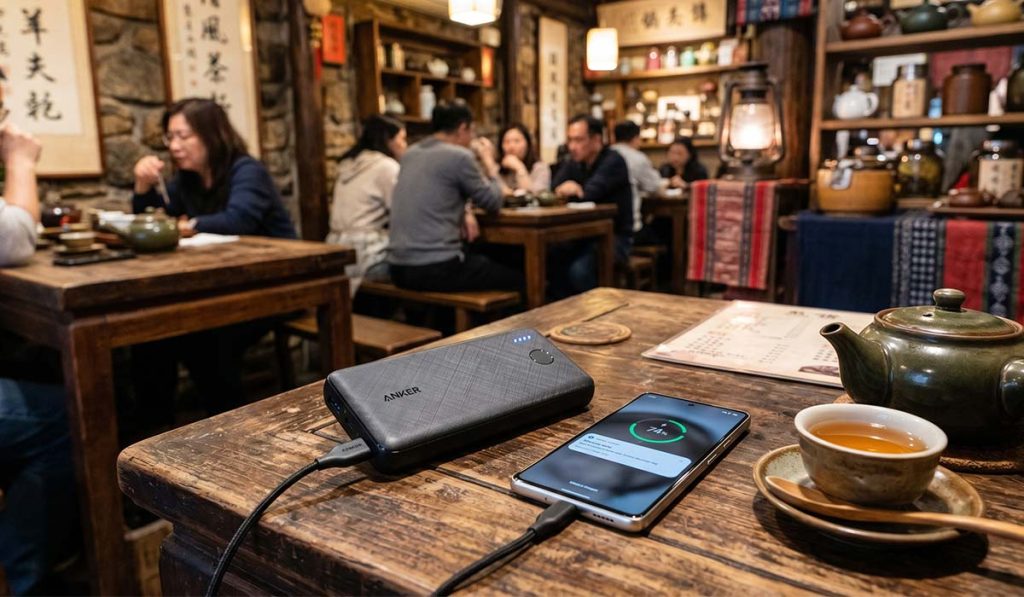
For a short trekker who uses a phone mainly for photos and occasional checks, a power bank is strongly recommended. For trekkers carrying cameras, GoPros, drones, or using GPS apps regularly, it is close to essential.
You may complete the trek without one if you charge carefully at every stop, but that approach leaves little margin for bad weather, power cuts, or crowded lodges. A power bank gives you flexibility, and flexibility is valuable in the mountains.
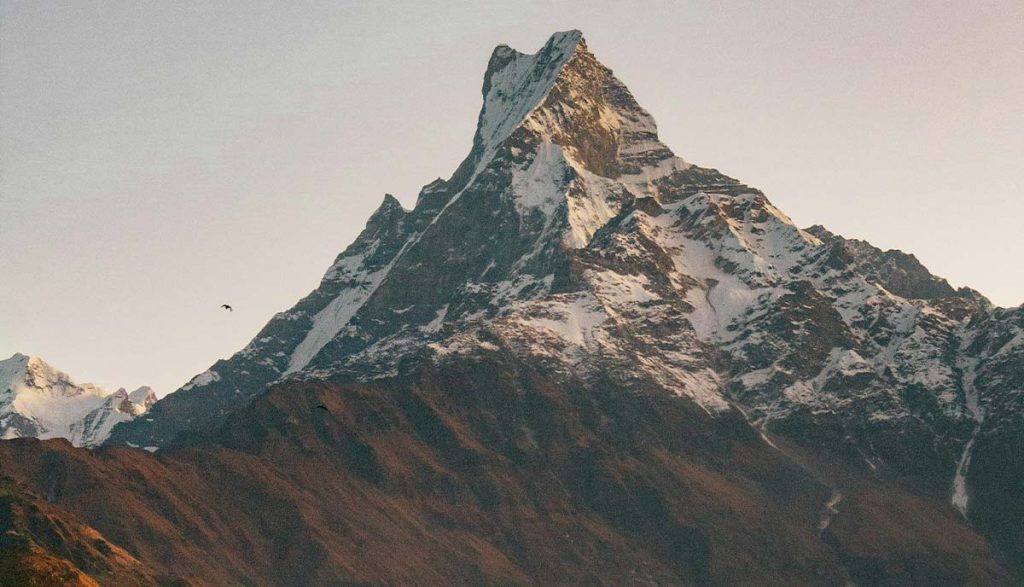
If you plan well, electricity on the Mardi Himal Trek is manageable rather than stressful. Charge whenever you can, carry backup power, keep expectations realistic, and you will spend less time hunting for sockets and more time enjoying the ridge, the forest trail, and the sunrise views toward Machhapuchhre and Annapurna.