Many trekkers underestimate Poon Hill because it is shorter than Everest Base Camp or the Annapurna Circuit. That is a mistake. Fitness Training for Poon Hill trek matters because this trek still includes long uphill sections, countless stone steps, early morning climbing in cold air, and several days of steady walking. If your body is not ready, a beautiful trek can start to feel much harder than expected.
Poon Hill is often recommended for beginners, and that is fair. It is one of Nepal’s more accessible Himalayan treks, with comfortable teahouses, manageable daily distances, and no extreme remoteness. But beginner-friendly does not mean effortless. The route commonly includes places like Ulleri, Ghorepani, and the sunrise hike to Poon Hill itself, and these sections can challenge people who are active at home but not used to hiking uphill for hours.
The good news is that most people do not need elite fitness for this trek. They need the right kind of preparation. A few weeks of focused training can make a major difference in how your legs feel on the stairs, how your lungs respond on climbs, and how much you enjoy each day.
What kind of fitness does Poon Hill really require?
Poon Hill is not a technical climb. You do not need mountaineering skills, rope work, or advanced endurance training. What you need is reliable trekking fitness. That means being able to walk for several hours on consecutive days, climb sustained uphill trails without frequent exhaustion, and recover well enough to do it again the next morning.
This trek tests three things more than anything else: cardiovascular endurance, leg strength, and joint resilience. Cardiovascular endurance helps on long ascents where your breathing gets heavier. Leg strength matters because the trail includes steep stone staircases and repeated uphill-downhill movement. Joint resilience, especially in the knees and ankles, becomes important on descents, which many trekkers find harder than the ascent.
Altitude is also part of the picture, though Poon Hill stays much lower than Nepal’s high-altitude treks. Most trekkers will not face severe altitude stress here, but you may still notice that climbing feels harder than it would at sea level. That is another reason basic conditioning helps.
Fitness Training for Poon Hill: what to focus on
The best Fitness Training for Poon Hill is simple and specific. You do not need a complicated gym program. You need training that prepares your body for walking uphill with control and consistency.
Start with aerobic training. Brisk walking, uphill treadmill sessions, hiking, cycling, or stair climbing all work well. The goal is not speed. The goal is to build steady effort for 45 to 90 minutes without feeling destroyed afterward. If you can comfortably hold a conversation during much of your session, you are training at a useful pace.
Then add strength work for the lower body. Squats, lunges, step-ups, calf raises, and controlled split squats are excellent because they reflect the demands of trekking. Step-ups are especially useful for Poon Hill because they mimic the repetitive climbing motion you will face on stair-heavy sections of trail.
Core strength also deserves attention. A stronger core improves balance on uneven paths and helps you carry a daypack with less fatigue through the back and hips. You do not need long ab routines. Short sets of planks, side planks, dead bugs, or bird dogs done consistently are enough.
Mobility and recovery should not be ignored. Tight calves, stiff hips, and weak ankles can make a moderate trek feel much tougher. Basic stretching after training, along with ankle mobility and balance work, can reduce discomfort on the trail.
A practical training timeline
If you already walk regularly and have average fitness, four to six weeks of preparation is often enough for Poon Hill. If you are currently inactive, give yourself eight to ten weeks. More time is always better than a rushed build-up.
In the early weeks, focus on consistency. Aim for three or four aerobic sessions per week, with at least one longer session on weekends. That longer day could be a hike, a long walk with hills, or a stair session. Add two strength sessions each week, keeping them moderate rather than exhausting.
As your fitness improves, increase the trekking-specific challenge. Walk on stairs more often. Train on inclines. Use a backpack with light weight, then slowly build up. You do not need to train with a heavy pack for Poon Hill, but carrying the same weight you expect on the trek helps your body adapt.
During the final week before departure, reduce the volume slightly. Keep moving, but do not try to cram hard sessions at the last minute. Fresh legs help more than one extra workout.
The best exercises for Poon Hill preparation
If you want the highest return from your training, keep your exercise selection practical. Hiking on real trails is best because it trains fitness, balance, and footwork together. If you do not have trail access, stair climbing is one of the closest alternatives. Even repeated sessions on apartment stairs or gym step machines can help.
For strength, step-ups lead the list. Use a sturdy bench or box and move with control. Lunges build strength and balance at the same time. Squats improve general leg endurance. Calf raises help on long ascents and protect against lower-leg fatigue. For downhill preparation, slow eccentric movements are useful, such as lowering carefully in split squats or step-downs.
Do not chase heavy lifting if you are not used to it. For most trekkers, moderate resistance and good technique are more helpful than maximal weight. The trail rewards durability, not gym numbers.
Can beginners train enough for Poon Hill?
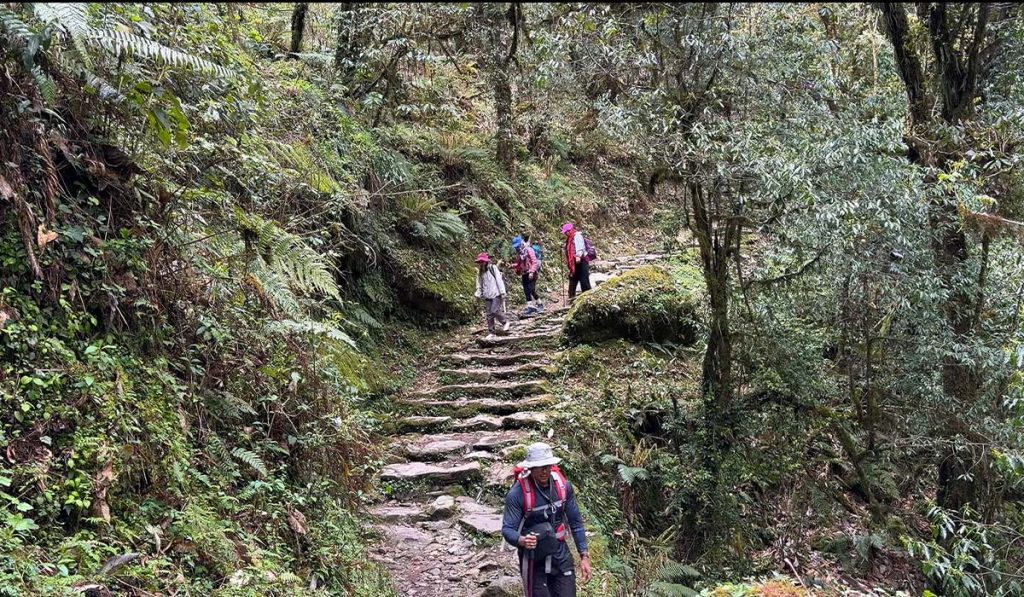
Yes, in most cases they can. Poon Hill is one of the better trekking goals for a first Himalayan experience because the route is achievable with sensible preparation. A beginner does not need to become an athlete. They need to build tolerance for walking uphill over several days.
The bigger issue is often not fitness itself, but expectation. Some travelers hear that Poon Hill is an easy trek and assume no training is necessary. Then the staircase to Ulleri or the pre-dawn climb to the viewpoint becomes a shock. If you respect the route and prepare honestly, the trek is far more enjoyable.
If you are a beginner, start with walking. Build up gradually. Add hills if possible. Then include simple leg exercises two times per week. That alone can change your trekking experience.
Common training mistakes trekkers make
One common mistake is focusing only on distance and ignoring elevation. Walking five flat miles is not the same as climbing steep stone steps for an hour. If all your training is flat, the trail will feel harder than expected.
Another mistake is doing too much too soon. Sudden increases in stairs, running, or weighted pack work can lead to sore knees, strained calves, or shin pain. Gradual progress matters more than aggressive effort.
Some trekkers also neglect downhill preparation. This is especially important on Poon Hill because descents can be tiring on the knees and thighs. Strength training and controlled downhill walking help far more than people expect.
Finally, many people arrive with decent fitness but poor recovery habits. Lack of sleep, dehydration, and under-eating can make a moderate trek feel difficult. Training your body is important, but so is learning to support it properly.
How fit do you need to be before you go?
A useful benchmark is this: you should be able to walk for 4 to 6 hours in a day, including hills or stairs, without needing days to recover. You should also be able to handle uphill effort at a steady pace and repeat similar activity on back-to-back days.
That does not mean every training session must be long. It means your body should be comfortable with sustained movement. If you can complete a long hilly walk on the weekend and still feel capable of normal activity the next day, you are moving in the right direction.
There is still room for variation. A younger traveler with average fitness may adapt quickly. An older trekker may prepare more gradually and do very well. A regular runner may have strong cardio but need more stair and downhill conditioning. It depends on your background, not just your age.
Don’t train in isolation from the trek itself
Fitness is only one part of preparing well for Poon Hill. Your training should match the reality of the trek. Break in your shoes before arrival. Walk in the socks you plan to use. Practice carrying your daypack. If you use trekking poles, train with them at least a few times so they feel natural on stairs and descents.
It also helps to understand the rhythm of teahouse trekking in Nepal. You are not racing. Strong trekkers often do best when they pace themselves calmly, drink enough water, and avoid the temptation to push hard early in the day. Fitness gives you a margin of comfort, but pacing is what protects that comfort on the trail.
From years of guiding in Nepal, one pattern is clear: the trekkers who enjoy Poon Hill most are not always the fastest. They are usually the ones who prepared honestly, walked at a steady pace, and arrived knowing that a short trek in the Himalayas can still demand respect.
If you give yourself a few weeks of smart training before departure, Poon Hill becomes much more than a physical challenge. It becomes the kind of trek where you can actually look up, breathe, and enjoy why you came.