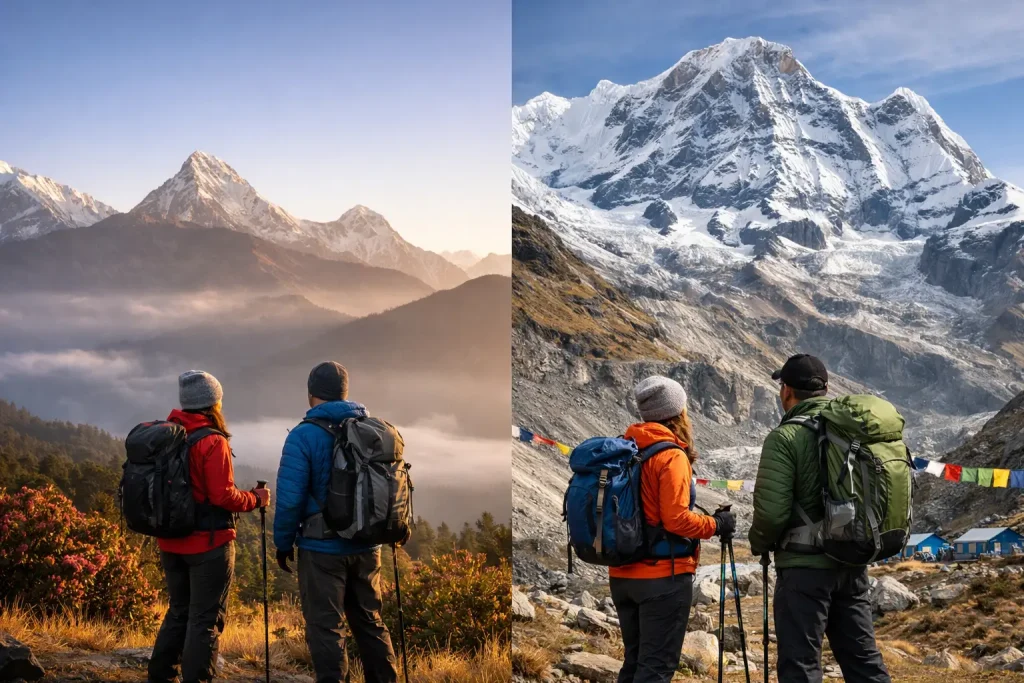
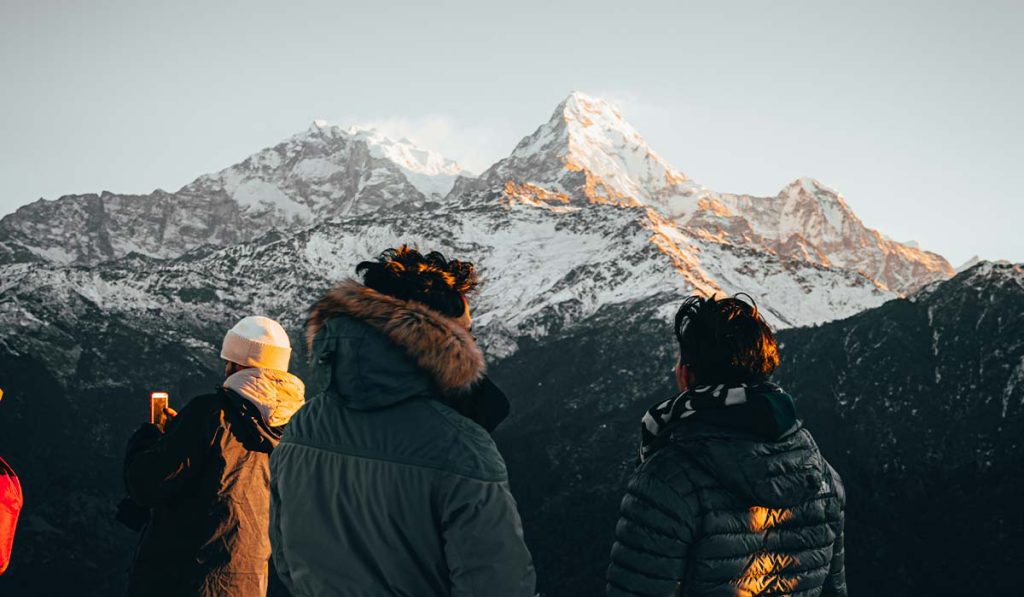
Most trekkers choose Poon Hill because it is short, scenic, and considered one of the easier treks in Nepal. That is true, but many first-time visitors still ask the same practical question: what are the Medical AND OTHER Facilities on the Poon Hill Route, and how basic or reliable are they in real conditions? Knowing that before you walk matters more than most people think, especially if you are trekking with children, older family members, or limited mountain experience.
The good news is that the Poon Hill trek is one of the better-supported tea house routes in the Annapurna region. Villages such as Nayapul, Tikhedhunga, Ulleri, Ghorepani, Tadapani, Ghandruk, and Birethanti have regular lodges and simple services for trekkers. At the same time, this is still a mountain trail, not a town-to-town road trip. Facilities exist, but they are limited, weather-dependent, and not equal in every village.
Medical and Other Facilities on the Poon Hill Route
If you compare Poon Hill with remote treks like Upper Dolpo or Manaslu, support on this route is much easier to access. If you compare it with a city standard, it is still very basic. That balance is the right way to understand the trail.
For most trekkers, the route provides enough infrastructure for a comfortable short trek. You can expect tea houses, cooked meals, bottled or boiled water, charging options, mobile network in many sections, and common trail supplies in larger villages. Medical help is available in limited form, but serious health issues may still require evacuation or transfer to Pokhara.
The key point is simple: Poon Hill is manageable, but you should not treat it casually. A mild stomach issue, twisted ankle, or altitude-related headache can usually be handled if you are prepared. A more serious emergency needs fast decisions and realistic expectations.
What medical help is available?
Medical facilities on the Poon Hill route are not advanced hospitals or full-service mountain clinics at every stop. What you will mostly find are local health posts in or near larger settlements, basic pharmacies or medicine shops in some villages, and lodge owners who are used to helping trekkers with common issues.
Around the lower access area near Nayapul and Birethanti, access to transportation makes it easier to reach stronger medical support if needed. In bigger villages such as Ghandruk, there may be a health post or basic local medical service, depending on current operation and season. Ghorepani is an important trekking stop with many lodges, but it should not be assumed to have advanced treatment capacity. If a trekker develops severe altitude sickness, serious dehydration, chest symptoms, or a bad injury, the practical solution is usually descent and transport toward Pokhara.
For common trekking problems, basic help is often enough. Headaches, mild fever, diarrhea, blisters, muscle pain, cold symptoms, and minor cuts are the issues most often managed on the trail. Some lodges may have a simple first-aid kit, but you should not rely on lodge stock for your personal medication. Bring your own pain relief, oral rehydration salts, blister care, bandages, altitude medication if prescribed, and stomach medicine that you know works for you.
Altitude sickness is less common here than on high Himalayan routes, but it is not impossible. Ghorepani sits at a noticeable elevation, and trekkers who come directly from low altitudes and rush uphill may feel a headache, poor sleep, loss of appetite, or unusual fatigue. Rest, hydrate, eat properly, and descend if symptoms worsen.
How easy is evacuation if something goes wrong?
This is one reason many trekkers feel comfortable choosing Poon Hill. Evacuation is far easier than on remote camping routes. Depending on where the problem happens, a sick or injured trekker may be helped down on foot, by mule support in some cases, or by reaching a road-connected area sooner than on longer treks.
Weather, trail condition, and exact location all affect rescue speed. In a true emergency, helicopter evacuation can be arranged if insurance and conditions allow, but helicopter access should never be assumed as instant. Cloud, wind, and coordination delays are common in Nepal. On a practical level, early reporting and early descent solve many problems before they become rescue situations.
That is why travel insurance with high-altitude trekking coverage is still important, even on a shorter route like this one.
Food, water, and sanitation on the trail
Other facilities on the Poon Hill route are generally good by trekking standards. Food is widely available in tea houses, and the menu is often broader than on more remote trails. Dal bhat, noodles, fried rice, soup, potatoes, eggs, pancakes, porridge, tea, and coffee are easy to find. In popular stops like Ghorepani and Ghandruk, some lodges offer bakery items or extra menu choices during busy trekking seasons.
Water is available throughout the route, but how you drink it matters. Bottled water is sold in many villages, though prices rise with altitude and carrying plastic into the mountains is not the best long-term option. Boiled water is commonly available in lodges and is often the more practical choice. Purification tablets or a filter bottle give you more flexibility and lower cost.
Sanitation is mixed. Lower villages and established lodges may have relatively comfortable toilet facilities, while higher or older tea houses can be much more basic. Hot showers are often available for an extra charge, but in colder months, the water temperature and reliability vary. Good hygiene on trek depends more on your habits than on lodge standards alone. Hand sanitizer, wet wipes, toilet paper, and soap sheets are worth carrying every day.
Accommodation, electricity, and communication
The Poon Hill route is one of the best tea house treks for comfort at the beginner level. Accommodation is easy to find in the main villages, especially during standard trekking seasons. Rooms are usually simple twin-sharing setups with beds, blankets, and a dining hall heated by a stove in the evening. Luxury is not the point, but comfort is usually enough for a short trek.
Electricity is available in most villages, though charging may cost extra. Power cuts and slow charging are still possible, especially in busy periods when many trekkers need the same sockets. Carry a power bank and keep your phone warm in colder weather, because batteries drain faster at altitude.
Mobile network coverage is better than many trekkers expect, but it is not continuous. Some sections have decent signal, while forested areas and ridgelines can be inconsistent. Wi-Fi is offered in many lodges on this route, especially in larger stops, but speed is often limited. It may be enough for messages, not always for calls or heavy uploads.
Can you buy supplies on the route?
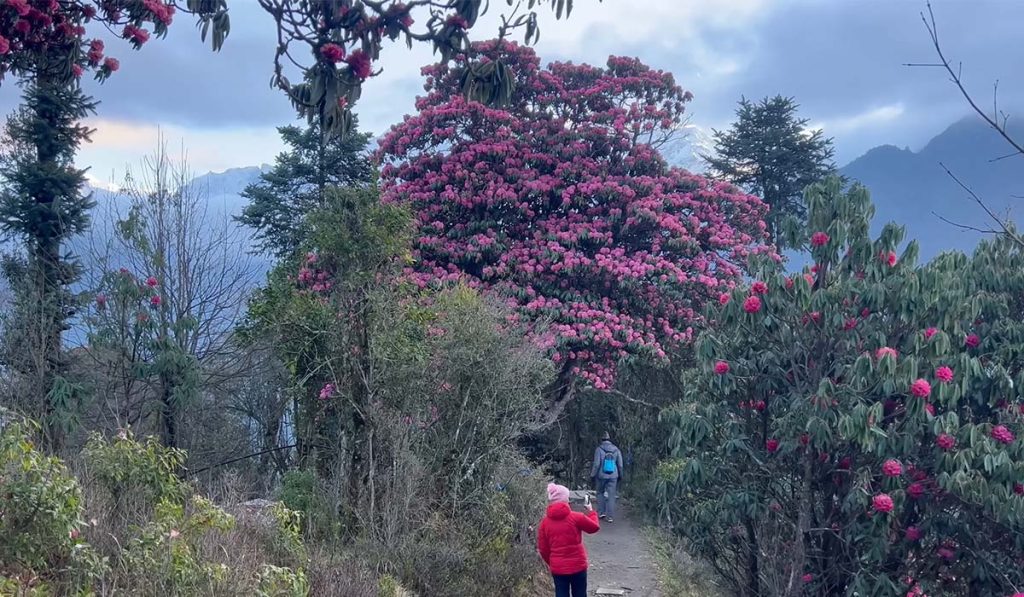
Yes, but only basic ones. Small shops along the trail may sell snacks, bottled drinks, noodles, toilet paper, soap, batteries, and sometimes simple medicine. Prices go up as you gain altitude because everything is carried in by porters, mules, or local transport.
Do not plan to build your trekking kit on the trail. If you forget gloves or a warm layer, you may find a solution in larger villages, but choice and quality are limited. It is much better to start with your essentials already packed. Buy what you need in Pokhara before the trek, then use trail shops only for backup or convenience.
Facilities by route section
The lower section from Nayapul through Birethanti and toward Tikhedhunga or Ulleri has the easiest access to transport and basic supplies. This is where logistical support feels closest to normal village life.
From Ulleri to Ghorepani, facilities remain solid because this is a classic trekking corridor. You will find plenty of tea houses, meals, water, and charging, but medical care stays basic.
The Ghorepani area has the highest concentration of trekkers and lodges on the route. That makes it one of the better places for accommodation and basic support, but also one where rooms and services can get crowded in peak season.
If your route continues through Tadapani and Ghandruk, services remain good, though some stretches feel quieter. Ghandruk is one of the stronger settlement points on the trek for accommodation, supplies, and easier onward access.
What should trekkers do before starting?
Even with decent facilities, the smartest approach is to be self-sufficient for normal problems and rely on the route only for basic support. Carry a personal first-aid kit, water purification method, power bank, extra cash, and the medication you actually use at home. If you have asthma, allergies, diabetes, or any heart or lung condition, discuss the trek with your doctor before arrival.
It also helps to pace the trek sensibly. Poon Hill is often marketed as easy, but steep stone steps, changing weather, and cold mornings can surprise people. Walking steadily, drinking enough water, eating properly, and sleeping at a comfortable rhythm do more for your safety than any tea house facility.
For trekkers who want a route with beautiful mountain scenery but without the isolation of Nepal’s more remote regions, Poon Hill remains one of the best choices. The trail gives you enough support to feel secure, but still enough mountain character to remind you that preparation matters.