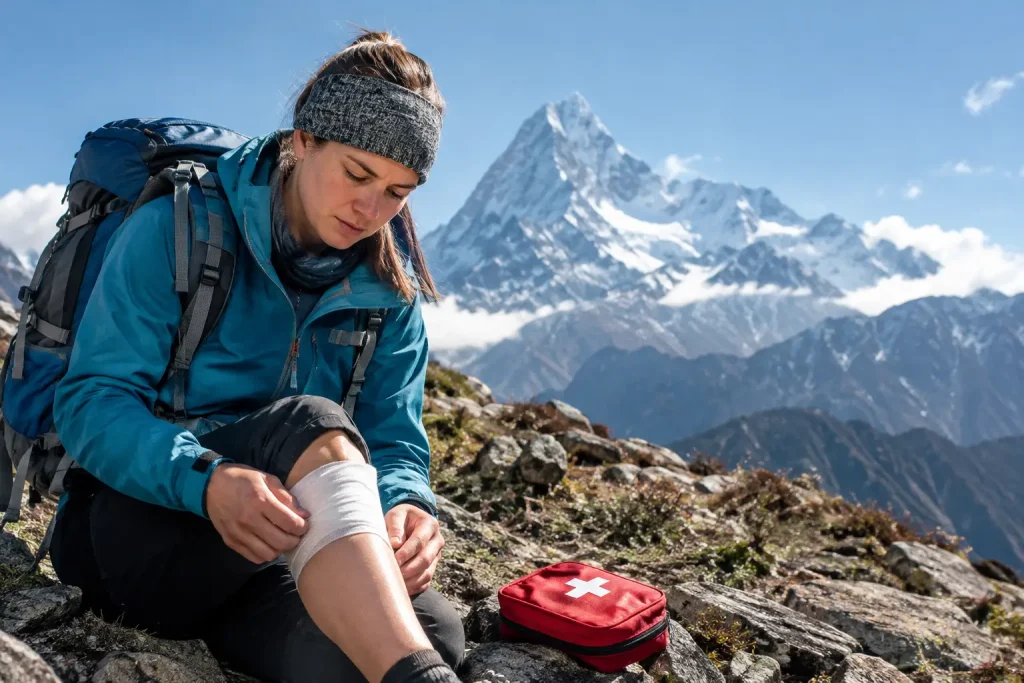
A rest day at 12,000 feet in Nepal is not wasted time. It is often the day that allows you to continue safely toward a high pass, viewpoint, or base camp. When you plan trekking rest days, treat them as part of your altitude strategy, not as optional recovery days to remove when flights run late or the itinerary feels too long.
On many Himalayan routes, the challenge is not only the distance covered. Your body must adjust to sleeping at progressively higher elevations, often while carrying fatigue from steep climbs, cold mornings, and several days of continuous walking. A well-placed rest day gives you room to acclimatize, assess how you feel, and handle the ordinary disruptions that are common in Nepal trekking.
Why Rest Days Matter on Nepal Treks
Above roughly 8,000 feet, the amount of oxygen available with each breath decreases. You can be fit, experienced, and moving at a sensible pace yet still develop altitude symptoms if you climb and sleep too high too quickly. Rest days reduce the pressure to continue upward before your body has adapted.
They also provide practical protection for your itinerary. Mountain weather can delay domestic flights, trails can be slower after rain or snow, and a minor stomach issue can drain your energy faster than expected. A schedule with no extra time turns every small delay into a major decision.
For this reason, a rest day is often better described as an acclimatization day. You may still walk, but the key rule is to return to sleep at the same elevation as the night before.
When to Plan Trekking Rest Days
Most trekkers need planned acclimatization days on routes where sleeping elevations rise above 10,000 to 12,000 feet. The higher the trek goes and the faster the itinerary gains elevation, the more valuable these days become.
A useful planning guideline is to avoid increasing your sleeping altitude by more than about 1,600 feet per day once you are above 10,000 feet. After every 3,000 feet of sleeping elevation gained, add an acclimatization day when possible. These are guidelines rather than guarantees. Age, previous altitude exposure, pace, illness, hydration, and individual physiology all affect acclimatization.
Put Rest Days Before the Highest Section
The best rest day is usually not at the end of the trek, when you have already completed the most demanding ascent. Place it before a high pass, summit day, or rapid gain in sleeping elevation.
On the Everest region routes, trekkers commonly acclimatize in Namche Bazaar before continuing toward Tengboche, Dingboche, Gokyo, or Everest Base Camp. Dingboche is another common stop because it provides a useful elevation buffer before the higher terrain around Lobuche and Gorak Shep.
On the Annapurna region routes, a rest day can be especially useful before a high pass such as Thorong La. Shorter treks, including Poon Hill or Mardi Himal, may not require a formal rest day for every healthy trekker, but an extra day can still be wise when the itinerary climbs quickly, weather is poor, or you are new to altitude.
Consider Your Arrival and Flight Buffer Separately
An acclimatization day and a travel contingency day serve different purposes. Do not assume one can reliably do both jobs.
For example, a Gokyo Lakes itinerary may include a planned rest day in Namche Bazaar for altitude adjustment. You should still consider additional buffer time before an international flight, particularly when your trek depends on flights to and from Lukla. Weather can interrupt mountain flight schedules, and the final days should not be scheduled with zero flexibility.
What to Do on an Acclimatization Day
A complete day in bed is usually not the goal if you feel well. Light activity supports circulation, keeps your legs moving, and can help you follow the standard acclimatization approach: climb high, sleep low.
Take a short hike to a higher viewpoint, then return to your lodge for the night. In Namche Bazaar, trekkers often walk toward Everest View Hotel or Khumjung. In Dingboche, a gradual hike toward Nagarjun Hill can provide useful elevation exposure. The appropriate distance depends on how you are feeling, trail conditions, and the advice of your guide.
Keep the effort controlled. This is not the day to chase a personal best, add a long side trip, or turn a recovery day into a hard training session. Eat regular meals, drink consistently, protect yourself from sun and wind, and give yourself time to rest in the afternoon.
How Many Rest Days Do You Need?
There is no universal number. A younger, fit hiker can need more acclimatization than an older hiker, while a slower itinerary may allow someone to adjust without a designated zero-mile day. Fitness improves trekking comfort and endurance, but it does not make anyone immune to altitude illness.
For a standard Everest Base Camp or Gokyo Lakes Trek itinerary, two acclimatization days are commonly appropriate: one in Namche Bazaar and one in Dingboche or another suitable high village. A more conservative schedule may add another flexible day, particularly for first-time high-altitude trekkers.
For the Langtang Trek, one planned acclimatization day around Kyanjin Gompa can work well, especially if you intend to hike to Kyanjin Ri or Tserko Ri. The village is already high, so assess symptoms carefully and do not push upward simply because the itinerary says it is a rest day.
For lower and shorter routes such as Pikey Peak, Poon Hill, or many Mardi Himal itineraries, formal rest days are less often required. However, adding an extra day may be sensible if you are arriving from sea level, have limited prior hiking experience, or want a more relaxed pace.
Signs Your Itinerary Needs More Time
Adjusting an itinerary is a normal part of safe mountain travel. Do not treat a printed schedule as a commitment to continue upward regardless of how you feel.
Slow down, add a rest day, or descend if you or a trekking partner has symptoms that are persistent, worsening, or unusual for the effort level. Watch for these warning signs:
- Headache that does not improve with rest, fluids, food, or appropriate medication
- Nausea, vomiting, loss of appetite, or unusual exhaustion
- Dizziness, poor coordination, confusion, or difficulty walking straight
- Shortness of breath while resting, a wet cough, or chest tightness
A mild headache can occur for several reasons, including dehydration or poor sleep. At altitude, however, it deserves attention. Do not climb higher with symptoms of acute mountain sickness. If symptoms worsen, descent is the most effective response. Serious altitude illnesses can become emergencies and require immediate descent and medical support.
Common Mistakes When Planning Rest Days
The most common mistake is choosing the shortest possible itinerary to save money or fit limited vacation time. A compressed trek may look efficient on paper, but it gives you fewer options when weather, fatigue, or altitude changes the plan.
Another mistake is calling a long, steep hike a “rest day.” A demanding side trip can add exhaustion rather than aid acclimatization. Choose a moderate outing, return to the same lodge, and keep enough energy for the following day.
Trekkers also sometimes rely on medication as a substitute for sensible ascent planning. Medication may be recommended by a qualified clinician for certain travelers, but it does not replace gradual ascent, symptom monitoring, or descent when necessary.
Build Flexibility Into Your Trek Plan
When comparing Nepal trekking itineraries, look beyond the total number of days. Ask where you will sleep each night, how much elevation you gain between lodges, where acclimatization days occur, and what happens if you need an extra day.
If you are arranging a guided trek, discuss your pace and altitude experience before booking. A responsible operator should be prepared to adjust the schedule when conditions or health require it. Guides can monitor symptoms and help with logistics, but each trekker must report how they feel honestly.
The strongest itinerary is not the fastest one. It is the one that leaves enough time to enjoy the mountains while giving your body a fair chance to adapt. Keep one extra day where altitude matters most, and you may gain far more than a better view from your lodge: you gain options when the mountains ask you to slow down.