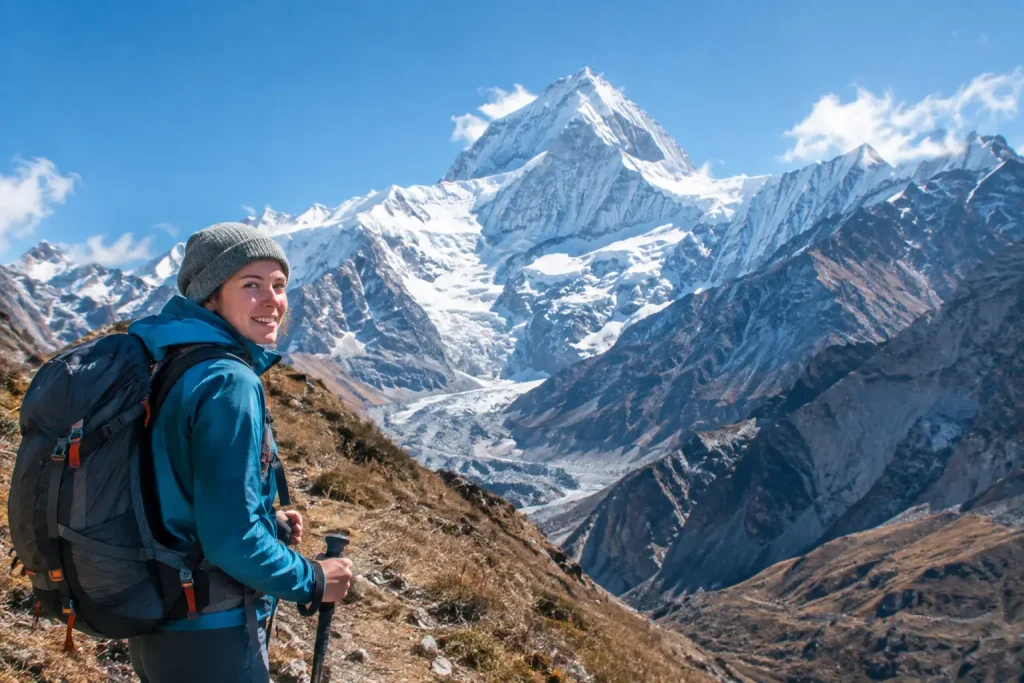
Choosing between Gokyo versus Langtang is less about finding the “better” trek and more about matching the route to your altitude experience, available time, budget, and tolerance for logistical uncertainty. Gokyo delivers a higher, more demanding Everest-region experience with major Himalayan viewpoints. Langtang is shorter and easier to access from Kathmandu, but it still reaches serious altitude and requires thoughtful preparation.
For many first-time Nepal trekkers, Langtang is the more practical starting point. For trekkers who have a longer itinerary, stronger acclimatization discipline, and a specific goal of seeing Everest-region peaks, Gokyo can be the more rewarding choice.
Gokyo versus Langtang at a glance
The Gokyo Lakes Trek usually takes 12 to 15 days, depending on acclimatization days and whether you add a pass such as Renjo La. Its high point for most trekkers is Gokyo Ri at about 17,575 feet (5,357 meters). The route follows the Everest approach trail before branching toward the Dudh Kosi valley, Machhermo, the glacial lakes, and Gokyo village.
The Langtang Valley Trek commonly takes 7 to 10 days. It begins with an overland journey from Kathmandu to Syabrubesi, then climbs through Langtang National Park to Kyanjin Gompa. Side hikes to Kyanjin Ri or Tserko Ri can take trekkers to roughly 15,659 feet (4,773 meters) or 16,352 feet (4,984 meters), respectively.
Both routes use established teahouses. Neither requires technical climbing. Yet the difference in maximum sleeping elevation, duration, and access makes Gokyo the more committing expedition-style trek.
Altitude and acclimatization
Altitude is the biggest practical difference between these treks. On the Gokyo route, trekkers generally sleep at higher elevations for longer. Gokyo village sits around 15,584 feet (4,750 meters), and the standard itinerary needs well-placed acclimatization stops, usually in Namche Bazaar and either Dole or Machhermo.
That does not mean Langtang is free of altitude risk. Kyanjin Gompa is around 12,467 feet (3,800 meters), high enough for acute mountain sickness to affect anyone. The fast rise from Syabrubesi is a common reason trekkers underestimate the route. A strong hiking background does not protect you from altitude illness.
Gokyo demands more patience because the trek spends multiple days above 13,000 feet. If you have previously acclimatized poorly, have a tight schedule, or are unsure how your body responds at altitude, Langtang offers more flexibility. It is easier to shorten the itinerary or descend quickly if symptoms develop.
No trek choice removes the need for sound altitude practice. Build gradual ascent days into the schedule, hydrate normally, avoid alcohol during the early acclimatization period, and tell your guide or trekking partners promptly if you develop a persistent headache, nausea, unusual fatigue, poor coordination, or breathing trouble at rest.
Scenery: Everest scale or a close valley experience
Gokyo is the choice for broad, high-altitude Himalayan scale. From Gokyo Ri, the panorama can include Everest, Lhotse, Makalu, Cho Oyu, and the Ngozumpa Glacier. The turquoise Gokyo Lakes add a distinct visual element that the standard Everest Base Camp route does not offer. In clear weather, this is one of Nepal’s strongest mountain viewpoints.
Langtang feels different. Its appeal is the intimate progression of a mountain valley: forest, river, villages, yak pasture, moraine, and sharp snow peaks rising close above Kyanjin. Langtang Lirung dominates the upper valley, while the day hikes from Kyanjin offer excellent views without committing to the higher sleeping elevations of Gokyo.
If Everest is on your personal must-see list, choose Gokyo. If you would rather spend less time on a major trekking corridor and more time in a compact valley with strong mountain scenery, Langtang is often the better fit.
Daily difficulty and fitness requirements
Neither trek should be treated as a casual vacation hike. Expect consecutive days of walking, uneven stone trails, steep ascents and descents, cold mornings, and limited recovery compared with a home-based hiking routine.
Gokyo is harder overall because of its length, altitude, and cumulative fatigue. Trekkers should be comfortable walking five to seven hours on several consecutive days and should train for sustained uphill movement. The climb to Gokyo Ri is steep and begins early, often before sunrise. Cold, wind, and thin air can make a moderate slope feel much harder than expected.
Langtang is physically demanding but more manageable for a fit beginner who allows enough days for the route. The approach has long uphill sections, and the Kyanjin Ri or Tserko Ri hikes are strenuous. Still, the core trek has fewer high-altitude nights and usually less total walking time.
A practical training plan for either route should include weekly long hikes, stair climbing or hill work, leg strength training, and loaded-pack walks. Aim to arrive able to hike for six hours with a daypack without needing several days to recover. For Gokyo, add extra endurance training and schedule at least two buffer days in Nepal.
Access and logistics
Langtang has a clear logistical advantage. The trailhead is reached by road from Kathmandu, usually in a full day. Road conditions can be uncomfortable and travel times can change with weather or construction, but the trek does not depend on a mountain flight.
Most Gokyo itineraries begin with a flight to Lukla. Flights are weather-dependent, and delays or cancellations are a genuine planning concern, especially outside the most stable trekking windows. Build buffer time before international departures. Helicopter alternatives may be available in some cases, but they are costly and are never guaranteed.
The Everest region is also generally more expensive. Flights, high-altitude lodging, food, and guide or porter costs tend to add up over a longer itinerary. Langtang is usually the lower-cost option, particularly for travelers with limited time.
Permits and trekking support
Gokyo lies in the Everest region and requires the relevant local and Sagarmatha National Park permits. Langtang requires Langtang National Park entry documentation, along with any current local requirements. Nepal’s trekking rules and fees can change, so confirm requirements shortly before departure rather than relying on an old blog post or forum thread.
Both treks can be completed with teahouse accommodation, but local support is especially valuable if you are new to Nepal trekking. A knowledgeable guide can monitor acclimatization, adjust the pace, handle changing lodge availability, and help make conservative decisions when weather or health changes the plan. Porters can also reduce physical strain, though you should still carry essentials such as water, layers, medication, documents, and a headlamp.
Best season for each trek
Spring, from March through May, and fall, from late September through November, are the primary seasons for both. Fall often brings the clearest skies after the monsoon, while spring offers warmer daytime temperatures and rhododendron bloom at lower elevations.
Gokyo benefits greatly from clear weather because its defining reward is a long-range panorama. Winter can offer sharp views and quieter trails, but temperatures at Gokyo and on the Gokyo Ri ascent can be severe. Snow may affect high passes and make trail conditions slower.
Langtang is also cold in winter, but it can be a reasonable choice for properly equipped trekkers who want a shorter route. During monsoon season, both areas face rain, leeches at lower elevations, cloud cover, and transport disruption. The Everest flight dependency makes Gokyo particularly inconvenient when weather is unstable.
Who should choose Gokyo?
Choose Gokyo if you have at least two weeks available, want iconic Everest-region views, and are willing to treat acclimatization as the central part of the itinerary. It is a strong option for trekkers who have completed multi-day mountain hikes before or who are fit, patient, and prepared to move slowly at altitude.
Gokyo is not ideal for travelers trying to fit a Himalayan trek into a rigid, short Nepal schedule. A delayed Lukla flight or an extra acclimatization day should not force you to skip safety margins.
Who should choose Langtang?
Choose Langtang if you have one to 10 days for trekking, prefer road access from Kathmandu, or want a less expensive first Himalayan experience. It is also a sensible route for travelers who value cultural villages, dramatic close-range mountains, and the option to adapt their itinerary more easily.
Langtang is not “easy” simply because it is shorter. It still deserves training, cold-weather gear, travel insurance that covers trekking at your planned elevation, and a schedule that allows for an unhurried ascent.
The best trek is the one that gives you room to respond well when the mountains set the pace. Choose Gokyo when you are ready for higher altitude and bigger logistical commitments; choose Langtang when a compact, flexible, and still deeply Himalayan trek suits your trip better.