A guide can make a difficult Himalayan trek safer, calmer, and far more manageable. But choosing trekking guides is not simply a matter of finding the lowest daily rate or the most polished social media profile. On routes where altitude, weather, permits, and changing trail conditions affect every decision, the right guide should strengthen your safety margin from the first day in Kathmandu to the final descent.
For many trekkers, a guide is also the person who recognizes a developing altitude problem, adjusts a plan when snow closes a pass, communicates with teahouse owners, and makes sure permits are in order. That level of responsibility deserves careful evaluation before you commit.
Start With Your Trek and Experience Level
The best guide for an Everest Base Camp Trek is not automatically the best fit for the Manaslu Circuit or Everest Three Passes Trek. Match the guide’s background to the route, season, and level of support you need.
A first-time high-altitude trekker may benefit from a guide who is patient, communicative, and experienced at setting a conservative acclimatization pace. An experienced hiker attempting a more remote route, such as Kanchenjunga Base Camp or Makalu Base Camp, should prioritize expedition logistics, remote-area problem solving, and familiarity with limited evacuation options.
Also be honest about your own needs. If you are comfortable with long hiking days but have never slept above 12,000 feet, altitude judgment matters more than technical hiking ability. If you are traveling solo, language support and daily check-ins may be especially valuable. If your schedule is fixed, choose a guide or operator who will explain where flexibility is necessary rather than promising an unrealistic itinerary.
Verify Licensing, Insurance, and Local Legitimacy
A qualified Nepal trekking guide should be properly licensed through Nepal’s tourism authorities and work within a legitimate trekking operation. Ask directly about guide licensing, company registration, and insurance coverage. A professional will answer clearly and without treating basic safety questions as an inconvenience.
Guide insurance is particularly important. Trekking work involves real exposure to altitude, unstable weather, and difficult terrain. A company that insures and supports its staff is more likely to take operational standards seriously across the trip.
Do not assume that a guide’s personal experience replaces formal authorization. Years on the trail are valuable, but licensing, documented training, and an established local operating structure provide additional accountability. This matters if plans change, a permit issue arises, or someone in the group needs emergency assistance.
Ask About First Aid and Altitude Training
There is no substitute for conservative acclimatization, but emergencies can still happen. Ask what wilderness first-aid training the guide has completed and how recently it was refreshed. More specifically, ask how they monitor for acute mountain sickness and what their decision process is if symptoms worsen.
A strong answer should include practical actions: slowing the pace, adding rest, stopping ascent, monitoring symptoms, and descending when needed. Be cautious if a guide suggests that determination, garlic soup, or medication alone can make it safe to continue upward with serious symptoms.
For high routes such as Gokyo Lakes, Annapurna Circuit, Manaslu Circuit, or Everest Three Passes, ask about contingency plans for bad weather, snow, illness, and delayed flights. The guide does not need to promise that nothing will go wrong. In fact, a realistic explanation of the options is usually a better sign than false certainty.
Evaluate Route Knowledge, Not Just Everest Experience
Everest Base Camp experience is useful, but Nepal’s trekking regions operate differently. A guide familiar with the Khumbu may not have the same current knowledge of permits, trail conditions, teahouses, and transportation on Upper Mustang or the Tsum Valley.
Ask how many times the guide has completed your intended route and when they last did it. Recent experience is valuable because lodge availability, road access, bridge conditions, and local regulations can change. On a classic route with frequent services, broad regional experience may be sufficient. On a remote trek or a winter departure, current route-specific knowledge becomes much more important.
Good guides know more than the main trail. They understand realistic daily walking times, which villages are sensible overnight stops, where altitude becomes a concern, and when an early start protects the group from afternoon wind or weather.
Compare Itineraries for Acclimatization, Not Speed
When choosing trekking guides, compare their proposed itinerary with the same care you would use to compare price. A shorter schedule can look attractive, especially for travelers with limited vacation time, but rushing increases the chance of altitude illness and reduces your ability to recover from weather delays.
On Everest Base Camp, for example, a responsible itinerary normally includes acclimatization days and a gradual approach to higher sleeping elevations. On the Annapurna Circuit, the timing around Thorong La Pass should reflect the group’s fitness, weather window, and adaptation to altitude. A guide who builds in room for adjustment is often offering more value than one who advertises the fastest completion time.
Ask whether the itinerary can be changed if you need an extra acclimatization day. Clarify who makes the final call if a group member is unwell. The safest arrangement is one in which the guide has the authority and confidence to recommend descent, even when that is disappointing.
Understand the Guide-to-Trekker Ratio
A private guide gives you the greatest flexibility and personal attention, but it costs more. A small group can reduce expenses and create a supportive atmosphere, provided the pace and objectives are compatible. Larger groups may be suitable for straightforward routes, yet they can make it harder for a guide to monitor every trekker closely at altitude.
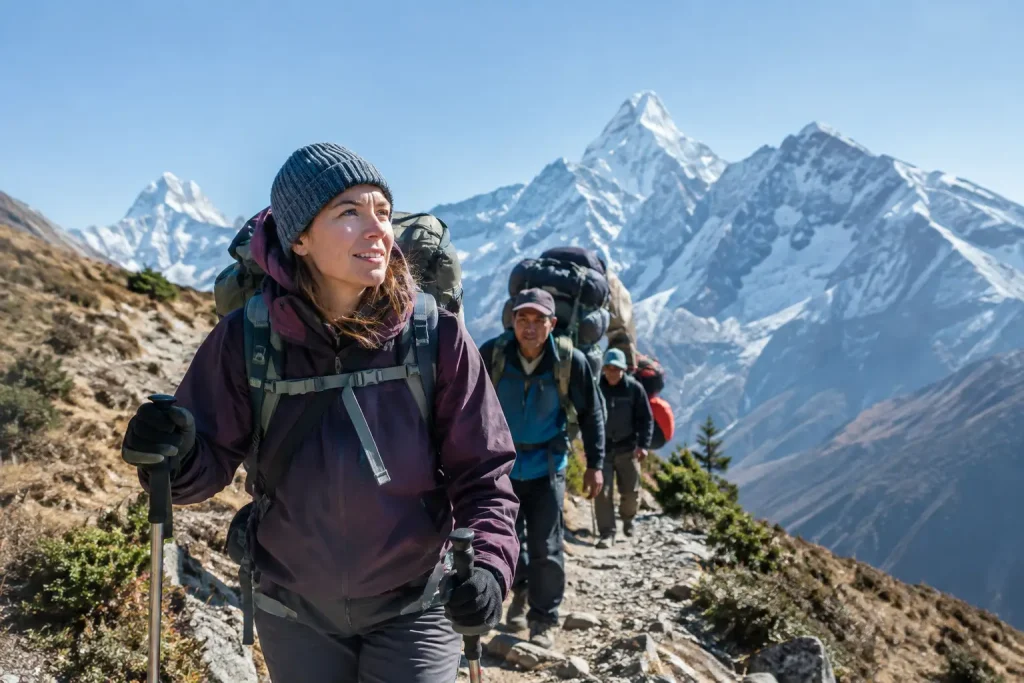
Ask how many clients each guide is expected to manage and whether an assistant guide will join the group. For a high-altitude group trek, an assistant can be a meaningful safety benefit. It allows one staff member to stay with a slower or unwell trekker while the rest of the group continues safely.
If porters are included, ask how loads are managed and whether porter welfare standards are followed. Responsible operations provide appropriate clothing, insurance, reasonable loads, and lodging for their staff. This is both an ethical consideration and a practical sign of how the company runs a trek.
Look Beyond the Headline Price
A low quote may exclude permits, airport transfers, accommodation in Kathmandu, meals, staff insurance, emergency coordination, or required transport. A higher quote may include all of these, making it the more predictable choice once you are in Nepal.
Request a clear written breakdown of what is included and excluded. You should understand who pays for extra nights caused by weather, changes to domestic flights, additional acclimatization days, and emergency transportation. Travel insurance remains your responsibility, but your guide should be able to explain how an evacuation would be coordinated if your insurer approves it.
Avoid choosing solely on price. At the same time, expensive does not automatically mean safer or better. Look for transparent costs, realistic planning, prompt communication, and answers that show knowledge of your exact trek.
Pay Attention to Communication Before You Book
Your pre-trip communication is often a preview of the service you will receive in the mountains. A reliable guide or trekking company should answer specific questions about permits, packing, altitude, fitness, and seasonal conditions without vague sales language.
Notice whether they ask you questions as well. A responsible provider will want to know your trekking history, health considerations, arrival date, group size, and expectations. They may recommend a different route or a longer itinerary if your original plan is poorly matched to the season or your experience. That is useful professional advice, not an attempt to complicate the booking.
Personal compatibility matters, too. You will spend long days together in challenging conditions. Look for calm communication, mutual respect, and a guide who can be firm about safety without being dismissive. English fluency may be important for detailed planning, but clarity, judgment, and attention to your wellbeing matter even more on the trail.
Know When Guided Support Is Most Valuable
Some Nepal treks are more practical to undertake with organized support because of permits, remoteness, restricted-area rules, or complex logistics. Upper Mustang, Manaslu Circuit, Tsum Valley, and Kanchenjunga Base Camp all require careful planning beyond simply following a popular trail.
Even on well-established routes, guided support can be worthwhile for travelers who want help with logistics and reassurance at altitude. Himalaya Wanderer readers who want on-the-ground arrangements can use Radiant Treks for permits, guide services, and customized itineraries, while keeping the same focus on realistic pacing and preparation.
The right guide will not remove every hardship from a Himalayan trek. You will still face steep climbs, cold mornings, changing weather, and the discipline of moving slowly at altitude. What a capable guide provides is informed judgment when conditions change, allowing you to focus on the walk with greater confidence.