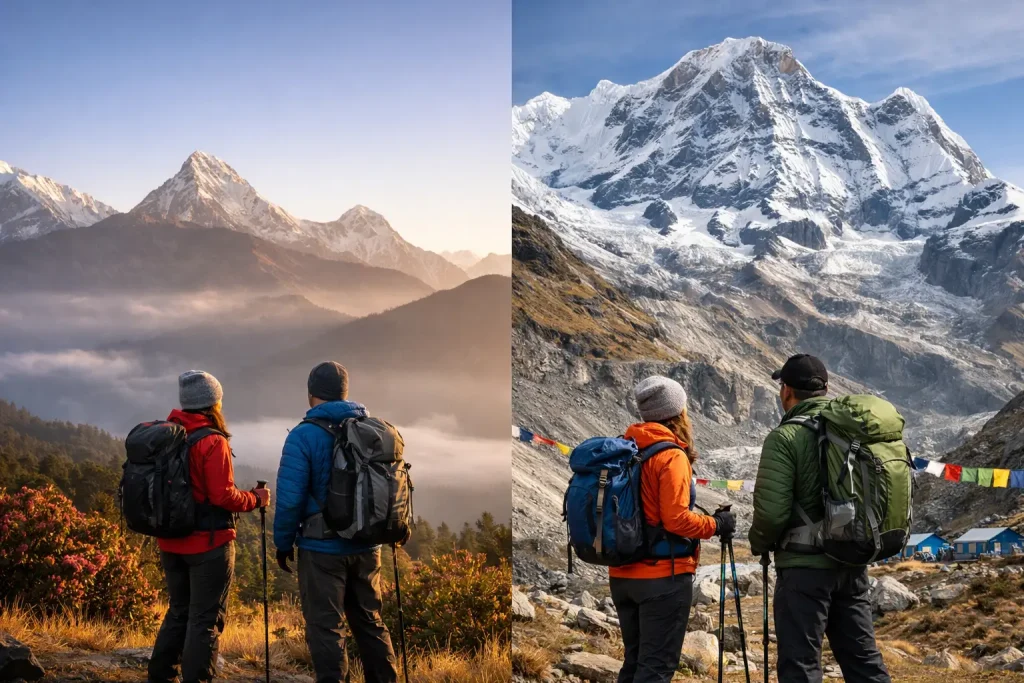
Most trekkers expect the Ghorepani Poon Hill route to be easy because it is short, popular, and lower in altitude than many other treks in Nepal. Then the long stone staircases begin, the climbs feel steeper than expected, and the backpack starts to feel twice as heavy by the second day. That is exactly where the Benefits of hiring a Porter for the Poon Hill Trek become clear.
Poon Hill is often recommended as a beginner-friendly trek, and in many ways it is. The trail is well established, tea houses are available throughout the route, and the maximum elevation is manageable for most healthy travelers. But beginner-friendly does not mean effortless. Carrying a full pack through Ulleri’s steps, forest climbs, and repeated ascents and descents can drain your energy faster than many people expect.
A porter does much more than carry your bag. On this trail, a good porter can help you walk more comfortably, enjoy the mountain scenery more fully, and finish each day with enough energy to appreciate the experience rather than simply recover from it.
Why the Poon Hill trail feels harder than it looks

When trekkers read about Poon Hill, they often focus on the distance and altitude. Both matter, but they do not tell the whole story. The route includes many uphill sections, thousands of stone steps, and uneven terrain that becomes more tiring when you carry 10 to 15 kilograms on your back.
The climb from Tikhedhunga or Hile to Ulleri is the classic example. On paper, it is only one section of the trek. In reality, it can feel relentless, especially if you are not used to hiking at elevation with a loaded bag. Even fit hikers notice the difference between walking with a light daypack and carrying everything themselves.
This is why hiring a porter is not only for older trekkers or beginners. Even experienced hikers often choose porter support on shorter Nepal treks because it improves the quality of the journey.
Benefits of Hiring a Porter for Poon Hill Trek
The biggest benefit is simple: you save energy where it matters most. Instead of spending the day thinking about your shoulders, lower back, and tired legs, you can focus on the trail, the villages, the rhododendron forests, and the mountain views.
Those energy savings matter from the first day. With only a light pack carrying water, valuables, and extra layers, your pace becomes more comfortable and more consistent. You are less likely to rush early and struggle later. You also recover better in the evening, which makes the next day more enjoyable.
There is also a safety benefit that many trekkers overlook. Fatigue affects footing, judgment, and confidence on steep stairs and uneven descents. When your load is lighter, your balance usually improves. This reduces the chance of slips, knee strain, and overexertion, especially in wet conditions or during the downhill sections that can be surprisingly hard on the body.
Another clear advantage is that a porter helps make the trek accessible to more people. Some travelers are active but do not trek regularly. Others may have minor knee issues, limited backpacking experience, or simply want to enjoy Nepal without turning every day into a test of endurance. Hiring a porter can make Poon Hill realistic and enjoyable for them.
A better trekking experience, not just less weight
Many people think hiring a porter is only about comfort. Comfort is part of it, but the real value is often the quality of the experience.
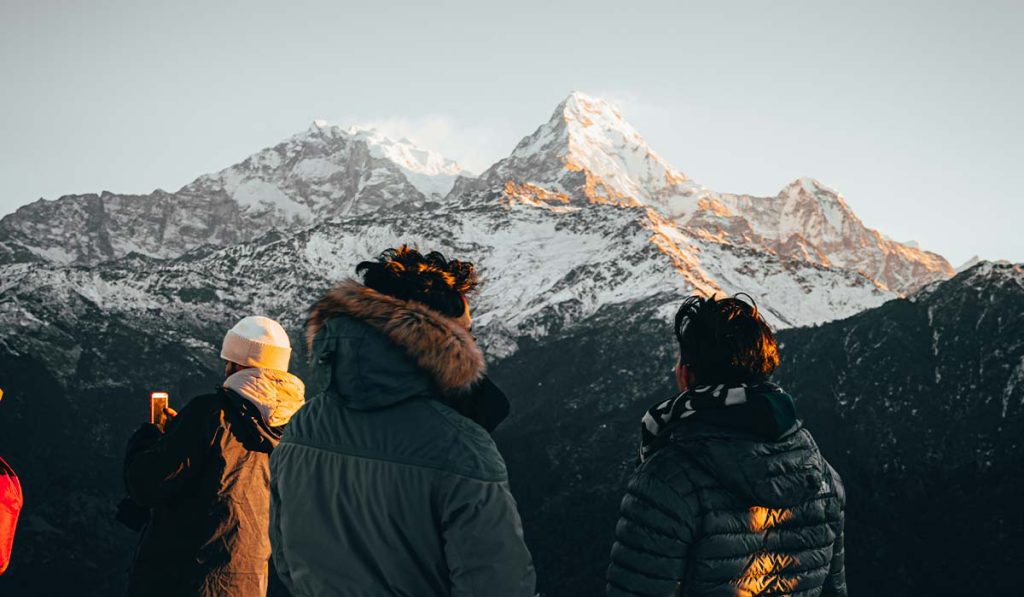
When you are not carrying a heavy pack, you notice more. You stop more naturally to look at Annapurna South, Machhapuchhre, and Dhaulagiri. Likewise, you have more patience in the villages. You arrive at tea houses with enough energy to walk around, talk to other trekkers, or simply enjoy the changing light over the hills.
This matters on the early morning hike to Poon Hill as well. That pre-dawn climb is short but steep, cold, and dark. If your body is already worn down from the previous day’s effort, you may still reach the viewpoint, but not in the best condition. If you have trekked with less physical strain, that sunrise moment feels much better.
For photographers and travelers who care about the overall journey, not just the final viewpoint, this difference is significant. The trek becomes less about managing discomfort and more about absorbing the landscape.
Local knowledge and practical help on the trail
On the Poon Hill route, a porter is not the same as a guide, and that distinction matters. A guide leads the route, explains the itinerary, helps with logistics, and provides broader support. A porter primarily carries your bag. Still, many porters have excellent trail familiarity and practical local knowledge from repeated trips on the same route.
They often know the pace that works best on steep sections, common weather patterns, tea house routines, and the small trail details that first-time trekkers miss. While they are not there to replace a licensed guide, their experience can still be very helpful in day-to-day trekking situations.
They may also help simplify small but important parts of the trip, such as handling your duffel at tea houses, keeping the walking day organized, or adjusting the load if conditions change. These practical details may seem minor before the trek, but they contribute a lot once you are on the trail.
Hiring a porter supports the local trekking economy
One of the most meaningful benefits of hiring a porter for Poon Hill Trek is that your trip supports local employment directly. Trekking in Nepal depends not only on trails and tea houses but also on the people who make the experience possible.
Porters are a key part of that system. For many families, porter work provides important seasonal income. When trekkers hire local staff through a responsible operator, they help create jobs in mountain communities and support the wider trekking economy.
This point should be understood with care. Hiring a porter is not charity, and it should never be framed that way. It is professional work that deserves fair pay, proper equipment, ethical load limits, and respectful treatment. Trekkers who choose porter support through reputable local companies are not only making their own trek easier. They are also participating in a more locally beneficial form of travel.
Is hiring a porter worth it for a short trek?
For many people, yes.
Poon Hill is shorter than Annapurna Base Camp or Everest Base Camp, so some trekkers assume porter support is unnecessary. That depends on your fitness, packing habits, age, expectations, and travel style. If you pack very light, hike regularly, and enjoy carrying your own gear, you may be perfectly happy without a porter.
But many trekkers underestimate how tiring a short trek can be when it involves steep climbs and consecutive walking days. A shorter itinerary does not always mean an easier physical experience. In fact, because Poon Hill is often completed in a compact schedule, the walking days can feel more concentrated.
A porter is especially worth considering if you are traveling with children, trekking as a couple with shared gear, recovering from a past injury, new to multi-day hiking, or visiting Nepal for enjoyment rather than physical challenge. In these cases, porter support often adds far more value than the cost suggests.
When hiring a porter makes the most sense
There are some situations where I strongly recommend considering a porter. If you know you struggle with stairs, if you tend to overpack, or if you want to combine Poon Hill with other activities in Nepal and avoid unnecessary fatigue early in your trip, a porter is a smart choice.
It also makes sense during peak trekking seasons when trails are busy and tea houses are lively. On crowded days, moving comfortably and keeping your energy steady can make the difference between a pleasant trek and a tiring one.
During colder months, your pack may also be heavier because of extra layers and gear. In that case, porter support becomes even more useful.
What to expect if you hire a porter
A porter usually carries the main bag or duffel, while you keep a small daypack with essentials such as water, sunscreen, camera, valuables, snacks, and a warm layer. This is the setup most trekkers find ideal because it keeps important items with them while removing the bulk of the weight.
It is important to pack realistically. Having a porter does not mean bringing unnecessary gear. Good trekking practice still matters. The better your packing, the easier the overall trip is for everyone.
You should also book through a responsible company that follows fair porter treatment standards. That includes reasonable weight limits, proper clothing and footwear, insurance where applicable, and clear working arrangements. Ethical porter welfare is not a small detail. It is part of trekking responsibly in Nepal.
If you are unsure whether to hire a guide, a porter, or both, think about what kind of support you need. If your main concern is carrying weight, a porter may be enough. And also, if you want route leadership, deeper local interpretation, and full logistical help, a guide or guide-porter may be the better fit.
Poon Hill is one of Nepal’s most rewarding short treks, but it is more enjoyable when your body is not fighting your backpack all day. If you want to walk lighter, recover better, and experience the trail with more energy and ease, hiring a porter is often one of the smartest decisions you can make before you start climbing those first stone steps.