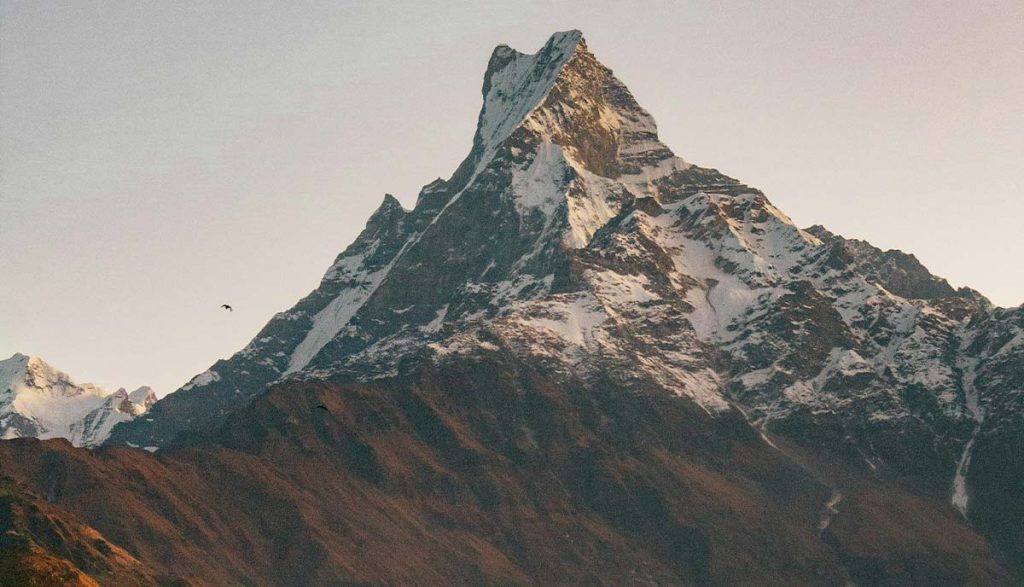
Most trekkers come to Mardi Himal for the ridge views and the close-up panorama of Machhapuchhre, but the trail is not only about mountains. Culture and villages on the Mardi Himal Trek route add a different kind of reward – one that many people do not fully expect before they start walking. Between forest sections, teahouse stops, and hillside settlements, you get a clearer sense of how people live in the Annapurna foothills and how trekking fits into that everyday life.
This route is shorter and less village-heavy than classic trails like Ghorepani or Annapurna Base Camp, so expectations matter. If your main goal is nonstop cultural immersion, Mardi Himal is not the richest route in Nepal for that. But if you want a trek that blends mountain scenery with real local settlements, working farmland, and teahouse culture, it does that very well.
What kind of culture will you see on the Mardi Himal Trek route?
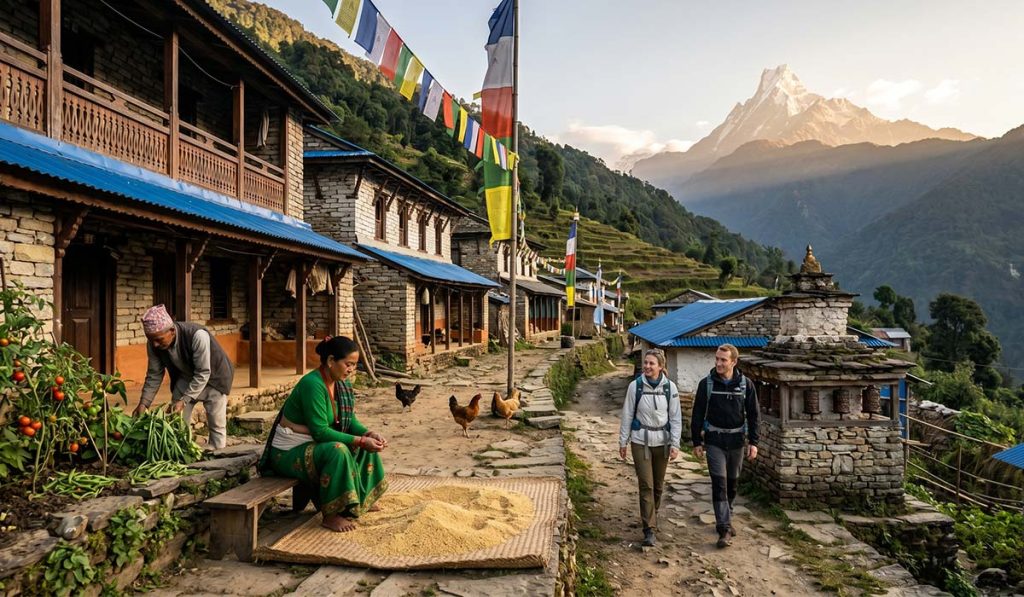
The lower section of the trek passes through villages influenced strongly by Gurung and other hill communities of the Annapurna region. In practical terms, that means you are walking through places where farming, livestock, seasonal tourism, and family-run lodges all connect. You will notice stone houses, terraced fields, prayer flags, small shrines, and village paths that are used for daily life, not only for trekkers.
Unlike remote high-altitude routes where culture can feel more isolated and traditional in a stark mountain setting, Mardi Himal shows a foothill culture shaped by both agriculture and trekking. Many lodge owners still farm, keep animals, or manage household work alongside hosting guests. That gives the route a grounded feel. Even when tourism is important, these are not settlements built only for visitors.
Religion also appears in subtle ways. You may see Buddhist symbols, mani walls in some areas, and local Hindu practices depending on the village and family background. On a short trek like Mardi, culture is usually observed through daily routine rather than festivals unless your timing is especially lucky.
Villages and settlements you pass through
Most itineraries begin from Kande, Phedi, or a nearby access point and move through or toward places such as Australian Camp, Pothana, Deurali, Forest Camp, Low Camp, Badal Danda, and High Camp. Not all of these are traditional villages in the same sense. Some are proper settlements with local households, while others are mainly trekking stops with lodges.
Pothana and Deurali are among the better places to notice village life early in the trek. Here, the route still feels connected to local movement, farming land, and established community patterns. You may see residents carrying supplies, tending fields, or moving livestock along the same path trekkers use.
As you climb higher, places like Forest Camp and Low Camp become more trail-service oriented. These stops are important, but they are less about village exploration and more about the rhythm of teahouse trekking. High Camp especially is functional. People stay there for the next morning’s push toward Mardi Himal Base Camp, not to spend time wandering through a large settlement.
That change is useful to understand before you go. The lower route offers more visible local life. The upper route becomes more about scenery, altitude, and lodge-based interaction.
Teahouse culture is part of the experience
On Mardi Himal, local culture is not only in villages. It is also in the teahouses. Meals, conversations by the dining-room stove, the way supplies are carried uphill, and the family structure behind each lodge all tell you something about the region.
Dal bhat remains the most practical and culturally rooted meal on the trail. You will also find noodles, fried rice, soup, eggs, potatoes, pancakes, and other standard trekking food. The menu may look familiar from other Nepal treks, but the experience still reflects local hospitality. In many lodges, service is simple, direct, and warm rather than polished in a commercial sense.
If you want a more meaningful cultural experience, spend less time on your phone and more time paying attention to the lodge routine. Ask where the family is from. Notice how fuel, food, and materials reach higher camps. Observe how weather affects daily work. Those details often say more than staged cultural programs ever could.
How much cultural immersion should trekkers expect?
The honest answer is moderate, not deep. Mardi Himal is excellent for scenery and very good for a short trek with enough local interaction to feel connected to the region. It is not the best choice if your priority is passing through many large traditional villages every day.
That does not make the cultural side weak. It just means it is quieter and more understated. You experience culture in fragments – village terraces, lodge kitchens, local greetings, shared trails, and the transition from settled farmland to high ridge country. For many trekkers, that balance is part of the route’s appeal.
A few practical ways to experience village life respectfully
Small choices matter on this trail. Stay in locally run teahouses, greet people with a simple namaste, ask before photographing residents, and be patient when services are slower in bad weather or busy seasons. These are working mountain communities, not just trekking scenery.
If you trek with a guide, ask about the background of each stop rather than treating every overnight place as the same. An experienced local guide can explain which settlements are seasonal, which are more community-based, and how the trail has changed as Mardi Himal became more popular.
For many trekkers, the strongest memory of Mardi Himal is the sunrise ridge. But the route feels fuller when you also remember the villages below, the people running the lodges, and the everyday mountain life that makes the trek possible.