A trek can feel straightforward at 9,000 feet and surprisingly difficult at 13,000. The change is not a failure of fitness or willpower. It is the effect of less available oxygen, and knowing how to avoid altitude sickness is one of the most important parts of planning any Nepal trek.
Altitude illness can affect young, fit hikers as well as first-time trekkers. The reliable protection is not a special supplement or a fast hiking pace. It is a sensible itinerary, an honest response to symptoms, and the willingness to descend when your body says it needs to.
Why altitude sickness happens
As elevation rises, air pressure falls. Each breath still contains roughly the same percentage of oxygen, but fewer oxygen molecules reach your lungs and bloodstream. Your body needs time to adapt by changing its breathing, circulation, and fluid balance.
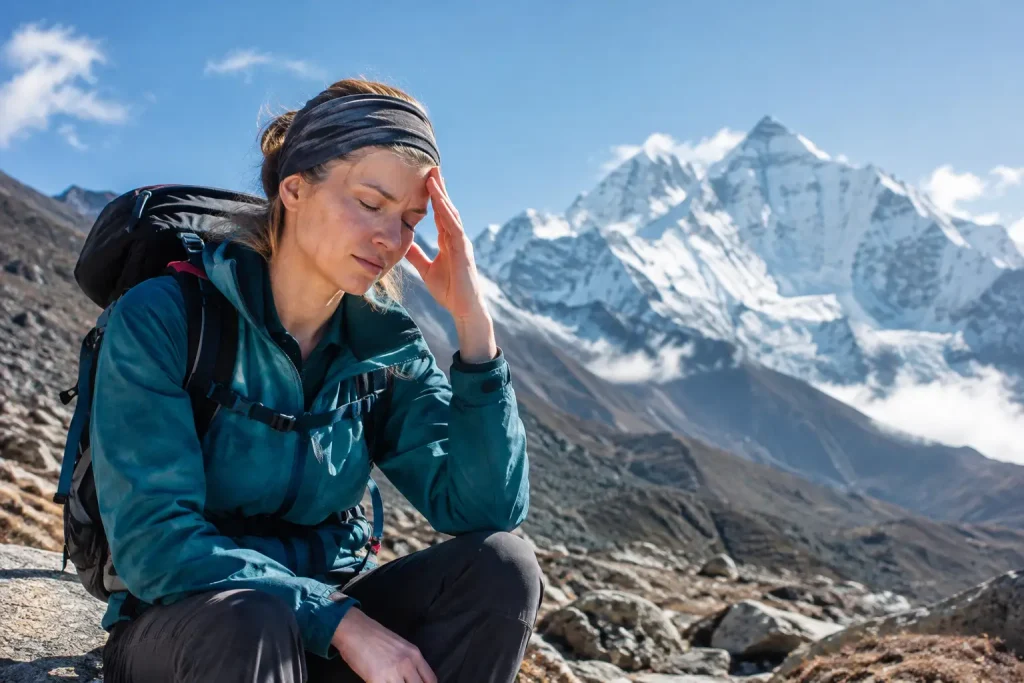
Acute mountain sickness, usually called AMS, is the most common form of altitude illness. It often begins six to 24 hours after gaining elevation or sleeping at a new high point. Headache is the defining symptom, often accompanied by nausea, reduced appetite, fatigue, dizziness, or poor sleep.
More serious conditions are high-altitude cerebral edema (HACE), involving swelling in the brain, and high-altitude pulmonary edema (HAPE), involving fluid in the lungs. Both can become life-threatening. They are uncommon when trekkers acclimatize well and act early, but they are reasons to descend immediately, not problems to push through.
The first rule: gain sleeping elevation slowly
The altitude where you sleep matters more than the highest point you reach during the day. A day hike to a higher ridge can help acclimatization if you return to a lower lodge to sleep. This is the basis of the trekking principle: climb high, sleep low.
Above roughly 10,000 feet (3,000 meters), a conservative plan limits increases in sleeping elevation to about 1,000 to 1,600 feet (300 to 500 meters) per night. Add a rest or acclimatization day after every 3,000 feet (1,000 meters) of sleeping elevation gained, or every three to four days on the trail.
These are planning guidelines, not a guarantee. A route with a long approach at lower elevation, such as the Poon Hill Trek, is usually easier to acclimatize on than a trek that reaches high lodges quickly. On the Everest region routes, trekkers commonly spend acclimatization days at Namche Bazaar and then again farther up the valley. Those days are part of the route, not spare time to remove from an itinerary.
A short itinerary can look attractive on a booking page, but compressed days create the clearest avoidable altitude risk. If you have limited vacation time, choose a lower route or add contingency days rather than assuming determination will replace acclimatization.
Use acclimatization days correctly
An acclimatization day should not mean lying in bed all day unless you are unwell. A short, easy hike to a higher point, followed by a return to a lower sleeping altitude, is generally the better approach. Keep the effort controlled, eat, drink to thirst, and be back at the lodge with plenty of time to rest.
Do not turn the day into a hard summit attempt. Exhaustion, dehydration, and a late arrival make it harder to recognize whether symptoms are due to a demanding day or developing AMS.
Pace for your lungs, not your itinerary
The most useful trail pace is one that allows you to breathe hard but remain in control. On steep climbs, shorten your stride and maintain a steady rhythm. Many experienced Himalayan guides use a deliberately slow pace at altitude because it conserves energy and keeps the group together.
Racing to the next tea house does not improve acclimatization. It can leave you depleted and more likely to ignore an emerging headache. Build in breaks before you are exhausted, especially on long ascent days such as the climb toward Gokyo, Thorong Phedi, or high camps on a quieter route.
Good physical conditioning still matters. Strong legs, aerobic endurance, and comfort hiking several hours on consecutive days make trekking safer and more enjoyable. But fitness does not make anyone immune to altitude illness. A very fit trekker can become sick after ascending too quickly, while a slower hiker on a proper itinerary may feel fine.
Eat and drink sensibly, but skip the myths
At altitude, appetite can fade. Make a deliberate effort to eat regular meals, with familiar carbohydrate-rich foods that are easy to tolerate. Rice, potatoes, pasta, soups, and porridge are practical trail choices. Do not force unusually large meals if you are nauseated, but do not treat skipped meals as normal either.
Drink regularly and use urine color as one rough hydration check: pale yellow is generally a reasonable sign, while persistently dark urine may suggest you need more fluids. Overdrinking is not helpful and can be dangerous. Drink to thirst, increase intake when you are sweating heavily or have dry conditions, and include normal meals or electrolyte drinks rather than relying on plain water alone.
Avoid alcohol once you are sleeping at high elevation. Alcohol worsens dehydration, disrupts sleep, and can make altitude symptoms harder to assess. Sedatives and sleeping pills can also suppress breathing and should only be used with medical advice from a clinician familiar with high-altitude travel.
Garlic soup, herbal remedies, and oxygen canisters are common trekking conversations, but none replaces a gradual ascent. Warm soup may help you feel better and support hydration. It does not prevent AMS.
Consider medication before you leave home
Acetazolamide, often known by the brand name Diamox, can speed acclimatization and may be appropriate for some trekkers. It is especially worth discussing with a travel medicine clinician if you have a past history of altitude illness, must follow an itinerary with unavoidable rapid ascent, or are traveling to a very high destination.
It is a prescription medicine, not a substitute for a safe plan. Side effects can include tingling in the fingers or toes, increased urination, and altered taste for carbonated drinks. Your clinician should review allergies, current medications, medical conditions, and the correct dose for prevention or treatment.
Dexamethasone and nifedipine have roles in specific high-altitude emergencies, but they are not routine self-treatment tools for a standard trek. Carrying medication without understanding when descent is required can create false confidence. For severe symptoms, the priority is always getting lower.
Know the symptoms that change the plan
A mild headache alone can occur for many reasons, including dehydration, poor sleep, and exertion. At altitude, however, treat a new headache seriously, especially when it comes with nausea, dizziness, unusual fatigue, or loss of appetite.
If symptoms are mild, stop ascending. Rest at the same altitude, hydrate normally, eat if you can, and monitor how you feel. Do not climb higher until symptoms have fully resolved. Tell your guide or trekking partner early. Quietly hoping the problem disappears is how manageable AMS can become a difficult evacuation.
Descend immediately if symptoms worsen at rest, if you develop severe headache or repeated vomiting, or if you feel unsteady when walking heel-to-toe. Confusion, unusual behavior, loss of coordination, shortness of breath while resting, chest tightness, a persistent wet cough, or blue lips are emergency warning signs. Do not wait for morning or try to reach the next planned village. Descend with support and seek medical help.
Never trek alone at high elevation
A partner or guide may notice slurred speech, poor coordination, confusion, or a change in behavior before the affected trekker recognizes it. This is one reason guided trekking can be particularly valuable on higher routes and for travelers without previous altitude experience.
If you trek independently, choose a route with regular villages, keep your itinerary flexible, share your plan with someone, and be prepared to turn around. Travel insurance should specifically cover trekking at your planned maximum elevation and emergency helicopter evacuation where needed.
Build an itinerary with room for weather and recovery
Weather delays, flight disruptions, illness, and slower-than-expected walking are normal parts of Himalayan travel. A schedule with no buffer days encourages poor decisions, such as ascending with a headache because an international flight is waiting at the end of the trip.
Plan at least one or two extra days beyond the minimum route schedule. This gives you the option to rest at the same elevation, descend and recover, or wait out bad weather without losing the entire trek. Before booking, compare not only the highest point of a route but also its daily sleeping elevations and available acclimatization stops.
The Himalaya reward patience. A steady ascent, an extra night in the right village, and an early decision to descend can protect the trek you trained for. Treat altitude safety as part of the experience, and you will have far more confidence when the trail rises above the tree line.