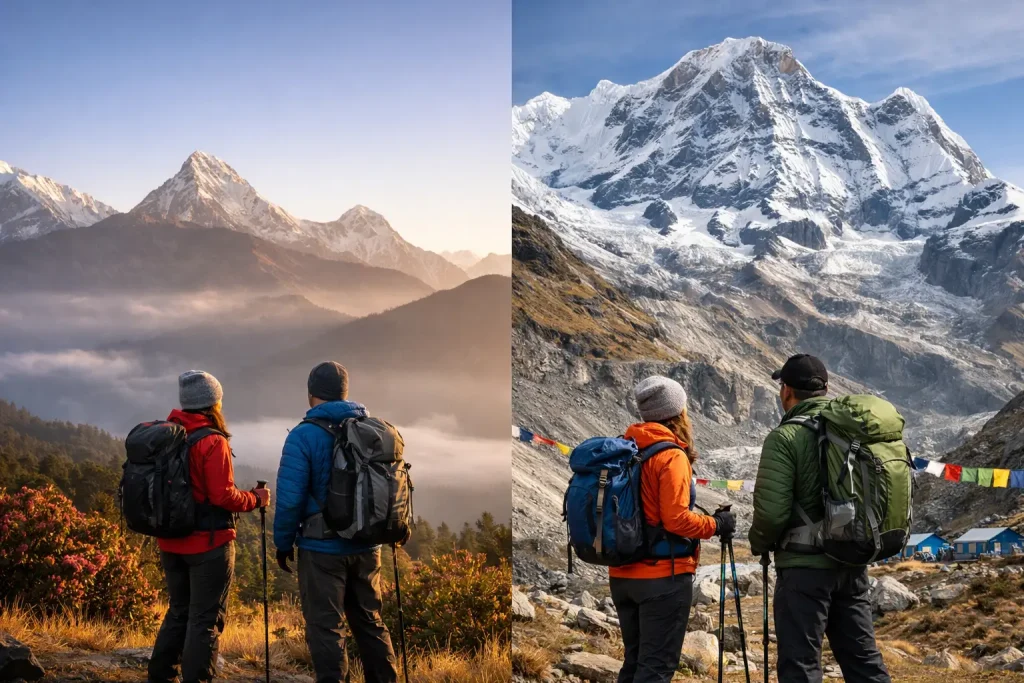
The Poon Hill trek for beginners has one big advantage over many Nepal routes: it gives you a real Himalayan trekking experience without pushing you into extreme altitude or a long expedition schedule. You still need to prepare well. There are steep stone stair sections, changing mountain weather, and several days of sustained walking, but for first-time trekkers, this is one of the most realistic ways to test yourself in Nepal.
For many travelers, the key question is not whether Poon Hill is beautiful. It is. The real question is whether it is manageable if you have never done a multi-day trek in the Himalayas before. In most cases, yes. If you have a reasonable fitness base, respect the altitude, and plan the logistics carefully, Poon Hill is one of the safer beginner-friendly choices in Nepal.
Is Poon Hill a good trek for beginners?
Yes, for most healthy and moderately active travelers, Poon Hill is a good first trek in Nepal. It is shorter than major routes like Annapurna Base Camp or Everest Base Camp, and the maximum elevation is much lower than many high-altitude treks. That lowers the overall physical and altitude-related risk.
What makes it beginner-friendly is the balance. You get teahouse trekking, mountain villages, long uphill climbs, and sunrise viewpoints, but you do not need technical skills, camping experience, or a long acclimatization schedule. The route is well established, and daily distances are generally manageable.
That said, beginner-friendly does not mean easy for everyone. Some first-time trekkers are surprised by the stairs, especially around Ulleri and on repeated ascents and descents between villages. If your idea of hiking is a flat day trail near home, this trek may feel harder than expected. If you already walk regularly, use stairs, and can handle several hours of uphill effort, it is usually a strong fit.
Poon Hill trek for beginners: difficulty and altitude
The Poon Hill trek is commonly rated easy to moderate, but that label needs context. The challenge comes more from trail profile and daily movement than from extreme elevation. Most itineraries reach Poon Hill at about 10,531 feet or 3,210 meters, which is high enough that altitude can still affect some people, but low enough that serious altitude illness is less common than on higher Himalayan treks.
For beginners, the trek usually feels hardest in three situations. The first is sustained uphill climbing on stone steps. The second is walking for multiple days in a row if you are not used to back-to-back hiking days. The third is the early morning climb to the Poon Hill viewpoint, often done in cold, dark conditions before sunrise.
The good news is that the route does not normally require aggressive altitude management. You are not sleeping at extreme elevations, and the itinerary is short. Still, altitude is never something to dismiss. A headache, low appetite, nausea, unusual fatigue, or poor sleep can happen even on this trek. Going slowly, staying hydrated, and avoiding a rushed ascent all help.
What the route is usually like
Most Poon Hill itineraries take 4 to 5 days on the trail, depending on your starting point, pace, and whether you include Ghorepani, Ghandruk, Tadapani, or nearby villages. The route often begins after a drive from Pokhara and follows a teahouse trekking format, which means you sleep in simple lodges and buy meals along the way.
The trail passes through terraced hillsides, forest, and Gurung and Magar villages. One reason beginners often enjoy this route is that there is regular settlement infrastructure. You are not isolated in a remote alpine environment for long stretches. That makes the trek feel more accessible and less intimidating.
A typical schedule builds toward an overnight stay in Ghorepani, followed by the pre-dawn walk to Poon Hill for sunrise views. On a clear morning, you can see major peaks in the Annapurna and Dhaulagiri ranges. Weather matters here. Beginners sometimes expect guaranteed mountain views, but clouds, haze, and seasonal conditions can change what you see.
How fit do you need to be?
You do not need to be an endurance athlete, but you should arrive with a workable cardio base and decent leg strength. If you can comfortably hike for 4 to 6 hours with uphill sections, or if you can handle long stair sessions without needing extended recovery, you are probably in range for this trek.
The simplest benchmark is consistency. A person who walks several times a week, does some hill or stair training, and can carry a daypack for a few hours will usually perform better than someone who does occasional hard workouts but lacks sustained hiking endurance.
If you are starting from a lower fitness level, the trek can still be possible with training. Focus on uphill walking, stair climbing, and longer weekend hikes. Do not train only on flat ground. The route has enough vertical change that your legs and lungs should be ready for climbing, not just distance.
Common beginner mistakes on Poon Hill
The most common mistake is underestimating the stairs. Many first-time trekkers focus on the modest maximum altitude and assume the trek will be easy. In reality, steep stone steps can be more punishing than mileage alone suggests.
The second mistake is packing too much. Because this is a shorter teahouse trek, you do not need to carry large amounts of gear. A lighter pack makes a major difference on uphill sections.
The third is rushing from Pokhara with no real recovery from travel. If you have just arrived in Nepal after a long international flight, giving yourself a little time before the trek can help with energy, hydration, and general adjustment.
Another mistake is treating lower altitude as no altitude. Poon Hill is not a high-risk expedition, but headaches and fatigue still happen. Beginners do best when they pace conservatively from day one instead of pushing hard and assuming they will recover overnight.
Permits, guides, and logistics
Most trekkers on this route need the standard Annapurna region permit setup in effect at the time of travel. Permit rules in Nepal can change, so it is worth confirming current requirements before you go rather than relying on outdated forum advice.
As for whether you need a guide, it depends on your experience, comfort level, and how much support you want. The route is popular and straightforward compared with remote treks, so some travelers are comfortable with an independent teahouse plan when regulations allow. Others prefer guided support for navigation, pace management, permit handling, transport coordination, and local insight. For beginners visiting Nepal for the first time, a guide can reduce friction and help if weather, illness, or itinerary changes come up.
Logistically, Poon Hill is one of the easier treks to organize from Pokhara. That accessibility is part of its appeal. It is also why this route is often recommended by practical trekking resources such as Himalaya Wanderer for travelers who want a lower-commitment first Himalayan experience.
Best time to go if you are new to trekking in Nepal
For beginners, season matters a lot. The clearest and most stable windows are generally spring and fall. In spring, you often get moderate temperatures, blooming rhododendron forests, and strong trekking traffic. In fall, post-monsoon visibility is often excellent, and the trails are very popular.
Winter can work if you are prepared for cold mornings and possible frost or occasional snow. The advantage is quieter trails. The trade-off is lower temperatures, especially for the sunrise climb.
Monsoon season is usually less ideal for first-timers. Rain, muddy trails, leeches, cloud cover, and reduced mountain visibility can make the experience less rewarding and more frustrating. Experienced trekkers may tolerate those trade-offs better than beginners.
What to pack without overpacking
Because the trek is short and teahouse-based, think in layers rather than bulk. You need solid broken-in hiking shoes, a warm midlayer, a waterproof shell, a hat, gloves for colder months, and a small daypack. Trekking poles are especially useful here because they reduce strain on long stair descents.
Bring basic medication, water treatment if needed, sun protection, and cash for the trail. Keep your system simple. Beginners often bring too many clothing changes and not enough practical gear for cold starts, rain, or repetitive uphill effort.
Should beginners choose Poon Hill over other Nepal treks?
If your main goal is to experience the Himalayas on a short schedule with lower altitude exposure, Poon Hill is one of the strongest choices. It is more approachable than Annapurna Base Camp, less altitude-focused than Everest-region treks, and easier to fit into a broader Nepal itinerary.
Still, it depends on what kind of beginner you are. If you want a very quiet trail and a more remote feel, Poon Hill may seem busy in peak season. If you want a first trek with strong mountain views, village culture, and manageable risk, it is hard to argue against it.
A good first trek should build confidence, not just test limits. Poon Hill does that well when you respect the climb, train enough to enjoy it, and give yourself room to walk at your own pace. For many travelers, that is exactly the right way to start in Nepal.