A private trek changes more than who walks beside you. It determines how quickly you move, where you sleep, how conservatively you acclimatize, and who is responsible for solving problems when flights, weather, or your body do not follow the original plan. For travelers considering private guide options in Nepal, the key is not simply choosing between guided and independent travel. It is choosing the level of support that matches the route, season, group experience, and consequences of getting a decision wrong.
Private arrangements can suit first-time Himalayan trekkers, couples, families, photographers, experienced hikers with specific objectives, and anyone who wants control over dates and daily pace. They also carry a higher cost than a fixed-departure group trek. The value comes from flexibility and direct attention, not from a promise that the trek will be easy.
What private guide options usually include
A private trek generally means your guide and support team are assigned only to you or your booking party. You are not required to match the departure date, hiking speed, room preferences, or itinerary priorities of unrelated travelers.
The simplest arrangement is a licensed trekking guide for an individual or small group. The guide leads the route, manages daily logistics, communicates with teahouses, assists with permits, monitors acclimatization, and helps make conservative decisions if weather or health becomes a concern. You carry your own pack or hire a porter separately.
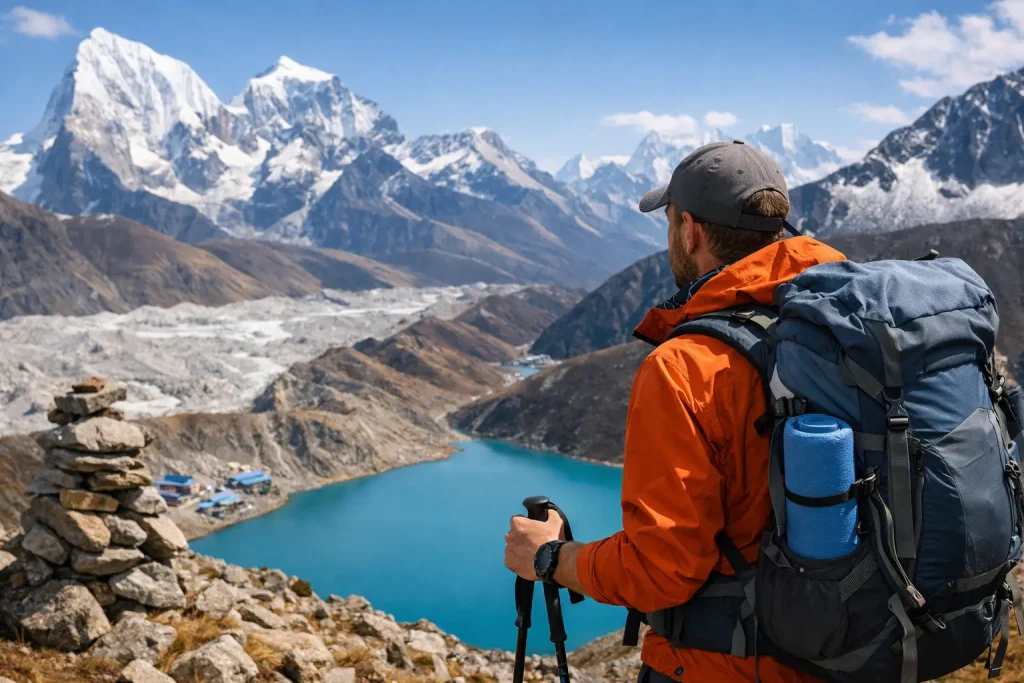
A guide and porter arrangement is the most common private setup for trekkers carrying a daypack only. Your guide focuses on navigation, lodging, safety, and itinerary management, while a porter carries a defined portion of your gear. This can be a practical choice on longer routes such as Everest Base Camp, the Annapurna Circuit, Manaslu Circuit, or the Gokyo Lakes Trek, where consecutive days at altitude can make a heavy backpack significantly harder.
For larger parties, private guide options may include multiple guides, porters, a kitchen crew on camping-based routes, private transport, hotel bookings in Kathmandu or Pokhara, and a customized sightseeing plan. This structure is more relevant for remote expeditions and restricted-area treks, including Upper Mustang, Tsum Valley, Kanchenjunga Base Camp, and Makalu Base Camp.
Private guide versus group trek
A fixed group trek is often less expensive because transport, staff, and logistics are shared. It can also be socially rewarding, especially for solo travelers who enjoy meeting other hikers. The trade-off is that the group itinerary is usually set in advance, and the pace must work for the group as a whole.
A private trek provides greater control. You can add an acclimatization day in Namche Bazaar, start walking earlier to avoid afternoon wind, spend more time photographing the mountains, or build a shorter itinerary around limited vacation time. That flexibility matters, but it has limits. A private guide should not compress a safe acclimatization schedule simply because a client has a tight return flight.
For many travelers, the decision comes down to pace and certainty. If you are comfortable following a standard itinerary and want to reduce costs, a small group can work well. If you are trekking with a partner, have different fitness levels, need specific dates, or want an itinerary built around altitude safety rather than the average group pace, private support is often the better fit.
Choosing the right level of support
The right arrangement depends first on the route. Well-established teahouse treks such as Annapurna Base Camp, Langtang Valley, Ghorepani Poon Hill, and Mardi Himal have frequent villages, clear trails, and relatively straightforward lodge logistics. A qualified private guide may be all you need, particularly if you are comfortable carrying your own equipment.
Longer and higher routes demand more planning. The Everest Three Passes Trek, for example, combines high passes, variable weather, and extended time above 16,000 feet. A guide and porter setup gives you a lighter daily load and a second set of eyes on fatigue, hydration, and altitude symptoms. The same applies to high sections of the Manaslu Circuit and Annapurna Circuit, where a difficult day can follow several days of accumulated exertion.
Remote treks require a different mindset. On Kanchenjunga, Makalu, or some routes in Dolpo, resupply options are limited, road access is distant, and weather delays can be more disruptive. Support staff, contingency days, and experienced local logistics are not luxuries in these areas. They are part of responsible trip design.
Your own experience also matters. A strong hiker at sea level may still benefit from private support if this is their first time sleeping above 12,000 feet. Conversely, an experienced high-altitude trekker may choose a guide-only arrangement for route knowledge and permits while carrying their own pack. Fitness helps, but it does not eliminate altitude risk.
What a private guide should handle
A professional guide is more than a trail leader. Before the trek, they should help confirm a realistic itinerary, explain permit requirements, review packing needs, and identify transport risks such as domestic flight delays to Lukla or road disruptions during the monsoon.
During the trek, a guide should organize lodging as conditions allow, manage meals and timing, assess how each trekker is coping, and recognize when symptoms need attention. Headache, nausea, poor sleep, loss of appetite, and unusual fatigue can be common at altitude, but their pattern and severity matter. A guide should never dismiss worsening symptoms just to keep an itinerary on schedule.
Good private guidance also includes local judgment. A guide may recommend leaving early before clouds build, taking a rest day when a traveler is not recovering well, choosing a safer alternative route, or adjusting the plan after snow affects a pass. These decisions are difficult to make from a pre-trip itinerary alone.
No guide can guarantee good weather, prevent altitude illness, or remove the need for personal responsibility. You still need travel insurance that covers high-altitude trekking and emergency evacuation, adequate fitness, appropriate clothing, and the willingness to turn around if your health requires it.
Permits and route rules
Permit requirements vary by trekking area and can change, so they should be confirmed for your travel dates. A private operator can simplify the paperwork, particularly where national park permits, local entry fees, trekking information systems, or restricted-area permits are involved.
Restricted regions have more formal conditions. Upper Mustang, Manaslu, and Tsum Valley are examples where travelers may need to trek with an authorized agency and meet minimum group requirements under current regulations. In these cases, a private trek does not necessarily mean trekking alone. It means your booking is privately arranged, while the permit rules determine the minimum number of eligible trekkers and staff required.
Ask exactly which permits are included, who processes them, and whether your guide carries the required documentation. Clear answers before arrival are preferable to discovering an exclusion at a checkpoint.
Cost factors to compare before booking
Private trekking prices vary widely because the itinerary and support level vary widely. A low daily rate may exclude permits, transportation, porter wages, accommodations, meals, guide insurance, or airport transfers. The total cost matters more than the headline price.
When comparing private guide options, request a written breakdown covering guide and porter services, permit fees, ground and domestic transportation, hotels, meals during the trek, equipment, taxes, and contingency costs. Also clarify whether tips are expected and whether the quoted itinerary includes rest days.
A private guide is usually priced per day or per trip, so the per-person cost drops when two or more travelers share the same team. However, do not fill a group solely to lower the price if fitness levels or expectations are incompatible. A mismatched private group can lose the flexibility that made private travel appealing in the first place.
Questions to ask before confirming a guide
Start with practical qualifications. Ask about the guide’s experience on your exact route, first-aid and altitude training, English communication, insurance coverage, and plan for illness or evacuation. For a high-pass or remote route, ask how often they have completed it and during which seasons.
Then ask how the itinerary protects acclimatization. A credible answer should include gradual ascent, planned rest or acclimatization days where appropriate, and room to extend the itinerary if conditions require it. Be cautious if an operator treats extra days as unnecessary on a route known for weather delays or altitude challenges.
Finally, understand the team structure. Confirm the maximum porter load, whether porters have suitable clothing and accommodation, how many trekkers each guide supports, and who makes the final call if someone must descend. Ethical staff treatment and safety planning are closely connected. A supported team that is overworked or poorly equipped cannot provide reliable assistance.
Building a private itinerary that remains safe
The best private itineraries use flexibility carefully. Add buffer days near the end of the trek rather than scheduling an international flight immediately after a domestic mountain flight. Build acclimatization days into the route before you need them. Choose realistic daily distances based on elevation gain, trail conditions, and your experience, not only on mileage.
If you have limited time, select a route that fits your window instead of forcing a longer trek into fewer days. Langtang Valley, Mardi Himal, Ghorepani Poon Hill, and Annapurna Base Camp can be better choices than rushing the Everest Three Passes Trek or Manaslu Circuit. The Himalaya rewards patience far more reliably than speed.
A private guide arrangement is most valuable when it gives you the confidence to make sound decisions on the ground. Choose the team, itinerary, and support level that leave room for weather, recovery, and the unexpected. Those margins are often what turn a demanding Nepal trek into a safe and memorable one.