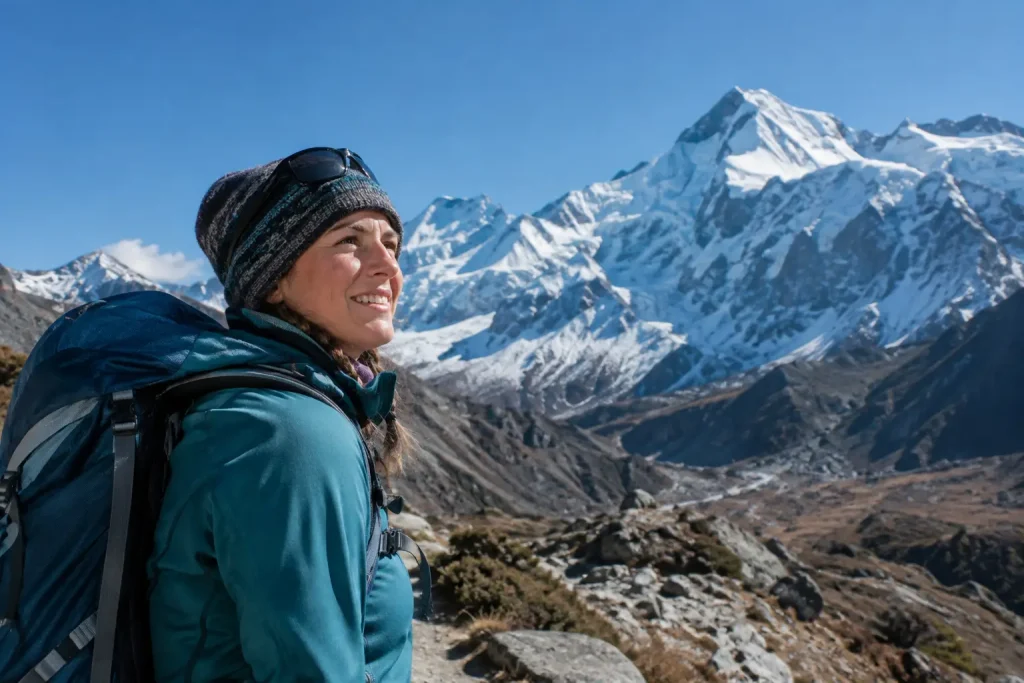
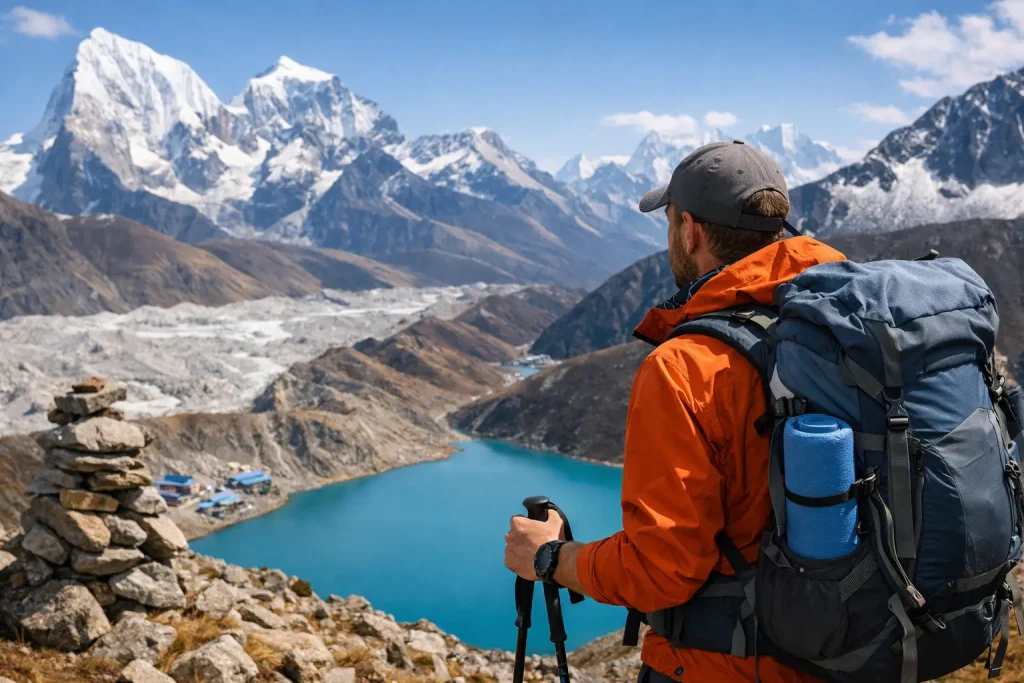
A teahouse trek vs camping trek decision shapes far more than where you sleep. It affects your pack weight, daily routine, food choices, budget, acclimatization options, and the level of logistical support you need. In Nepal, the right choice depends on the route, season, group experience, and how independently you want to travel in remote terrain.
For most first-time Himalayan trekkers, a teahouse trek is the more practical option. Camping becomes essential or highly valuable when a route has limited lodges, when you are traveling outside the main seasons, or when your goal is a remote expedition-style trek rather than a lodge-based trail.
Teahouse Trek vs Camping Trek at a Glance
A teahouse trek follows established trails with family-run lodges providing rooms, cooked meals, and basic communal facilities. You carry personal clothing, water, snacks, and day essentials, while sleeping bags remain useful at higher elevations. Popular lodge-based routes include Everest Base Camp, Annapurna Base Camp, the Annapurna Circuit, Langtang Valley, Mardi Himal, Gokyo Lakes, and Manaslu Circuit.
A camping trek uses tents, a cooking setup, staff support, and planned food supplies. Your team may include a guide, cook, kitchen helpers, porters, and pack animals where conditions allow. Camping is common on less-developed routes such as Kanchenjunga Base Camp, Makalu Base Camp, Dolpo, and remote sections of Upper Mustang or Tsum Valley. It may also be used when lodges are full or unavailable.
The distinction is not always absolute. Some remote Nepal itineraries combine lodge stays with several camping nights. That hybrid approach can work well when a route moves between developed villages and isolated valleys.
Comfort and Daily Routine
Teahouses offer a welcome level of simplicity after a long day on the trail. You arrive, choose from a menu, receive a room, and sleep indoors. Facilities vary widely. Lower-elevation villages may have private rooms, attached bathrooms, charging outlets, and hot showers for an additional fee. At higher elevations, expect shared toilets, unheated dining rooms, limited electricity, and cold water.
The trade-off is less privacy and less control. During peak trekking months, dining rooms can be busy, rooms may be basic, and walls are often thin. On routes such as Everest Base Camp, a busy lodge can feel social and efficient, but it is not a quiet mountain hotel.
Camping offers more privacy and greater control over your sleeping environment. A well-run camp provides a dining tent, kitchen tent, toilet tent, and organized meals. It can feel more self-contained, particularly in areas with no settlements nearby. However, it also requires more patience. Staff must establish camp, prepare meals, break down tents, and manage weather exposure every day.
In heavy rain, wind, or snow, camping is more demanding. Even with quality equipment, changing clothes, using the toilet, and staying warm require more effort than they do in a lodge. Trekkers who value a warm dining room and a simpler routine usually prefer teahouses.
Food, Water, and Hygiene
On a teahouse trek, meals come from lodge kitchens. Menus commonly include dal bhat, noodles, fried rice, soups, potatoes, eggs, pasta, and Tibetan bread. Food variety decreases as elevation rises because ingredients must be transported uphill. Dal bhat is often the most reliable choice: it is filling, warm, and typically served with rice, lentils, and seasonal vegetables.
Teahouse food is convenient, but dietary needs require advance planning. Vegetarian trekkers usually have workable options. Travelers with celiac disease, severe allergies, or highly restrictive diets need a more cautious strategy because kitchens are small and cross-contamination can be difficult to prevent.
A camping team can plan meals around your group’s needs and carry more specialized ingredients. This is an advantage for longer expeditions, groups with medical dietary requirements, and remote areas with few food supplies. The downside is that food quality depends heavily on the operator’s planning, staff skill, and supply management.
Water treatment matters on both styles of trek. Do not assume that bottled water is the safest or most sustainable answer. Use boiled water from reputable lodges where available, or treat water with a filter and purification method appropriate for trekking. Good hand hygiene is equally important, especially before meals and after using shared facilities.
Cost and What You Are Paying For
Teahouse treks generally cost less because the infrastructure already exists. You pay daily for rooms, meals, charging, showers, Wi-Fi where available, permits, and guide or porter services if you hire them. Costs rise significantly with altitude, because every supply must be carried into higher villages.
Camping treks cost more because you are bringing the infrastructure with you. The price includes tents, food, fuel, kitchen equipment, staff wages, transport of supplies, and often additional pack animals or porters. A camping itinerary also requires more advance coordination and contingency planning.
Do not choose solely on the headline price. A low-cost camping package may mean inadequate food, unsuitable tents, poor staff ratios, or insufficient emergency planning. Likewise, an apparently inexpensive teahouse itinerary can become costly if it excludes meals, permits, transportation, and required guide services.
Altitude Safety Is Not Determined by Your Bed
A lodge room does not make a high-altitude trek safer, and a tent does not automatically make it riskier. Acute mountain sickness is driven primarily by elevation, ascent rate, individual response, and acclimatization. Whether you stay in a teahouse or camp, the key safeguards are a sensible itinerary, rest or acclimatization days, hydration, adequate calories, and immediate attention to symptoms.
Teahouse routes often have an advantage because their established villages make it easier to adjust daily distances and descend if symptoms worsen. On the Everest Base Camp Trek, for example, common acclimatization stops at Namche Bazaar and Dingboche support a gradual ascent.
Camping routes can be less flexible. A planned camp may be the only practical overnight point for many miles, and evacuation logistics may be more complicated. This does not make remote trekking unsuitable, but it raises the value of experienced guides, satellite communication, comprehensive travel insurance, and a conservative approach to itinerary planning.
Never continue ascending with worsening headache, nausea, dizziness, unusual fatigue, or poor coordination. Severe symptoms, including confusion, breathlessness at rest, or difficulty walking straight, require immediate descent and urgent medical assessment.
Logistics, Permits, and Guide Requirements
Teahouse trekking is easier to organize, but it is not always straightforward. Nepal’s trekking regulations, permit requirements, and guide rules can change by region. Several restricted or controlled areas require permits arranged through a registered trekking agency and may require a licensed guide and a minimum group size.
Camping treks nearly always need an organized support team because of food, equipment, route finding, and permit logistics. Remote trails can involve river crossings, landslide-prone paths, long distances between villages, and limited communication. A local guide is not simply a convenience in these areas. They are central to route decisions, weather judgment, camp management, and emergency response.
Season also changes the calculation. In spring and fall, popular teahouse routes have the most reliable services but may be crowded. In winter, high passes and remote lodge areas can be affected by snow, while some facilities close. During the summer monsoon, leeches, rain, cloud cover, landslides, and flight delays affect many routes. A camping trek requires particularly careful weather planning during these periods.
Who Should Choose a Teahouse Trek?
Choose a teahouse trek if you are new to Nepal trekking, want to keep your pack lighter, prefer indoor sleeping, or are choosing a well-established route. It is also the better fit for travelers with limited vacation time, since lodge itineraries are usually easier to operate and adjust.
A teahouse trek does not mean an easy trek. Everest Base Camp, the Three Passes Trek, Manaslu Circuit, and Annapurna Circuit can all be physically demanding because of altitude, long walking days, cold conditions, and high passes. Lodges reduce logistical effort, not mountain risk.
Who Should Choose a Camping Trek?
Choose camping when the trail itself requires it, when you want a more remote experience, or when you are comfortable accepting greater logistical complexity for fewer crowds and deeper wilderness. It suits trekkers who have already tested themselves on multi-day hikes, understand the demands of expedition travel, and are prepared for variable conditions.
For a remote Nepal itinerary, prioritize a reputable operator with clear details on staff qualifications, meals, emergency communication, sleeping equipment, acclimatization planning, and evacuation procedures. Radiant Treks can help arrange guided lodge, camping, or hybrid itineraries based on your route, season, and experience level.
The best choice is the one that leaves you with enough energy and margin to enjoy the mountains safely. If you are drawn to a remote camping route, build up to it with honest fitness preparation and a conservative itinerary. If you choose a teahouse trek, treat its convenience as support for smart decisions, not permission to rush upward.