Hiring a Mardi Trek Guide and Porter is one of the smartest decisions you can make for the Mardi Himal trek, especially if you want a smoother, safer, and less physically demanding journey. The route is shorter than many classic treks in Nepal, but that does not mean it is simple in every season or for every trekker. Steep stone steps, changing weather, forest sections, and higher-altitude ridge walking can all feel much harder when you are carrying a full backpack and trying to manage route logistics on your own.
Mardi Himal is often chosen by trekkers who want big mountain views without committing to a long expedition. That is part of its appeal. You can reach impressive viewpoints in a relatively short timeframe, usually through forests of rhododendron and oak before climbing above the tree line toward High Camp and Mardi Himal Base Camp. But a shorter trek still requires planning. Transport, accommodation, pacing, weather judgment, and basic safety decisions matter, and this is where a guide or porter can make a real difference.
Do You Need a Mardi Trek Guide and Porter?
The answer depends on your experience, budget, fitness, and the kind of trekking experience you want.
A guide is most valuable if you are new to trekking in Nepal, traveling solo, uncertain about route changes, or trekking outside the most stable weather windows. Even on popular routes, trail confusion can happen around village junctions, forest tracks, or alternate paths linked to side settlements and lodges. A good guide does much more than point the way. They help set a realistic pace, monitor how you are handling altitude, coordinate rooms and meals, and adjust plans when weather or trail conditions shift.
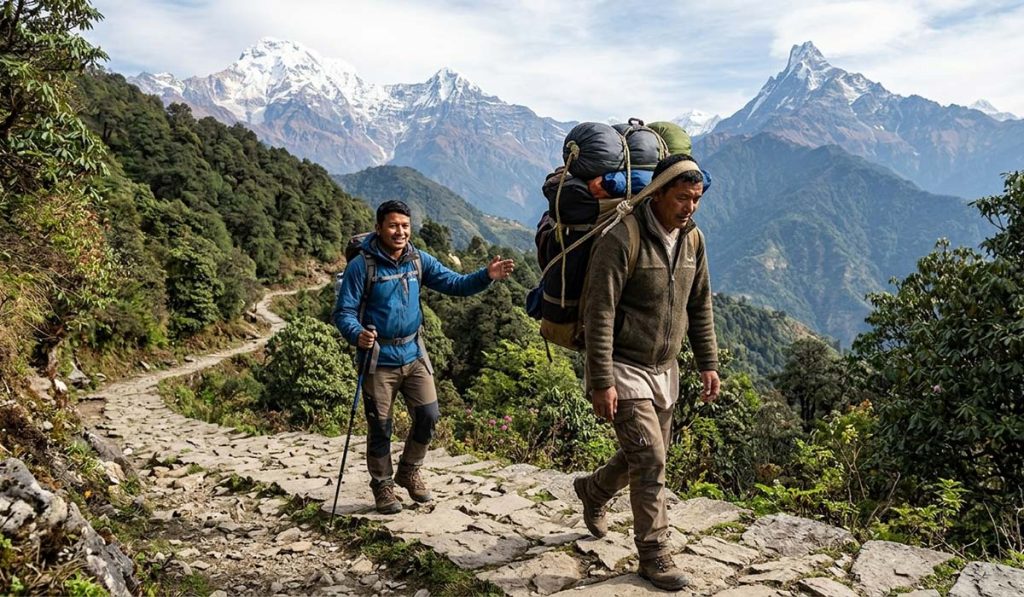
A porter is most valuable if you want to enjoy the trek with less strain. Many trekkers underestimate how tiring it is to climb day after day with 10 to 15 kilograms on their back. On the Mardi route, this is especially noticeable on the uphill sections from lower villages toward Low Camp, Badal Danda, and High Camp. Carrying less weight often means you walk better, recover faster, and enjoy the mountain views more.
If your budget allows only one, first-time trekkers usually benefit more from a guide. If you are confident with navigation and logistics but want to reduce physical effort, a porter may be enough. Many travelers choose both because the combination gives the best balance of safety, comfort, and local support.
What a Guide Actually Does on the Mardi Himal Trek
Trekkers sometimes think a guide is only necessary on remote or technical routes. Mardi Himal is not technical, but that does not mean local expertise has little value.
A professional guide helps before the trek even starts. They can explain the route options from Pokhara, whether you begin through Kande, Phedi, or another access point depending on your itinerary. They know which overnight stops make sense for your pace, how long each section really takes, and where altitude starts affecting people more noticeably.
On the trail, a guide manages the practical parts that many trekkers do not think about until they become stressful. This includes finding suitable teahouses, checking room availability in busy periods, helping with meal planning, and making sure you stay on a sensible schedule. If the weather turns poor near High Camp, they can judge whether it is better to wait, continue carefully, or turn back. That kind of decision is much easier when made by someone who knows the mountain conditions.
There is also the cultural side. The Mardi route passes through villages and lodge communities where local interaction is part of the experience. A guide can bridge language gaps, explain local customs, and make your trek feel more connected rather than just scenic.
What a Porter Does and Why It Matters
A porter’s role is simple but incredibly valuable. They carry the heavier duffel or shared load so you can trek with a light daypack. That usually means you only carry water, a jacket, snacks, valuables, and daily essentials.
This changes the trek more than many people expect. Less weight reduces fatigue on climbs, lowers strain on knees during descents, and gives you more energy at the end of the day. It can also help with acclimatization because you are not pushing yourself as hard physically.
A porter is not a luxury in the Himalayan context. It is a practical support role and an important part of the trekking economy. Hiring a porter also supports mountain communities directly. That said, ethical treatment matters. Porters should have proper clothing, fair loads, suitable footwear, and reasonable working conditions. A responsible trekking company or organizer will manage this properly.
Guide vs Porter vs Guide-Porter
For Mardi Himal, you may come across three common options.
A guide focuses on navigation, logistics, and overall support. A porter carries your main bag. A guide-porter does a mixed role, usually carrying a lighter load while also helping with route guidance and basic trek support.
A guide-porter can be a good budget-friendly choice for shorter treks like Mardi Himal, especially for one or two trekkers. But there are trade-offs. If someone is carrying weight, they may not always walk beside you every minute or provide the same level of attention as a full guide. For travelers who want stronger safety support, deeper local insight, or more flexible help throughout the day, a dedicated guide is still the better choice.
How Much Does a Mardi Trek Guide and Porter Cost?
Costs vary by season, group size, service standard, and whether you book independently or through an agency. Rates also change over time, so exact prices should always be confirmed close to your travel date.
In general, a licensed guide costs more than a porter because the role includes route management, communication, and trek leadership. A porter is usually the lower-cost option. A guide-porter sits somewhere in between. If you are trekking as a pair or small group, the cost per person becomes more reasonable because one guide can support multiple trekkers, and one porter may carry bags for two clients within a safe load limit.
When comparing prices, check what is included. Sometimes the daily rate covers wages only. In other cases it may include meals, accommodation, insurance, and transport for staff. Cheaper is not always better if it means poor staff welfare or limited support on the trail.
Is Hiring a Guide Required?
Rules in Nepal can change, and many trekkers are understandably confused about where a guide is mandatory and where independent trekking is still possible. For Mardi Himal, you should always verify the current regulation before your trip rather than relying on older blog posts or forum discussions.
Even when a guide is not strictly required by regulation, many trekkers still choose one for convenience and safety. That is especially true during monsoon, winter, or if they have limited trekking experience in Nepal.
Best Trekkers to Hire Help for Mardi Himal
Some trekkers gain more from support than others.
First-time visitors to Nepal usually appreciate having a guide because the trekking system, permits, transport, and teahouse rhythm are all new. Solo trekkers often find a guide adds both confidence and companionship. Older trekkers and those with knee or back issues often notice the biggest benefit from hiring a porter. Families and mixed-ability groups also tend to move more comfortably when local staff help manage pace and logistics.
Experienced hikers who are fit, travel light, and are comfortable with basic route-finding may decide to trek with less support. That can work, but it is still worth being honest about your endurance, weather tolerance, and comfort level with changing conditions.
How to Choose a Good Mardi Trek Guide and Porter
The quality of the person matters more than the label.
Look for a licensed guide with real experience on the Mardi route, not just general trekking experience. Ask whether they have worked in different seasons and how they handle altitude symptoms, weather delays, and itinerary changes. Clear communication is also important. You want someone who answers practical questions directly and does not overpromise.
For porters, responsible treatment is a good sign of a trustworthy operator. Ask about load limits, insurance, clothing, and whether the porter is properly equipped for cold conditions. Good trekking support is not only about your comfort. It is also about fair and safe working standards for the staff who make the trek possible.
If you book through an experienced local company, you usually get better coordination and backup if plans change. That matters more than people realize until flights, road conditions, or weather affect the itinerary.
Tipping and Expectations
Tipping is common on trekking routes in Nepal and is generally appreciated as recognition of good service. The amount varies depending on trek length, group size, and your satisfaction with the support provided.
It is best to think of tipping as part of your overall trekking budget rather than an afterthought. If your guide was attentive, flexible, safety-conscious, and helpful throughout the trip, a fair tip is a meaningful gesture. The same applies to a porter who carried responsibly and supported your trek with consistency and care.
Set expectations early as well. Discuss the daily plan, walking pace, bag weight, and what support you need most. Good communication at the start often prevents small misunderstandings later.
Final Advice for Mardi Himal Trekkers
Mardi Himal is one of the most rewarding short treks in Nepal because it gives you fast access to dramatic mountain scenery without the long commitment of bigger routes. Hiring the right support can make that experience much better. A guide helps you trek with more confidence and better judgment. A porter helps you enjoy the trail with less physical stress. Together, they turn a demanding hike into a more focused mountain experience, where your energy goes into walking, noticing, and appreciating the landscape rather than managing every problem alone.