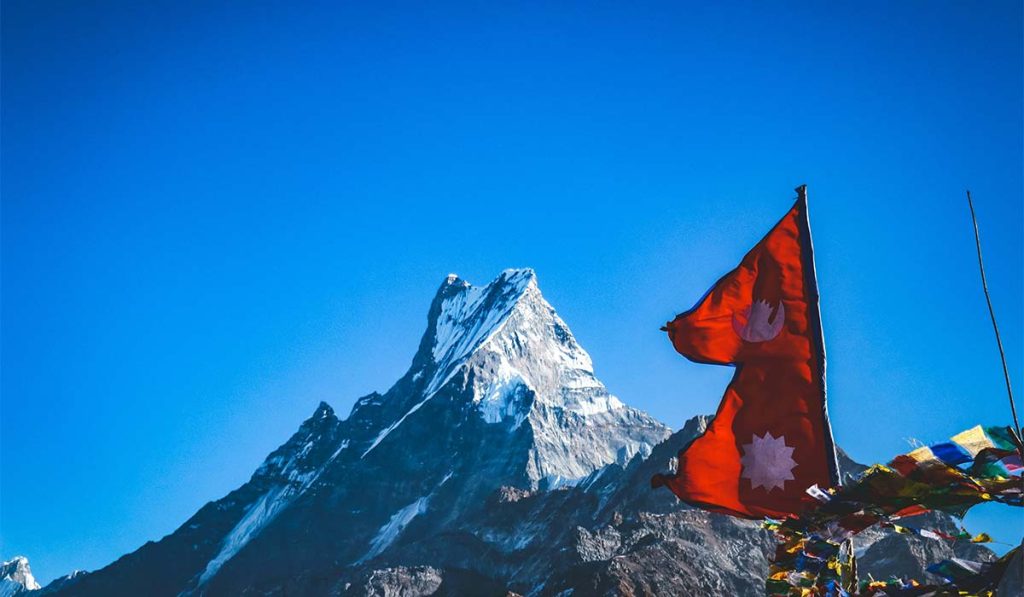
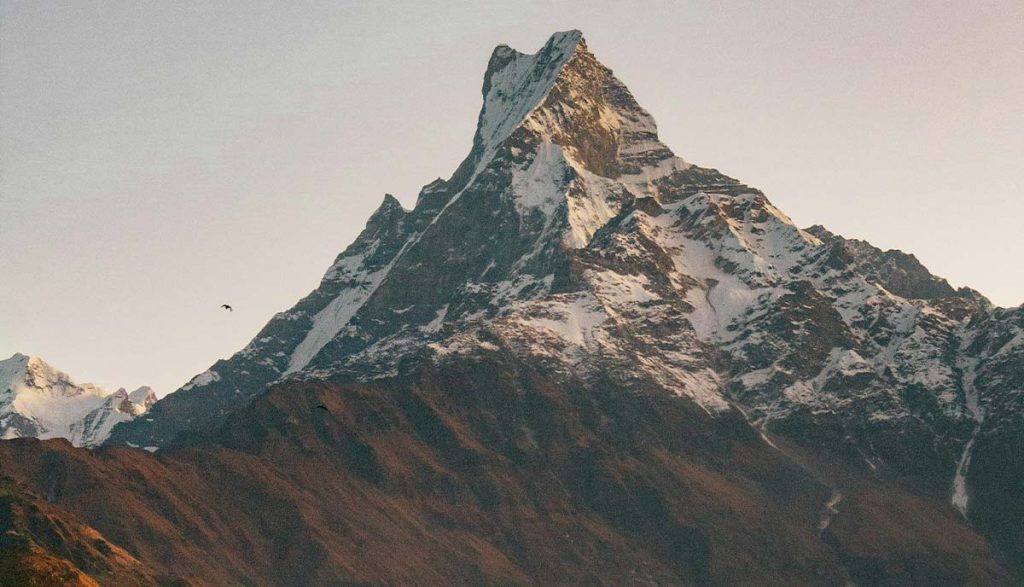
Some treks give you one big viewpoint at the end. The Best viewpoints on the Mardi Himal Trek are different because the scenery builds day by day, then keeps changing with altitude, weather, and where you stand on the ridge. That is what makes this short Annapurna trek so rewarding. You are not walking for a single photo stop. You are moving through a series of natural balconies with different angles of Machhapuchhre, Mardi Himal, Annapurna South, and Hiunchuli.
For many trekkers, Mardi Himal feels more scenic than expected for its length. The route climbs from forest to open ridge surprisingly quickly, and once you reach the higher sections, the mountain views stay close and dramatic. If you want to enjoy the trek fully, it helps to know which viewpoints are the real highlights, what each one shows, and when the light is usually best.
Best viewpoints on the Mardi Himal Trek route
The strongest viewpoints on this trek are not all equal. Some are broad sunrise spots, some are best for close mountain detail, and some are rewarding because of how the landscape opens suddenly after hours in the forest. Knowing the difference helps you pace the route and avoid rushing to only one place.
Forest Camp to Low Camp clearings
This lower section is often overlooked because trekkers are still gaining elevation under tree cover, but there are a few openings between Forest Camp and Low Camp that deserve attention. On clear days, Machhapuchhre appears through the forest in sharp, almost surprising glimpses. The mountain does not dominate the whole horizon yet, but that is part of the appeal. You see it framed by rhododendron and mossy woodland, which gives this section a different character from the exposed ridge above.
In spring, these lower viewpoints become more attractive because the forest itself adds color. If the higher route turns cloudy later in the day, those lower clearings can still offer memorable views early in the morning. They are not the best panoramic spots of the trek, but they set the tone well.
Low Camp
Low Camp is the first place where many trekkers feel the route truly opens. Machhapuchhre becomes much more prominent here, and the sense of altitude begins to grow. If clouds are moving in and out, this area can still produce excellent mountain views, especially in the early morning before weather builds.
What makes Low Camp useful is not just the scenery but the transition it represents. You are leaving the enclosed forest environment and entering the ridge system that defines Mardi Himal. For trekkers who arrive with limited visibility higher up, Low Camp sometimes ends up being better than expected. That happens often in the monsoon shoulder months or on afternoons with unstable weather.
Badal Danda
Badal Danda is one of the most beautiful stopping points on the trek and one of the most photogenic viewpoints overall. The name is often associated with clouds, and that matches the experience. When conditions are clear, you get wide mountain views with layers of ridge, valley, and sky. When clouds drift below you, the place feels even more dramatic.
From here, Machhapuchhre stands out strongly, and the broader Annapurna range begins to feel more connected rather than distant peaks seen in isolation. Sunrise and sunset can both be rewarding at Badal Danda, depending on the weather. Sunset is especially good if the sky stays open because the ridges and cloud movement create depth that is harder to appreciate in flat midday light.
If you are deciding where to spend extra time, this is one of the best places to slow down. Even trekkers focused on High Camp and the viewpoint above often remember Badal Danda as one of the most atmospheric parts of the entire route.
High Camp
High Camp is the classic scenic overnight stop and one of the key reasons the trek is so popular. The lodge area itself offers expansive views, and because you are already above most tree cover, the mountains feel much closer and more direct. Machhapuchhre rises in a striking position, while Mardi Himal and Annapurna South become more dominant as you look along the ridge.
The main advantage of High Camp is timing. You can see evening light, wake early for sunrise, and start the climb to the upper viewpoint before clouds develop. In the mountains of Nepal, clear mornings are often much more reliable than clear afternoons. That makes High Camp more than just an accommodation stop. It is one of the best viewpoints on the Mardi Himal Trek in its own right.
On a clear night, the starlit ridge and early dawn light can make this stop unforgettable. But it is also worth being realistic. High Camp can be cold, windy, and occasionally crowded in peak trekking season. The views are excellent, but comfort is more limited than lower down.
Mardi Himal Viewpoint
For many trekkers, this is the highlight of the route. The Mardi Himal Viewpoint sits above High Camp and gives the best balance of accessibility and dramatic reward. The climb is usually done early in the morning, and that timing matters. In good weather, the peaks are crisp, the valleys are still shadowed, and the first light hits the upper snow slopes beautifully.
From this viewpoint, you get a commanding perspective of Mardi Himal, Machhapuchhre, Annapurna South, and Hiunchuli. The mountain walls look much closer than they do from the lower camp areas. You are no longer just looking at a distant skyline. You are standing in a high alpine position with a real sense of the massif around you.
This spot is ideal for trekkers who want the best scenery without pushing all the way to Mardi Himal Base Camp. For many people, the viewpoint gives the most efficient reward-to-effort ratio on the trek. If trail conditions are icy, windy, or visibility is uncertain, stopping here is often the sensible choice.
Mardi Himal Base Camp
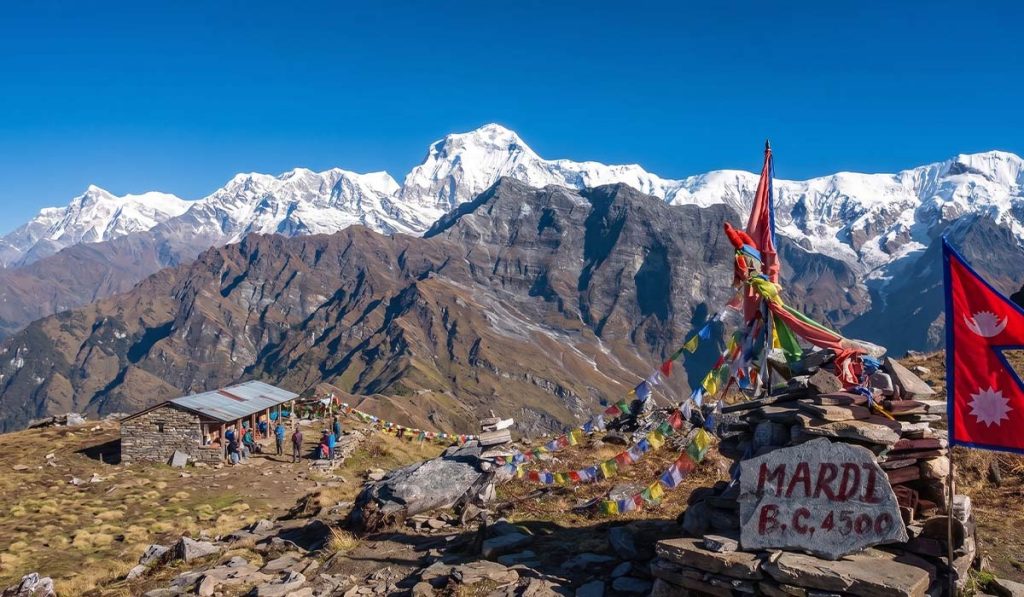
Base Camp is the highest and most ambitious viewpoint on the standard route, but it is not automatically the best for every trekker. On a clear morning, the setting is spectacular. You are closer to the mountains, and the upper terrain feels raw, exposed, and serious. The sense of being deep in the high Himalaya is stronger here than at the lower viewpoint.
That said, the trade-off is real. The trail above the viewpoint can be more demanding, especially with snow, ice, strong wind, or tired legs after an early start. In some conditions, the extra effort gives only a modest difference in perspective compared with the main viewpoint. In excellent weather, Base Camp is absolutely worth it for strong trekkers. In poor weather, it can become a push for little visual reward.
This is where honest route judgment matters. The best viewpoint is not always the highest one. It is the place where you can actually see the mountains well and reach them safely.
Which viewpoint is actually the best?
If you want one answer, the Mardi Himal Viewpoint above High Camp is the best all-around spot on the trek. It gives the strongest combination of accessibility, wide-angle mountain scenery, sunrise potential, and relative safety compared with pushing higher in mixed conditions.
If you want atmosphere, Badal Danda is hard to beat. If you want the most committed high-mountain feel, Base Camp wins. If you want close sunrise views with easy access from your lodge, High Camp delivers very well.
So the real answer depends on what kind of trekking experience you value most. Photographers often prefer Badal Danda for mood and layered landscapes. First-time Himalayan trekkers usually remember the main viewpoint above High Camp as the defining moment. Fit and confident trekkers in stable weather may favor Base Camp.
Best time for clear views on the Mardi Himal Trek
The best viewpoints mean little if the mountains stay hidden. On Mardi Himal, visibility is usually best in autumn from late September to November and in spring from March to April. Autumn often gives the cleanest skies overall, while spring adds blooming rhododendron in the lower sections.
Winter can also be excellent for clear mountain views, but cold temperatures, snow, and icy trail conditions can make the upper route more difficult. During the monsoon and heavy pre-monsoon cloud periods, views can be inconsistent. You may still get good mornings, but clouds often build fast.
Daily timing is just as important as the season. Start early, especially above High Camp. If you wait too long, clouds can roll in and flatten what should be the best scenery of the trek.
Tips to enjoy the viewpoints properly
Do not rush this trek as if the only goal is Base Camp. Mardi Himal rewards trekkers who pay attention to the ridge stops, changing angles, and early morning light. Spending a little extra time at Badal Danda or High Camp can improve the experience more than simply walking farther.
Keep your camera or phone accessible on the move. Several of the best views appear suddenly along the trail, especially once you leave the forest behind. Dress for wind at the higher viewpoints, and carry enough water for the early climb from High Camp. If you are trekking in colder months, microspikes may be useful depending on trail conditions.
Most importantly, stay flexible. The mountains decide a lot. If the weather closes in, a lower viewpoint with clear visibility can be more rewarding than a higher one buried in cloud. Experienced local guidance is especially helpful here because small timing decisions often make a big difference on this route.
Mardi Himal is not a trek where the scenery waits politely at the finish line. It unfolds in stages, and that is exactly why so many trekkers come back talking about the ridge, the dawn light, and the feeling of walking face-to-face with Machhapuchhre rather than only checking off a destination.